


The scorching sun beats down on the dusty roads of Belimbing Village in Kosambi District, Tangerang Regency. Factories and warehouses surround the residential areas, while the perimeter fence of Soekarno-Hatta International Airport runs close to the village boundary. Every few minutes, an aircraft flies low over the rooftops—a familiar part of daily life for residents.
Chen Fie has spent most of her life in this village. “All I knew was the well, the bed and the kitchen,” said the 51-year-old, who completed primary school.
Chen Fie married young. She was quiet and rarely took part in activities outside the home. Her life began to change in 2022, when Perkumpulan Pengembangan Perempuan dan Sumberdaya (PPSW) Jakarta, a local partner of KEMITRAAN, began organising women in her neighbourhood, RT 01.
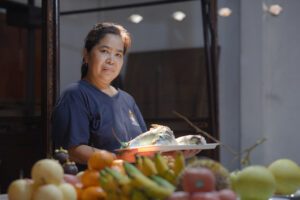
Today, Chen Fie leads the KWPS Lampion Merah Abadi women’s cooperative, participates in village development planning forums known as Musrenbang, and helps residents obtain civil registration documents online.
Many other Cina Benteng women in Belimbing Village have experienced similar changes. The cooperative, which began with just 10 members, now has more than 300. But it is not only their savings and businesses that have grown. Women whose lives were previously largely confined to the home are now proposing development programmes, helping residents access public services, and contributing to efforts to prevent and respond to violence against women and children.
A Cooperative Amid a Cycle of Debt
Belimbing Village Head H. Maskota recalled that the village was still classified as underdeveloped in 2007. The arrival of factories subsequently boosted the local economy, but this progress was not accompanied by adequate financial literacy.
Belimbing Village is home to around 2,372 ethnic Chinese residents. Most work as traders or labourers, and many have received no more than a junior secondary education. According to Maskota, many residents have become trapped in debt after borrowing simultaneously from several “banks”—the local term for door-to-door lenders, loan sharks and online lenders.
“One resident even sold a house worth Rp250 million to pay off online loans,” he said during a discussion held as part of a media visit organised by KEMITRAAN’s Estungkara Programme, an INKLUSI partner.
Belimbing Village Secretary Entang Yoga said that community cooperatives were one way to curb the proliferation of illegal loans offered under various guises, including by lenders claiming to be cooperatives. Building a cooperative, however, was not easy.
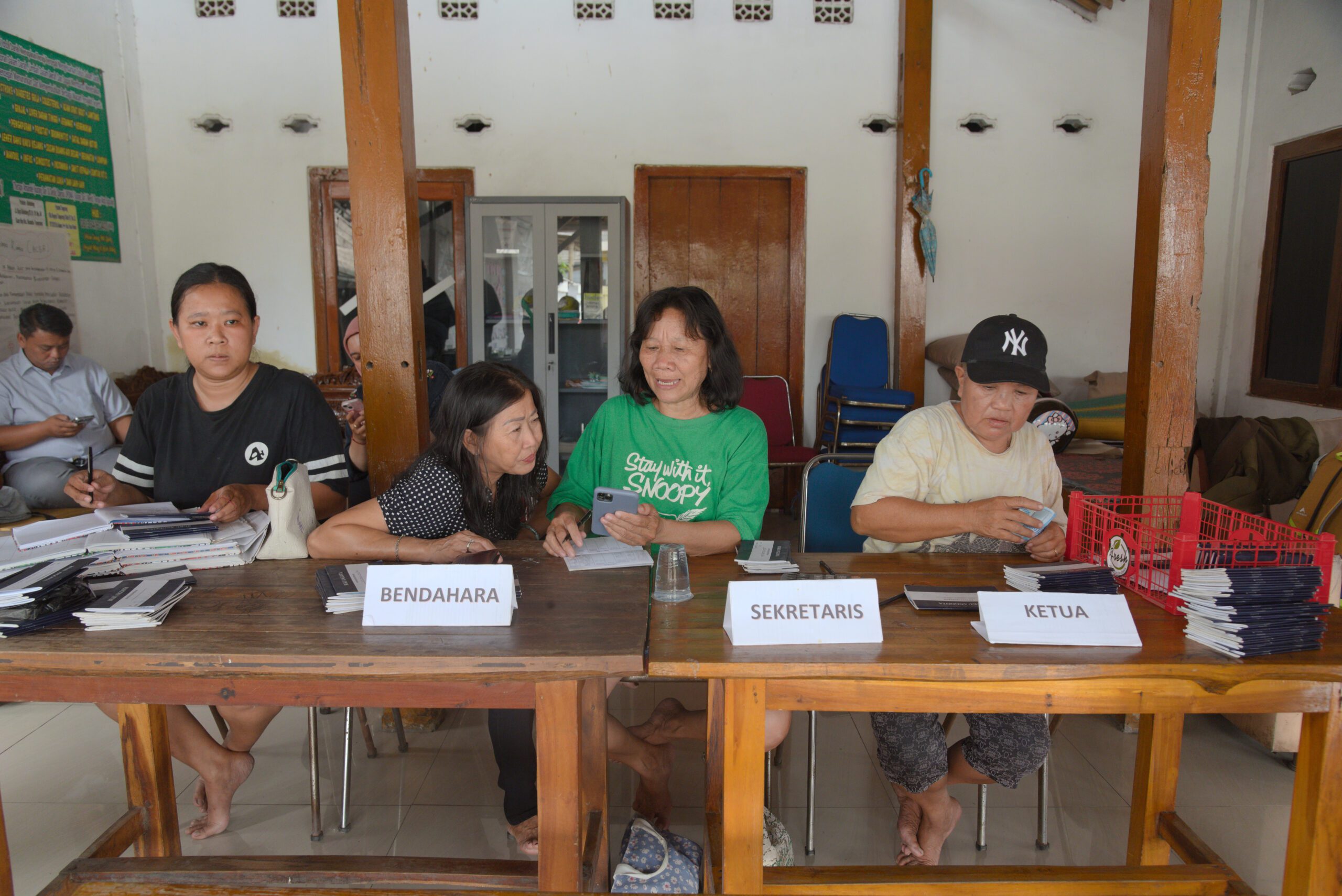
When PPSW began working with residents in 2022, it first mapped the community’s needs and built trust through small groups of Cina Benteng women. Prospective members were approached and encouraged to join one by one. Some agreed only after nearly two years of engagement.
KWPS Lampion Merah Abadi was formally established in August 2022. Members must save for at least three months before they can apply for a loan. The initial mandatory deposit was deliberately kept low and could be paid in instalments to avoid placing an additional burden on members.
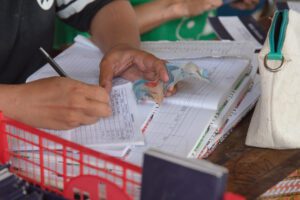
The cooperative now has around 312 members and records a turnover of approximately Rp449 million. Members use loans for a range of needs, from business capital and their children’s school expenses to paying off online loans. In addition to gaining access to safer financing, members receive support to develop home-based businesses.
For Chen Fie, earning her own income gives a woman greater freedom to meet her needs without always depending on her husband. “Even asking my husband to buy me face powder could be very difficult,” she said.
PPSW recognised, however, that economic empowerment alone does not automatically eliminate inequality within the home. Women who earn their own income may still experience violence or bear the full burden of domestic work. Cooperative meetings therefore also provide a space to discuss gender equality, share experiences and learn how to negotiate with partners.
During the early stages of the programme, some husbands would come looking for their wives if meetings went on for too long. After seeing the benefits of the cooperative, some began supporting their wives’ participation and sharing caregiving responsibilities—for example, by collecting their children from school while their wives attended meetings.
No Longer Merely Recipients of Services
The cooperative’s activities have since expanded beyond savings and loans. Previously, some members did not even know how to obtain their own national identity cards. With support from the programme, they learnt how to access civil registration services online.
They now use this knowledge to help other residents through a service called “Toktok Adminduk”. What began as support for the Cina Benteng community has expanded to serve everyone in the village. Women who once struggled to access services themselves have become a link between residents and the government.

Through the Women’s Voices Forum, they have also begun bringing everyday concerns—such as support for micro, small and medium enterprises, clean water and waste management—to the Musrenbang. They have learnt how to collect data, develop proposals and present them to the village government. The women’s participation is gradually transforming a decision-making space that was previously dominated by men.
“These forums used to be filled with men. Now it is the women who attend,” said Ratna Wulan Devi, known as Dewi, Chen Fie’s daughter and an active member of the community.
Their role has also expanded to preventing and responding to violence. The women established Balai Cerita Bunga Rampai, a safe space for survivors of domestic violence and neglect. It is deliberately located separately from the community facilitators’ private homes. They work with the village government and police to assist survivors and encourage women to report violence.
Since 2024, around 116 cases of violence have been recorded. According to Dewi, many have ultimately been resolved through mediation. Even so, the community continues to monitor those responsible to prevent repeated violence.
The transformation is most clearly visible in Chen Fie. Once unsure how to obtain her own identity card, she now helps other residents secure civil registration documents. Once quiet and rarely involved in activities outside the home, she now leads a cooperative and sits alongside government representatives in Musrenbang forums.
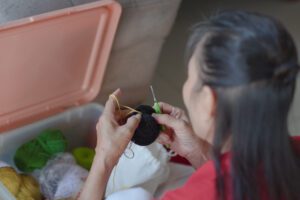
The cooperative has given her an income, but also something equally important: a community, confidence and the space to speak up. The women of Belimbing Village have always had these capacities. Organisation, knowledge and support have given them the confidence to use them.
Their voices are no longer heard only at home or in cooperative meetings. Today, the voices of Cina Benteng women have reached the village hall.