
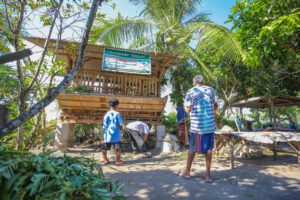
Mornings in Selebung Ketangga Village, East Lombok, begin with a simple division of tasks around a small goat shed. Some members prepare the feed, others clean the enclosure, while the rest check on the goats they raise together.
The shed has room for only five goats. Yet it has become a place where members of a Self-Help Group (SHG)—people with disabilities and their family members—learn how to run a collective enterprise. Together, they divide responsibilities, care for the livestock, manage the proceeds and work through the problems that arise.
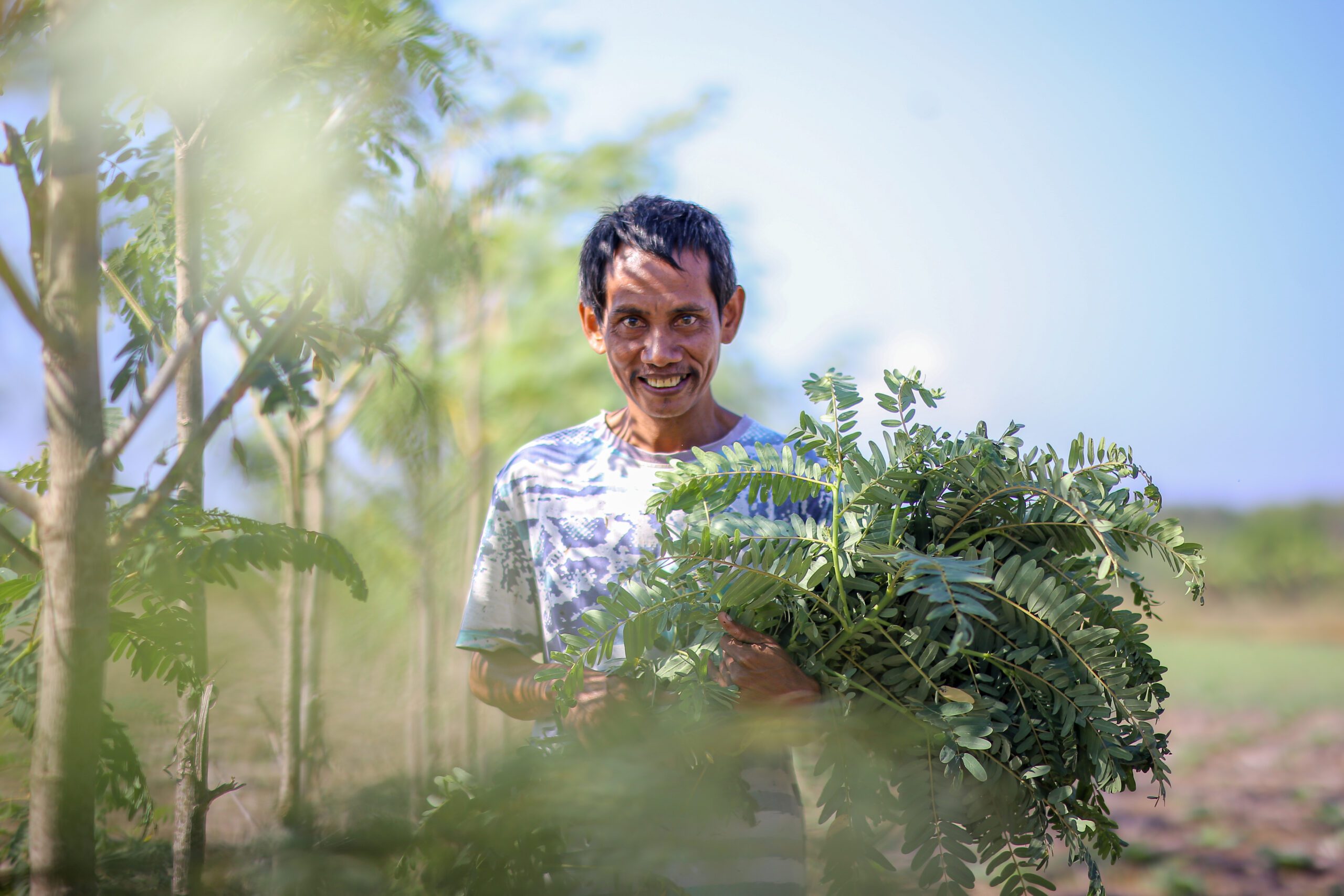
“We chose goat farming because it is familiar to the community and well suited to the conditions in the village. Feed can also be sourced from the surrounding area,” said Sahrul, Chair of the Selebung Ketangga SHG.
The enterprise also allows a wide range of members to take part.
“The work can be shared, from caring for the goats to processing the waste. Both women and men can be involved,” he said.
The SHG is a community-based support group initiated by YAKKUM Rehabilitation Centre (PRYAKKUM), one of INKLUSI’s partners. In East Lombok, PRYAKKUM and its local partner, LIDI Foundation, support groups made up of people with disabilities—particularly people with psychosocial disabilities—and their families.
The group provides a space for members to support one another, access services, develop livelihoods and participate in village decision-making. The goat-farming enterprise was one of the ideas that emerged from their discussions.
Members chose it after considering the community’s existing knowledge, the local environment and the resources available. Responsibilities were then agreed collectively, based on each person’s abilities, interests and circumstances.
Once the business plan had been developed, the SHG presented it to the village government. The proposal received support from both the village administration and the East Lombok District Livestock Office. The Livestock Office provided technical guidance and became a point of consultation for the group as it began managing the animals.
In February 2025, members worked together to build a demonstration shed. It was completed in three days. Since then, they have been learning through practice—not only about feeding and animal health, but also about what it takes to manage a business collectively.
Beyond the Home
Before the SHG was established, many people with disabilities in Selebung Ketangga rarely took part in community activities. Stigma, limited access and a lack of opportunities to participate meant that some spent much of their time at home.
The SHG meetings gradually began to change this. Members became more accustomed to voicing their opinions, discussing their needs, making decisions and sharing responsibility. The livestock enterprise gave them a reason to keep meeting, as well as practical challenges they had to address as a group.
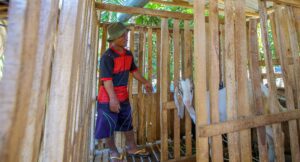
There were care schedules to agree on, feed to source, animal health to monitor and sales income to manage. The process did not always run smoothly, but it helped members become more comfortable working together and being accountable for the decisions they made.
Over time, these changes extended beyond the group itself. The SHG began receiving invitations to village meetings, including development planning forums. Their presence created opportunities for people with disabilities to speak directly about their needs and perspectives, rather than having others speak on their behalf.
Sahrul experienced this shift personally. After losing both hands in a workplace accident, he faced a difficult period of adjustment in his daily life. Through the SHG, he later took on the role of chair and began helping to coordinate the group’s activities.
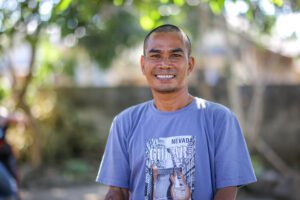 Sahrul experienced this shift personally. After losing both hands in a workplace accident, he faced a difficult period of adjustment in his daily life. Through the SHG, he later took on the role of chair and began helping to coordinate the group’s activities.
The role comes with its own challenges. He has to keep members involved, maintain communication with the village government and relevant agencies, and help the group find solutions when problems arise.
One recurring difficulty comes during the dry season, when the availability and quality of feed decline. The group also continues to strengthen its business management, animal care, waste processing and feed planning.
Although the enterprise remains small, the group has begun selling several goats. The returns are still modest, but members have already gained direct experience in managing a shared economic activity.
With support from INKLUSI, PRYAKKUM and its local partners work across seven provinces and eight districts to promote the meaningful participation of people with psychosocial disabilities and other people with disabilities. SHGs are developed as spaces for community support, social rehabilitation, learning, livelihood development and participation in local development.
In Selebung Ketangga, the group’s progress can be seen in ordinary, tangible ways: a shed maintained together, a work schedule agreed by members, and seats now available to them at village meetings.
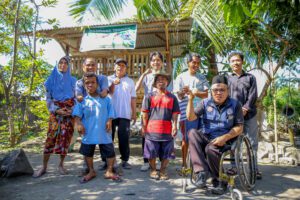
“The SHG gives us a space to show that people with disabilities can take part and contribute to the community,” Sahrul said. “This shed is not only a place to raise goats. It represents the changes we are working towards together.”