

INKLUSI LOGO Full Color Stacked - English

Publications

Documents

Filter

Search

Publications Category

Sort by:

Documents

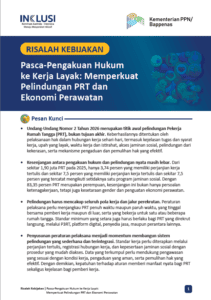
This policy brief examines the challenges of implementing Law No. 2 of 2026 on the Protection of Domestic Workers to ensure the fulfilment of labour rights and decent working conditions for domestic workers in Indonesia. While legal recognition represents an important milestone, significant gaps remain in the enforcement of labour standards, documentation of employment relationships, access to social security, labour inspection, and mechanisms for complaints and remedy. These challenges are further compounded by the diverse employment arrangements and recruitment channels through which domestic workers are engaged, the majority of whom are women.

The brief identifies seven key gaps in the domestic worker protection system and puts forward policy recommendations to strengthen regulatory implementation, establish operational decent work standards, integrate employment agreements with social security coverage, and improve labour inspection and access to effective grievance mechanisms. It also highlights the importance of recognising domestic workers as workers in both policy and public discourse, alongside initiatives to develop their competencies and formally recognise their skills. These measures are intended to strengthen domestic workers’ rights, advance gender equality, and contribute to a more inclusive and sustainable care economy.
Policy Brief, Documents

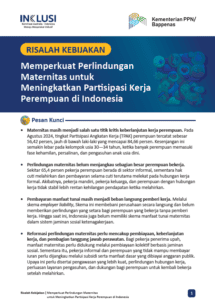
This policy brief examines gaps in Indonesia’s maternity protection framework and their implications for women’s employment continuity and economic participation. Despite the existence of a regulatory framework, access to maternity leave, income protection, and return-to-work support remains uneven, particularly for women in informal employment and those in precarious working arrangements.

The brief identifies six key gaps in maternity protection and proposes policy reforms encompassing stronger enforcement of workers’ rights, the development of collective financing mechanisms through social security, expanded childcare services, employment continuity safeguards, and a more equitable distribution of care responsibilities. These recommendations aim to establish a more inclusive and sustainable maternity protection system while advancing women’s labour force participation in Indonesia.

Documents

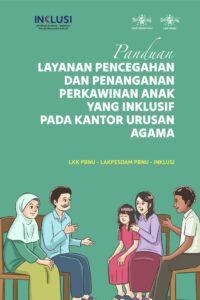
The Guidebook on Inclusive Services for the Prevention and Handling of Child Marriage was developed by the Family Welfare Institute of the Nahdlatul Ulama Executive Board (LKK PBNU) and the Institute for Human Resource Studies and Development of the Nahdlatul Ulama Executive Board (Lakpesdam PBNU) through the Australia–Indonesia Partnership Towards an Inclusive Society (INKLUSI).

This guidebook serves as a practical reference for Offices of Religious Affairs (Kantor Urusan Agama or KUA) in delivering services to prevent and address child marriage that are gender-responsive, child-friendly, inclusive, and sensitive to the diverse social contexts of local communities.

The information presented in this publication is the sole responsibility of the authors and does not necessarily reflect the views of the Governments of Indonesia or Australia.

Documents

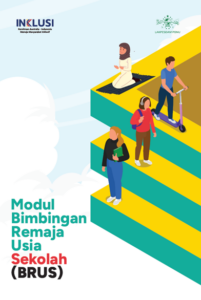
Published by Lakpesdam PBNU, the School-Age Youth Guidance Module (BRUS) adapts guidance materials from the Ministry of Religious Affairs to support child marriage prevention through INKLUSI.

It equips facilitators to help young people understand themselves, make informed decisions, build healthy relationships and plan for the future.

The information presented in this publication is the responsibility of the authors and does not necessarily reflect the views of the Governments of Indonesia or Australia.

(Available in Bahasa Indonesia only)

Documents

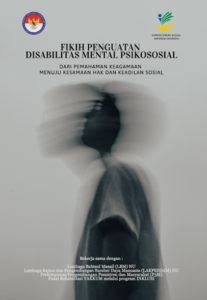
Fiqh for Strengthening Psychosocial Disability: From Religious Understanding to the Fulfilment of Rights and Social Justice is published by the National Commission on Disabilities (Komisi Nasional Disabilitas) and the Ministry of Social Affairs of the Republic of Indonesia, in collaboration with Lakpesdam PBNU, the Association for Pesantren and Community Development (P3M), and the YAKKUM Rehabilitation Centre (PRYAKKUM) through the INKLUSI Programme.

The publication offers perspectives that promote respect for the dignity, rights, and supported decision-making of persons with psychosocial disabilities. Integrating religious perspectives, human rights, and social justice, it is intended to serve as a reference for government institutions, service providers, religious leaders, academics, and communities in strengthening more inclusive, equitable, and rights-based policies, services, and practices.

Documents

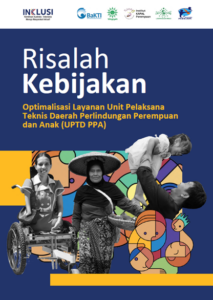
Policy Brief: Optimising Services of the Regional Technical Implementation Unit for the Protection of Women and Children (UPTD PPA) is the result of the collective efforts of INKLUSI partners—’Aisyiyah, KAPAL Perempuan, Lakpesdam PBNU, PERMAMPU, and Yayasan BaKTI. The publication presents policy recommendations to strengthen the implementation of Presidential Regulation No. 55 of 2024 on UPTD PPA.

In response to the challenges in delivering protection services, the policy brief highlights the importance of strengthened cross-sector coordination, regulatory and financing support, and gender-responsive institutional governance to enable UPTD PPA to provide integrated, effective, and survivor-centred services.

This publication is supported by the Australia–Indonesia Partnership Towards an Inclusive Society (INKLUSI). The information presented in this publication is the responsibility of the authors and does not necessarily reflect the views of the Governments of Indonesia or Australia.

(Available in Bahasa Indonesia only)

Documents

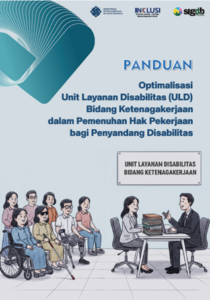
Guidelines for Optimising Disability Service Units (ULD) in the Employment Sector to Fulfil the Right to Work for Persons with Disabilities is a practical resource developed to strengthen the role of Disability Service Units (ULD) in promoting the fulfilment of the right to work for persons with disabilities. The publication was developed through a collaboration between SIGAB Indonesia, the Directorate of Special Employment Placement (PTKK) of the Ministry of Manpower, and the National Commission on Disabilities (KND).

The guidelines provide practical guidance for national and local governments, ULD managers, and other stakeholders to strengthen inclusive employment services and support the implementation of disability-inclusive employment policies across Indonesia.

This publication is supported by the Australia–Indonesia Partnership Towards an Inclusive Society (INKLUSI). The information presented in this publication is the responsibility of the authors and does not necessarily reflect the views of the Governments of Indonesia or Australia.

Documents

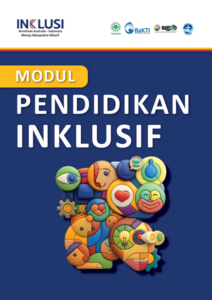
The Inclusive Education Module is a training guide developed by ‘Aisyiyah, BaKTI, SIGAB, and the YAKKUM Rehabilitation Centre with support from the INKLUSI Secretariat. The module is designed to support educators and formal as well as non-formal education institutions in understanding and implementing inclusive education, thereby expanding access to quality and equitable education for all learners, including persons with disabilities.

The module also highlights the importance of the roles played by various stakeholders in delivering inclusive education, including not only educators and schools, but also parents, families, communities, and other relevant actors. For this reason, it covers a range of topics that contribute to creating inclusive and accessible learning environments for everyone.

The information contained in this publication is the sole responsibility of the production team and does not necessarily reflect the views of the Governments of Indonesia and Australia.

Read Our Latest Stories

Subscribe to INKLUSI Newsletter

Sign up for INKLUSI's newsletter to stay updated on our programs and advocacy efforts. Together, we can build a more inclusive and equitable society!