
Speaking in front of a crowd was once unfamiliar territory for many women in Mbatakapidu Village, East Sumba in East Nusa Tenggara. In community meetings, men would generally sit at the front and do the talking, while women stayed in the background—preparing food, serving guests, and taking care of the household.
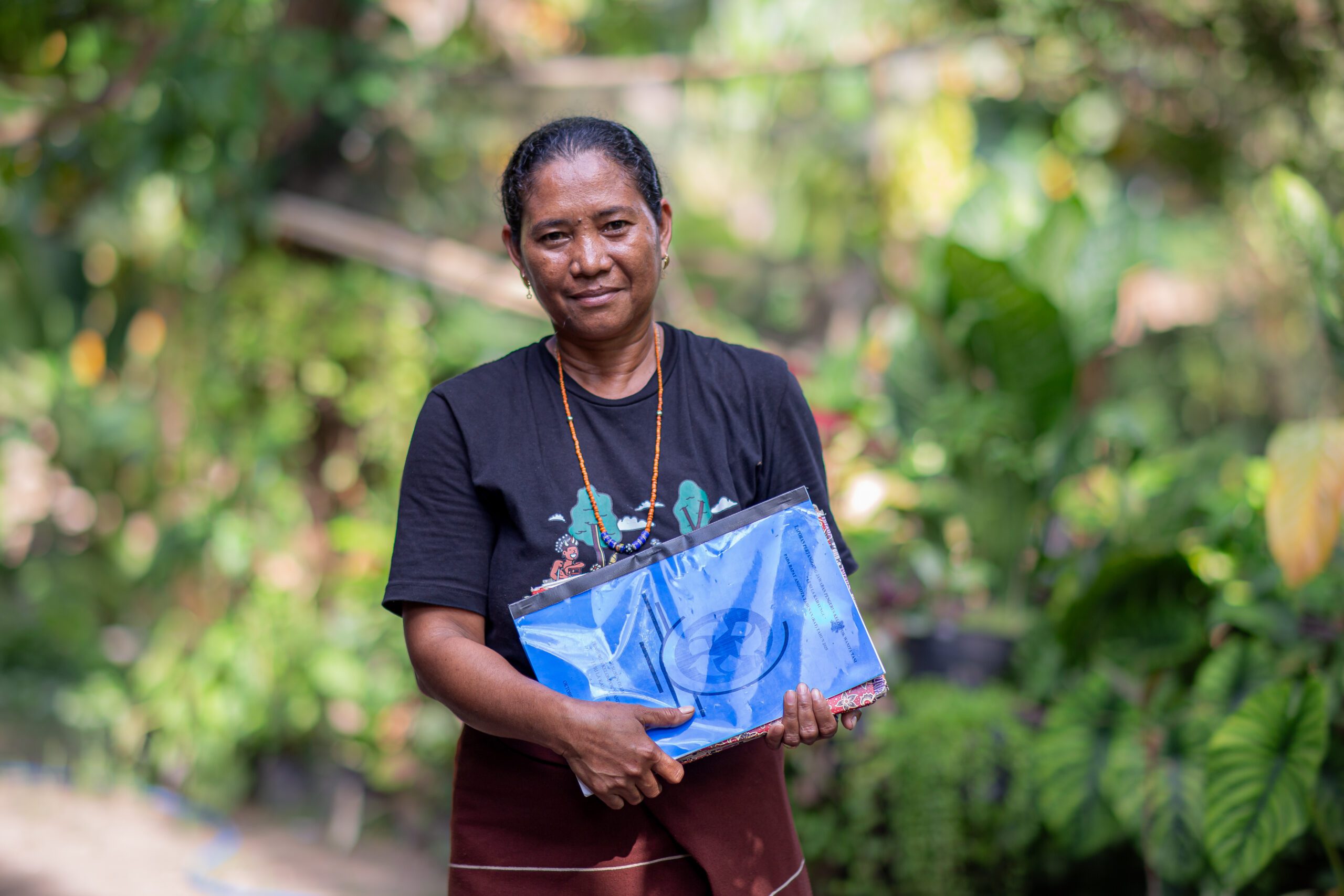
“To be honest, I wasn’t used to speaking. Even just seeing people made me nervous,” said Wilhelmina, a member of the Mbatakapidu Women’s Forum. She recalled how women in the village had long been accustomed to staying in the kitchen and caring for children, while men were more often the ones speaking on community matters.
Slowly, that began to change.
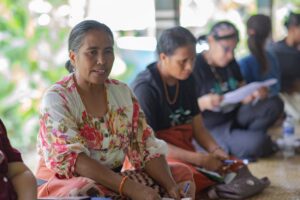
With support from Lembaga Bumi Lestari (LBL), an INKLUSI partner in East Sumba, women in Mbatakapidu were given space to gather, discuss, and talk about their own needs. A Women’s Forum was then established, bringing together 15 members from five hamlets across the village.
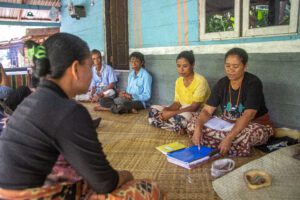
Having a dedicated space matters because being present at a meeting does not always mean having an equal opportunity to speak. According to LBL facilitators, in mixed meetings of men and women, only certain women would usually feel confident enough to voice their views. But when women met in their own forum, the dynamic was different. They became more active in discussions, identified their needs, and decided what issues they wanted to advocate for.
“What we are trying to encourage is for women to have the confidence to speak up and advocate for what they need,” said Fernandus Pala Amah, LBL Program Coordinator.
For members of the forum, the change has been tangible.
“We are no longer only taking care of things in the background. We have to step forward and speak, to express what we feel and what we need as women,” said Naomi, one of the forum’s committee members.
Women’s Voices in Village Planning
The Women’s Forum also gives members a space to prepare before taking part in broader village development discussions. They discuss proposals together, agree on priorities, and select representatives to present them at the Musyawarah Perencanaan Pembangunan, or Musrenbang, Indonesia’s participatory development planning forum.
Women had already been involved in Musrenbang through groups such as the PKK family welfare movement and through women community leaders. The Women’s Forum, however, created a group specifically focused on discussing and bringing forward women’s priorities. In addition to participating in the Village Musrenbang, they also have a dedicated Women’s Musrenbang where they can first formulate their shared needs.
Some of these proposals have already led to concrete results. These include vegetable and onion seeds for horticulture groups, as well as yarn for weaving groups. Proposals submitted in 2024 were realised in 2025.
The women have also raised needs closely connected to everyday life. As Posyandu community health volunteers, for example, they proposed tables, stationery, weighing scales, and other equipment to support health services. The proposals were accepted and the equipment was provided.
But not everything they advocate for comes in the form of material assistance.
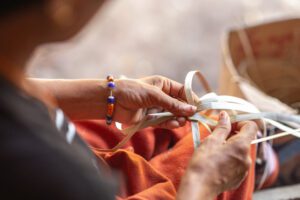
Through Musrenbang, the women have also raised concerns about electricity and telecommunications access. Both directly affect their economic activities. Without electricity, the time available for weaving is limited. Without reliable connectivity, it is harder to market handicrafts and communicate with potential buyers.
Women who grow vegetables face similar challenges. They explained that produce often has to be transported some distance to be sold. The longer the journey, the greater the risk that vegetables will wilt before reaching buyers. With better communications access, they hope to find buyers more easily and arrange deliveries more efficiently.
Women’s involvement has also expanded beyond village planning forums. With support from LBL, they have helped residents complete civil registration documents, including birth certificates, national identity cards and family cards, while liaising with the village government and the Civil Registration and Population Office. These experiences have helped them better understand public services and become more confident in helping residents navigate them.
Change is also being felt at home.
After taking part in discussions on gender equality, the women brought those conversations back to their families. Gradually, tasks that had previously been seen as women’s responsibilities began to be shared. Some husbands now fetch water, help with household chores, or take care of their own needs. Wilhelmina said that the flowers in her yard were, in fact, planted by her husband.
For these women, the change is not about reversing the roles of women and men.
“It doesn’t mean bringing husbands down. No. It is about being a little more equal. If a husband can speak, then a wife can speak too,” Naomi said.
There is still a long way to go. Not every proposal raised through Musrenbang has been fulfilled. Women in Mbatakapidu still hope to expand their businesses, strengthen their skills, gain access to production equipment, and reach wider markets for their farm produce and handicrafts.
But something fundamental has taken root: the ability to identify their own needs, discuss them collectively, and advocate for them.