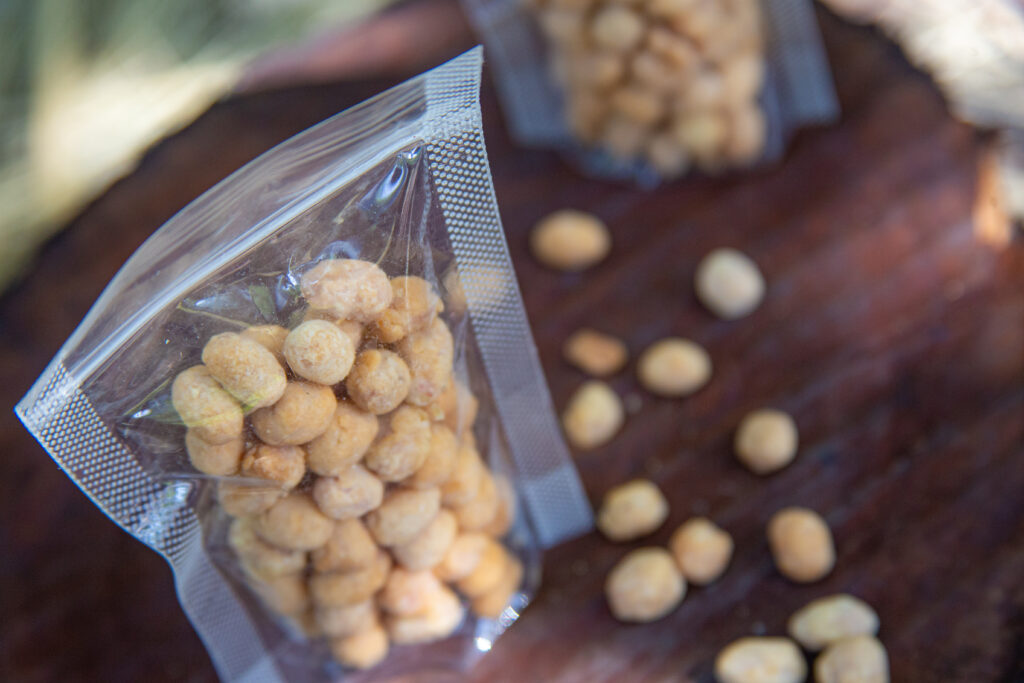


A day before their monthly meeting, members of the Usaha Bersama Simpan Pinjam (UBSP) community savings and loan group in Kalamba Village, East Sumba, gather at the home of the group’s chairperson or treasurer. Together, they fry peanuts, coat them with flour and eggs, and package the resulting kacang telur snacks for sale at schools and within the surrounding community.
The business is financed through the group’s collective funds. Rather than being distributed among the members, the profits are returned to the fund, increasing the amount available for members to borrow.
For the women of Kalamba, UBSP is more than a place to save money. The group provides a vital safety net when a child needs a school uniform, a family needs to buy rice, a member becomes ill, or someone requires capital to purchase seeds.
Lota Lapuraeng has also come to understand these benefits. He attended a group meeting on behalf of his wife, Ance Kareridema, who had recently given birth. When Ance first wanted to join UBSP, however, Lota tried to discourage her.
“I asked her, ‘What is the point of joining the group?’ But she said it was good to be part of UBSP because we could borrow money whenever we needed it. Now I understand its benefits,” Lota said.
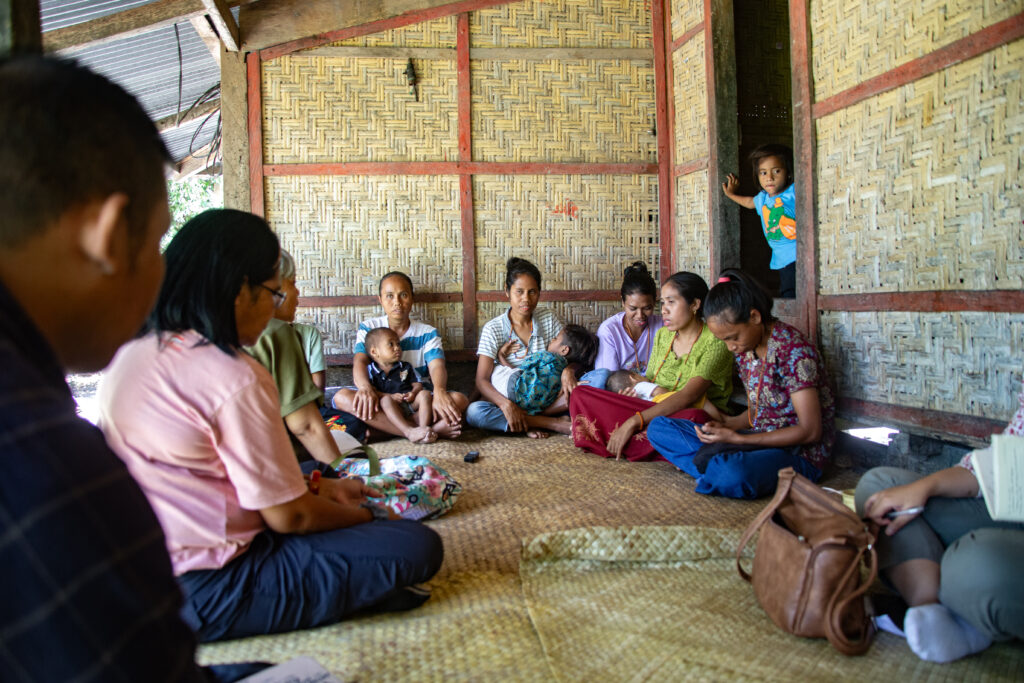
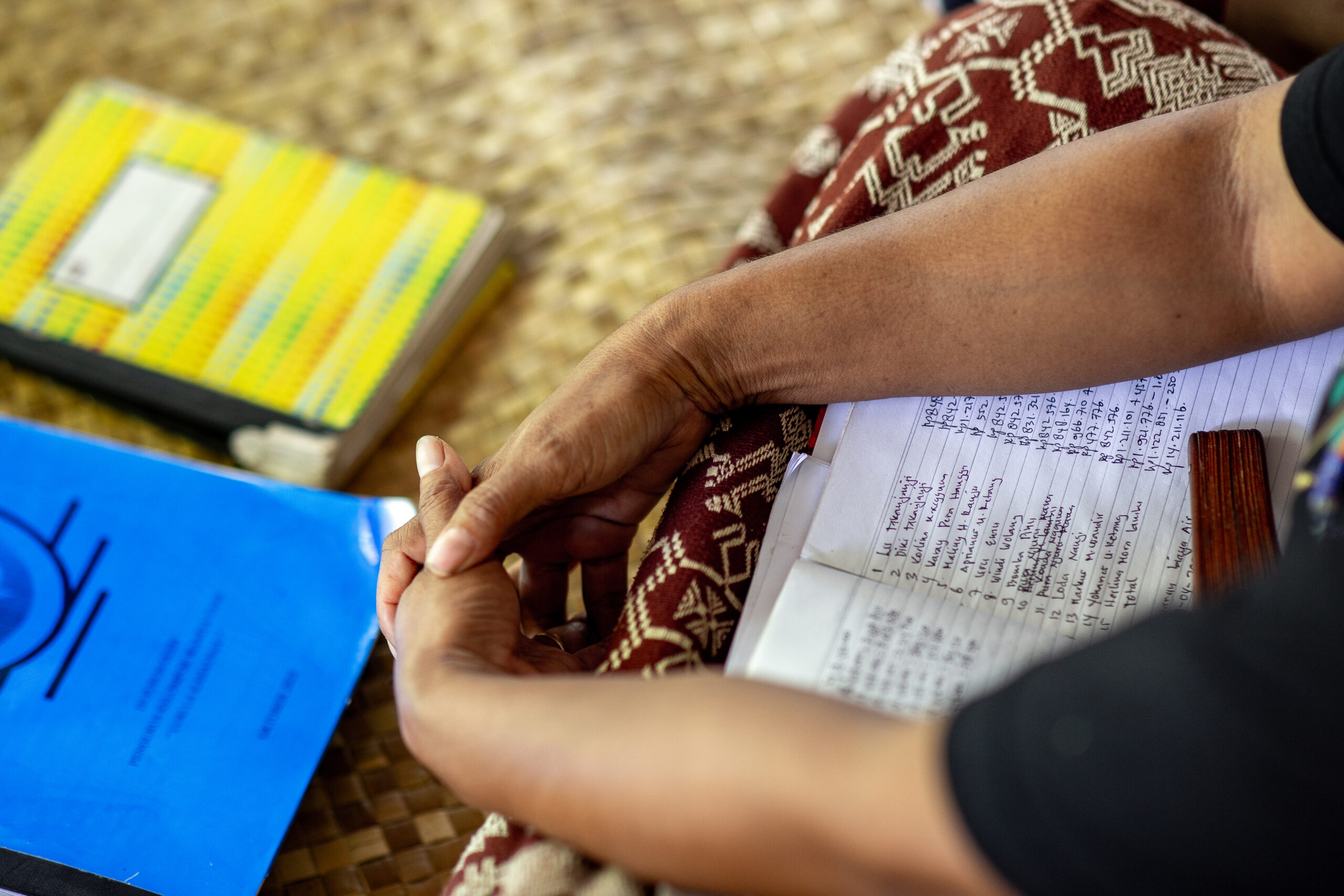
Kelompok di Kalamba beranggotakan 13 perempuan. Dengan iuran Rp5.000 per bulan, aset mereka telah tumbuh menjadi lebih dari Rp7 juta—jumlah yang kecil bagi lembaga keuangan formal, namun sangat berarti bagi keluarga yang membutuhkan dana cepat dengan persyaratan ringan.
Sebelumnya, warga harus menunggu penghasilan, menjual ayam atau tikar, atau meminjam dengan bunga tinggi untuk memenuhi kebutuhan mendesak. Kini, uang yang berputar berasal dari simpanan mereka sendiri.
UBSP Menjawab Kebutuhan, Memperbaiki Jalan
Manfaat serupa dirasakan warga Desa Mbatakapidu. UBSP di desa ini dirintis sejak 2010 dengan iuran awal Rp1.000 per bulan. Setelah setahun, tabungan itu menjadi simpanan pokok. Anggota kemudian melanjutkan simpanan wajib sebesar Rp5.000 setiap bulan.
Lembaga Bumi Lestari (LBL), mitra lokal KEMITRAAN yang didukung program INKLUSI, mendampingi kelompok ini memperkuat tata Kelola sehingga aturan peminjaman, jadwal pengembalian, pencatatan keuangan, rapat anggota, dan pembagian sisa hasil usaha menjadi lebih tertib.
Pinjaman digunakan untuk biaya pendidikan, pengobatan, perbaikan rumah, pembelian ternak, dan usaha produktif. Besarnya disesuaikan dengan simpanan serta kemampuan anggota mengembalikannya.
“Kalau anak perlu uang sekolah atau ada keluarga yang sakit, kami tidak harus langsung mencari pinjaman ke luar. Uang yang kami kumpulkan bisa dipakai, lalu dikembalikan supaya anggota lain juga bisa meminjam,” ujar Korlina Kondangguna, kader di Mbatakapidu.
Manfaat UBSP bahkan melampaui kebutuhan rumah tangga. Sebagian sisa hasil usaha digunakan untuk membeli semen dan bahan lain guna memperbaiki jalan desa yang sebelumnya sulit dilalui dan rawan kecelakaan.
“Dana desa ada, tetapi wilayah kami luas dan berupa perbukitan. Jadi, kami mulai dulu dengan kemampuan kelompok. Kami beli bahan untuk jalan supaya kendaraan bisa lewat lebih aman,” kata Korlina.
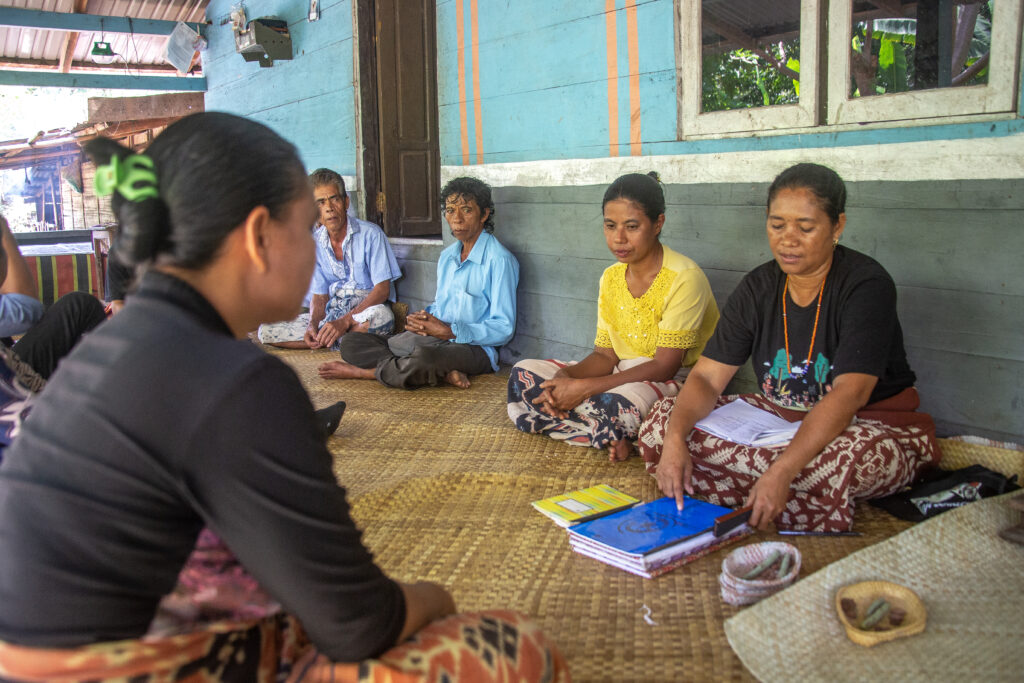
This community-led initiative later received support from the village government to continue surfacing the road. The group has also developed education and health savings schemes so that urgent needs do not always result in high-interest debt. In addition to savings and loans, residents run weaving, vegetable-growing and chicken-rearing businesses. However, limited electricity and internet access continue to restrict their development.
“The weaving material dries out quickly during the day, so we weave at night. But we do not have electricity and still rely on kerosene lamps. We can already sell the products, but without an internet connection, it is difficult to market them more widely,” Korlina said.
Change Begins at Home
LBL’s support has also opened discussions about sharing responsibilities within the family. B. Tuohangara acknowledged that most domestic work was previously placed on women’s shoulders.
“In the past, the mothers did most of the work. We fathers would simply ask for coffee without caring whether there was any coffee available or what the women were already doing,” he said.
Gradually, men have begun to understand that domestic work and childcare are shared responsibilities. They have also recognised that women often have a better understanding of household needs, from food supplies to children’s education expenses.
“We have now begun to realise this ourselves. The mothers actually understand household financial management better. Decisions therefore also need to be discussed together,” said Tuongahara.
Korlina has seen more men begin to cook and care for their children. She said the changes are also becoming visible in customary and public spaces, where women’s voices were previously often overlooked.
“Women used to work harder while the men simply asked for coffee. Things are better now. Men also cook, and fathers take part in caring for the children,” she said.
The sustainability of the groups remains a challenge. Of the 27 UBSP groups once operating in Mbatakapidu, only around seven or eight remain active. Group leaders are now considering how to involve young people and prepare a new generation to continue their work.
“We cannot keep managing the groups until we die,” Korlina said. “Young people need to start getting involved so there will be someone to carry the work forward.”