
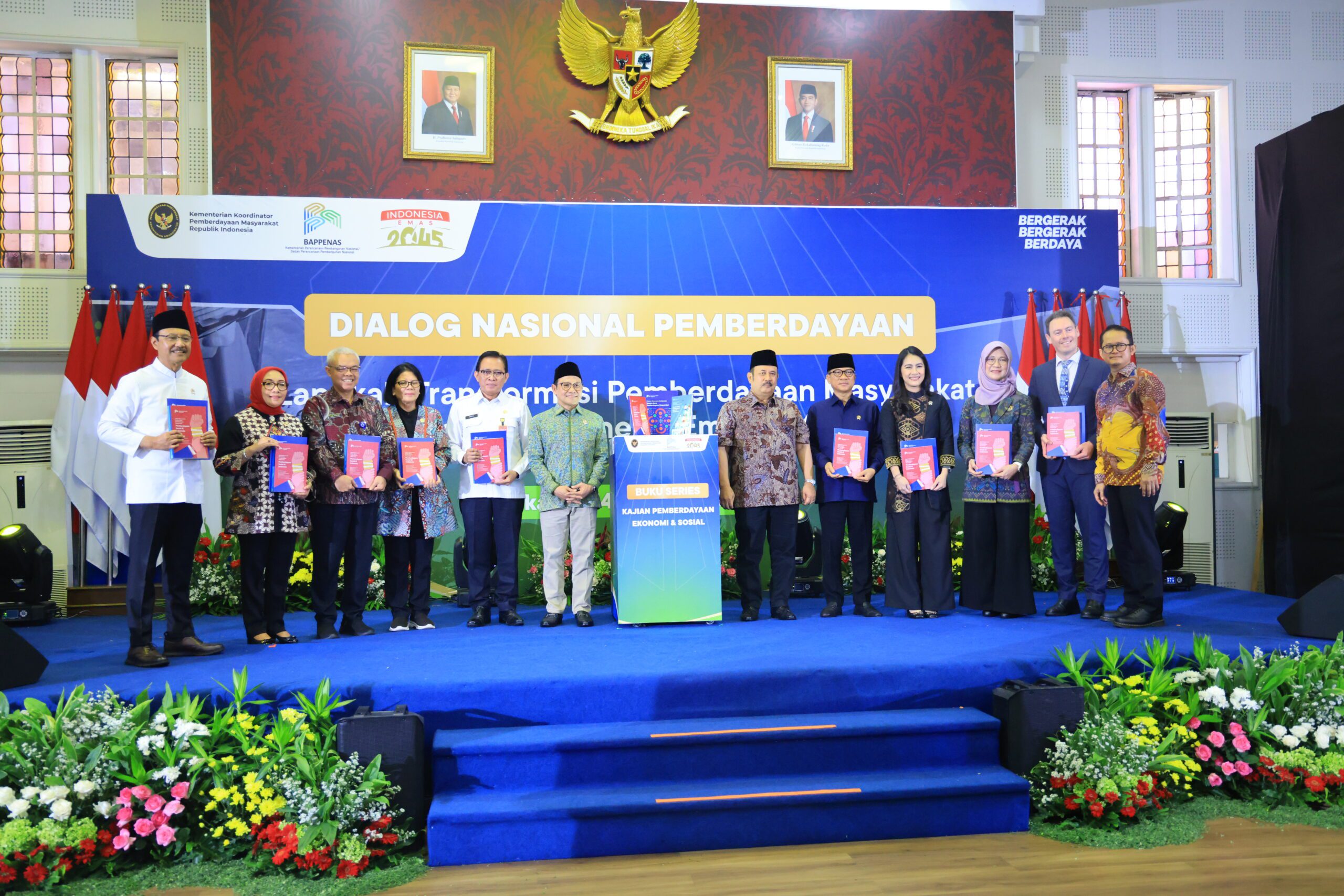
Jakarta, 14 October 2026 – The Ministry of National Development Planning/Bappenas and the Coordinating Ministry for Community Empowerment launched three publications developed with support from the INKLUSI Program at the National Dialogue on Empowerment in Jakarta.
The publications will inform Indonesia’s Community Empowerment Master Plan, with particular attention to the needs of people living in poverty, marginalised communities and vulnerable families.
The dialogue also marked the start of work on a national framework to align community empowerment policies and programs. The framework is expected to clarify institutional roles and strengthen coordination across sectors, giving programs a clearer direction. Its aim is to enable vulnerable individuals, families and communities to meet their basic needs independently and sustainably.
The dialogue was also attended by Minister of Social Affairs Saifullah Yusuf, Minister of Villages and Development of Disadvantaged Regions Yandri Susanto, and Deputy Minister of Population and Family Development Ratu Isyana Bagoes Oka.
Tim Stapleton, Minister-Counsellor for Economic, Investment and Infrastructure at Australia’s Department of Foreign Affairs and Trade (DFAT), also attended and expressed support for the Community Empowerment Master Plan.
Minister of National Development Planning/Head of Bappenas Rachmat Pambudy emphasised that developing the master plan requires collaboration to embed community empowerment in the national development strategy.
“We must ensure that the Community Development Master Plan can be implemented through collaboration, so that the transformation of community empowerment can become part of our national development strategy,” he said.
Coordinating Minister for Community Empowerment Muhaimin Iskandar similarly highlighted the importance of empowerment in strengthening economic independence. He explained that the program aims to help working-age people living in poverty build their capabilities and improve their wellbeing sustainably.
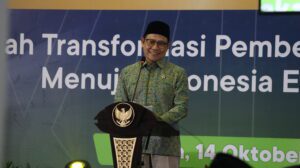
“Through this community empowerment program, we want to support people living in poverty who are of working age, in sufficiently good health and have opportunities for a better future to become productive and independent,” Muhaimin said.
Developing the master plan also creates an opportunity to integrate gender and social inclusion perspectives into development planning.
Minister of Women’s Empowerment and Child Protection Arifatul Choiri Fauzi emphasised that both perspectives should be incorporated into community empowerment policy.
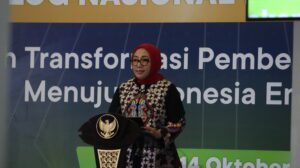
“We recognise that developing the Community Empowerment Master Plan offers an opportunity to strengthen the integration of gender and social inclusion perspectives into development planning,” she said.
INKLUSI’s Contribution through Research and Lessons from the Field
The three publications address complementary aspects of the Community Empowerment Master Plan.
Policy Overview for the Community Empowerment Master Plan maps policy directions, empowerment pillars, enabling factors and intended milestones.
Study to Inform the Community Empowerment Master Plan: Social Empowerment in Indonesia examines challenges and recommendations for marginalised groups, vulnerable families, disaster-prone communities, young people and Indigenous communities.
Meanwhile, Study to Inform the Community Empowerment Master Plan: Standardisation of Economic Empowerment in Indonesia explores improvements to economic empowerment programs. It focuses on increasing incomes among people living in poverty and extreme poverty.
Alongside its support for the publications, INKLUSI contributes to the master plan through monitoring and evaluation, stakeholder discussions and the collection of lessons from the field.
This process aims to identify achievements and barriers in implementing social empowerment programs, particularly for vulnerable groups. The lessons gathered will inform policy recommendations that better reflect community needs.
Through these contributions, INKLUSI supports the development of empowerment policies that respond to diverse needs. This collaboration seeks to expand access to services and opportunities for groups facing barriers to benefiting from development.