

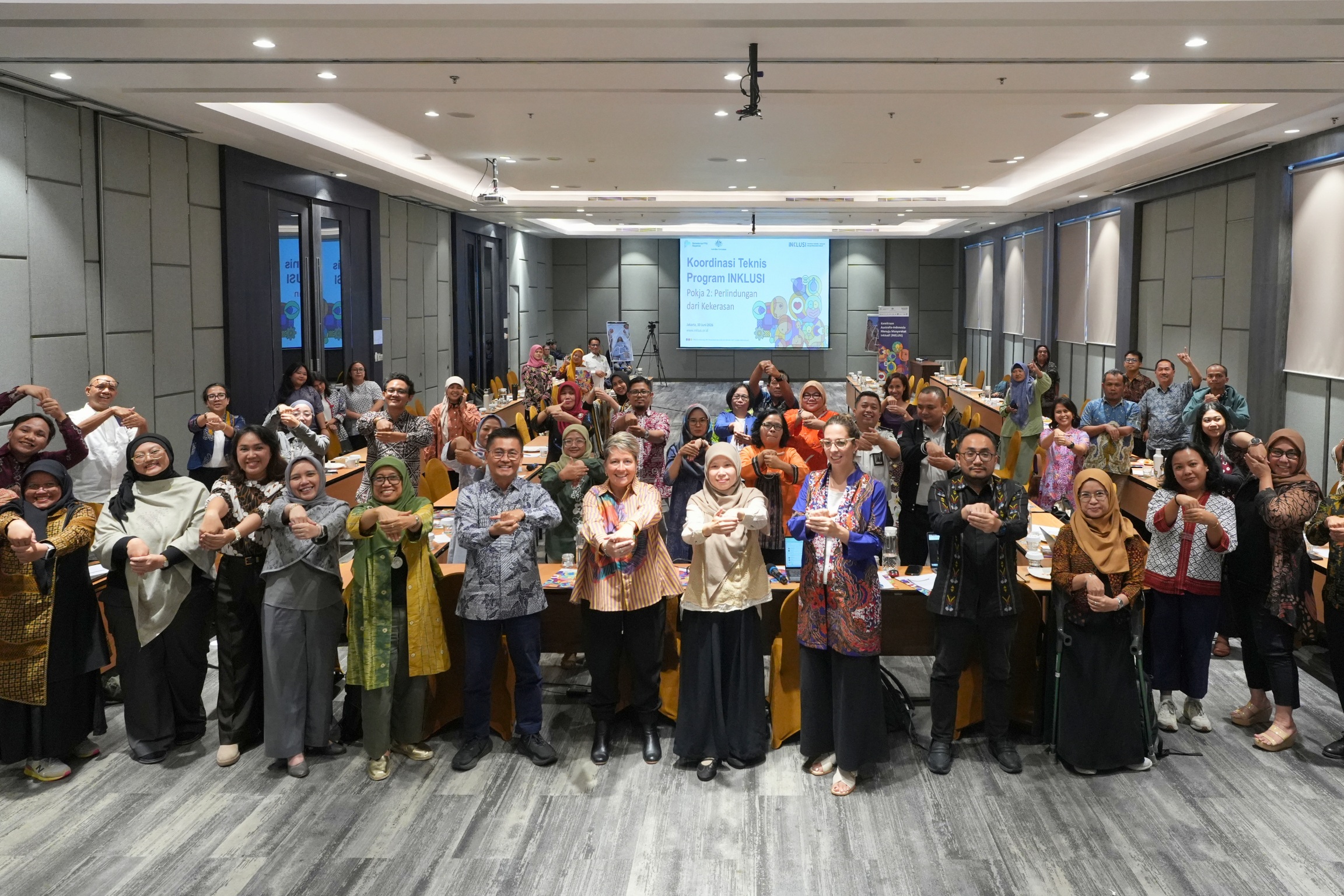
The Australia–Indonesia Partnership Towards an Inclusive Society (INKLUSI), in partnership with Indonesia’s Ministry of National Development Planning (BAPPENAS), convened the Technical Working Group (TWG) Coordination Meeting on 30 June–1 July 2026 in Jakarta. Bringing together representatives from government institutions and civil society organisations, the meeting focused on strengthening collaboration and aligning priorities for Phase II of the INKLUSI Program (2026–2029).
The forum provided an opportunity for BAPPENAS, government ministries and agencies, and INKLUSI partners to review achievements, identify strategic priorities, and ensure the next phase of the program is aligned with Indonesia’s National Medium-Term Development Plan (RPJMN).
The success of the INKLUSI Program is built on collaboration between government, civil society organisations and development partners. As the program enters Phase II, this partnership will be critical to expanding successful approaches, strengthening good practices, and ensuring the program continues to contribute to Indonesia’s national development priorities and the Sustainable Development Goals (SDGs).
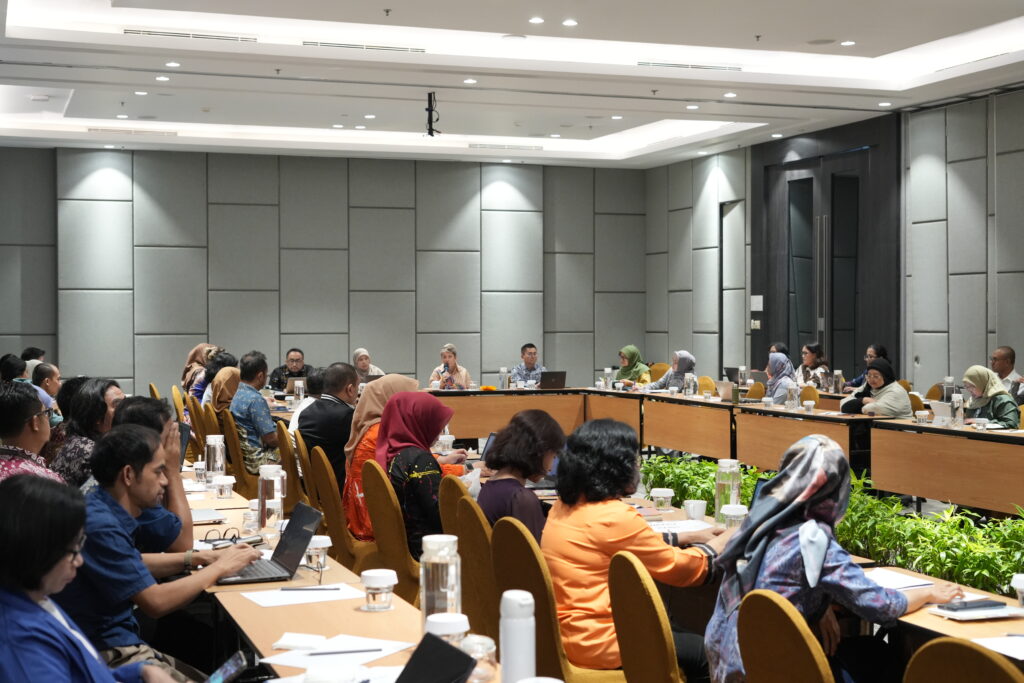
Technical coordination within INKLUSI is carried out through four TWGs, reflecting the program’s four thematic priorities: Access to Services; Protection from Violence; Economic Recovery and Livelihoods; and Inclusive Participation in Development. These Working Groups provide a platform for government institutions and INKLUSI partners to exchange updates, address implementation challenges, and identify opportunities for collaboration at both national and subnational levels.
Tirta Sutedjo, Director of Poverty Alleviation and Social Welfare at BAPPENAS and Chair of TWG 1, recognised INKLUSI’s contribution to expanding access to essential services, advancing the rights of persons with disabilities, and promoting gender equality and social inclusion.
“INKLUSI plays a strategic role in supporting Indonesia’s national development agenda as well as the Sustainable Development Goals, which the Government of Indonesia is committed to achieving,” said Tirta.
She noted that the program has reached 32 provinces, more than 100 districts, and over 600 villages. The experience gained through this work, she said, provides valuable lessons that can inform policies and practical models for replication across Indonesia.
“We hope the program will leave a lasting legacy through models and good practices that can be adopted nationally,” she added.
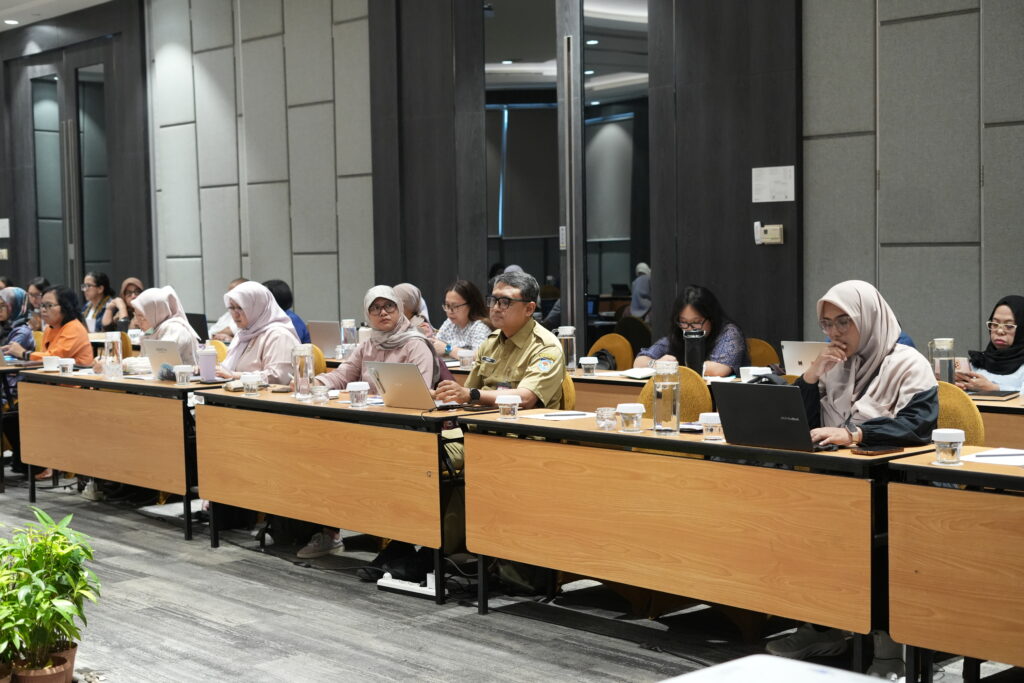
Tirta also highlighted the role of the TWGs in monitoring how INKLUSI contributes to national development priorities while strengthening alignment with government initiatives funded through national and subnational budgets. This coordination, he said, is essential to ensuring the program continues to improve the wellbeing of marginalised communities.
Held twice each year, the TWG meetings also provide an opportunity for INKLUSI partners to share lessons learned and good practices developed together with communities and local governments. Feedback from participating ministries and agencies will help refine Phase II implementation, ensuring the program remains relevant, effective and sustainable.
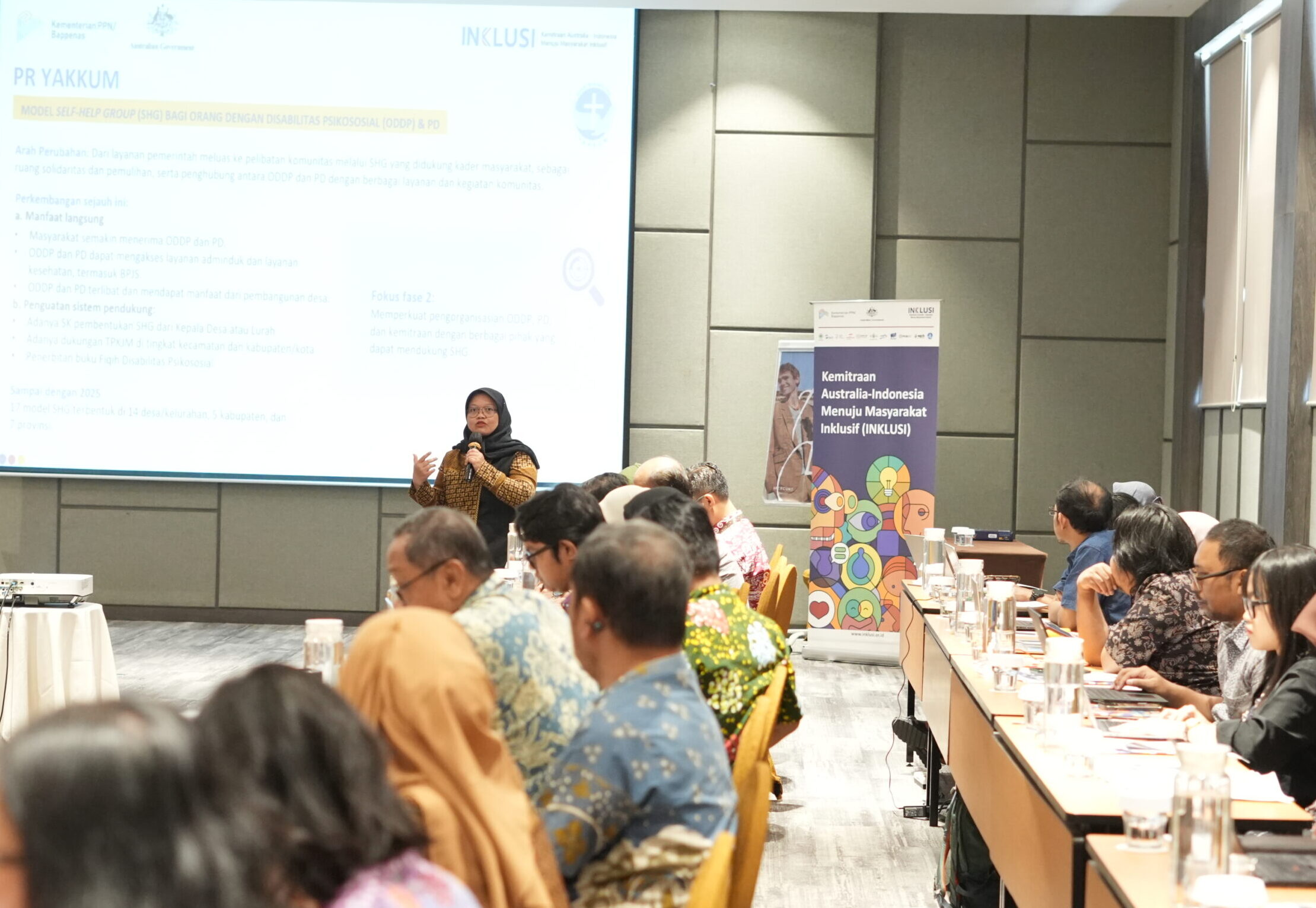
TWG Coordination Meeting: Scaling Good Practices for Sustainable Impact
Discussions during the meeting focused on strengthening the models and approaches developed by INKLUSI partners across a range of thematic areas. Participants highlighted the importance of community-led approaches, responsive services, and stronger support systems built through collaboration with government and other stakeholders.
The experiences shared by INKLUSI partners demonstrated how locally driven initiatives can strengthen access to services, protection, livelihoods and opportunities for participation among marginalised groups. These approaches are important not only for reaching more people, but also for delivering meaningful and sustainable change.
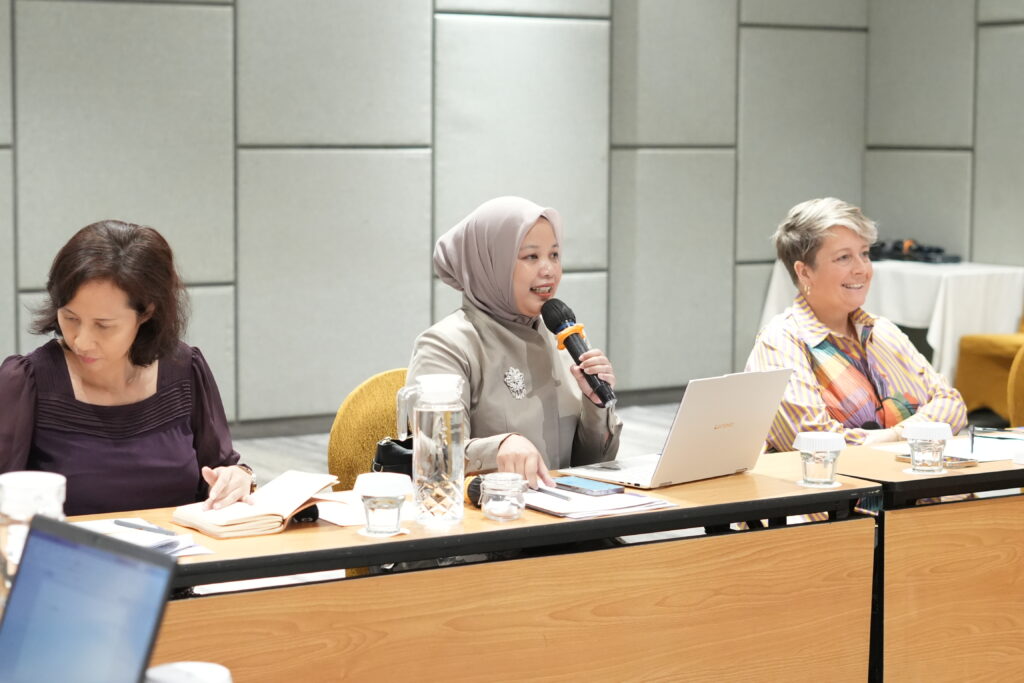
Dwi Rahayuningsih, Head of the Disability, Older Persons and Care Economy Inclusivity Team under the Deputy for Poverty Alleviation and Social Welfare at BAPPENAS, said the collaboration between INKLUSI, partners and communities has generated valuable lessons that should continue to be expanded.
“The INKLUSI Program has produced many inspiring examples. Going forward, these initiatives should continue to be strengthened and expanded,” she said.
The meeting also explored several cross-sector challenges that require continued collaboration. These included strengthening services for the children of Indonesian migrant workers, both those left behind in Indonesia and those born overseas; integrating gender equality, disability and social inclusion (GEDSI) perspectives into community-based services such as Posyandu; and improving coordination between national and local governments to strengthen the delivery of essential services.
Participants also emphasised that successful community-based initiatives should not be reduced to overly prescriptive or top-down models. Good practices need to be understood within their local context, recognising community knowledge and clearly defined measures of success, so they can inspire adaptation in other regions while remaining responsive to local needs.
Mohammad Roudo, Director of Rural Development, Affirmative Regions and Transmigration at BAPPENAS, welcomed the progress achieved through INKLUSI. He emphasised that the next step is to strengthen the connection between national policy and local implementation so that more communities can benefit from the program.
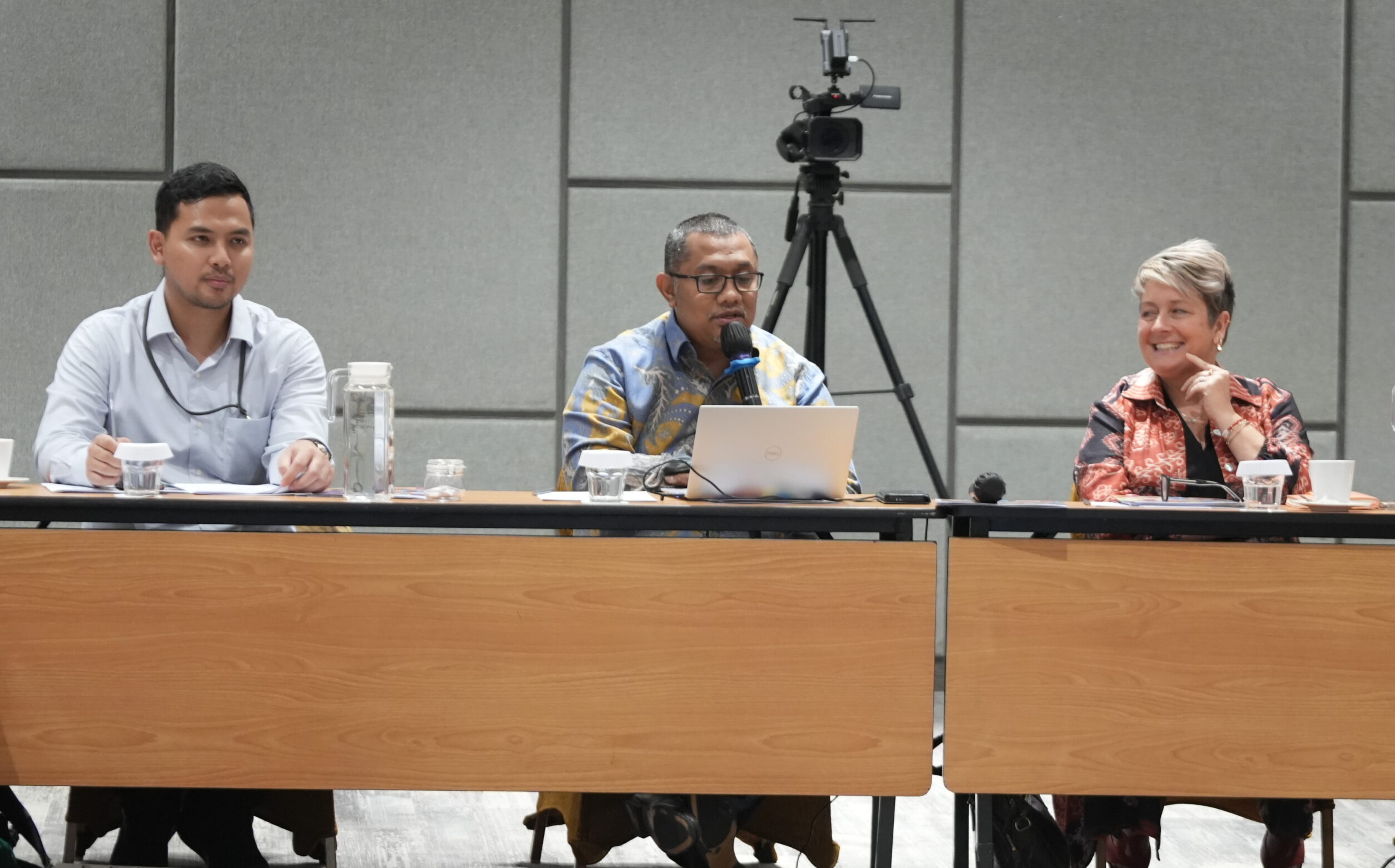
“The key is ensuring that national policies are translated into action that supports both Indonesia’s development priorities and the Sustainable Development Goals, while remaining responsive to community needs,” Roudo said. “Meaningful participation can only be built on strong communities.”
Looking ahead, Phase II of the INKLUSI Program will focus on five priorities: strengthening collaboration between INKLUSI, government and partner organisations; deepening partnerships across sectors; sustaining the impact of program investments; strengthening the capacity of local partners; and enhancing knowledge management and learning.
“Phase II of the INKLUSI Program will focus on collaboration, sustainability and learning, so that the good practices developed together with our partners can create broader and longer-lasting impact,” said Kate Shanahan, INKLUSI Team Leader.
Through this TWG Coordination Meeting, INKLUSI continues to strengthen partnerships across government, civil society and communities to advance gender equality, the rights of persons with disabilities, and social inclusion. By expanding good practices and strengthening collaboration, the program aims to support more inclusive and sustainable development that benefits marginalised groups across Indonesia.