

Jakarta, 10 December 2025 — Digital spaces have become an inseparable part of daily life, including in education, work, and communication. However, as technology continues to advance, risks such as online bullying, exploitation, misinformation, and gender-based violence are also increasing—particularly for women, girls, children, persons with disabilities, and other marginalised groups.
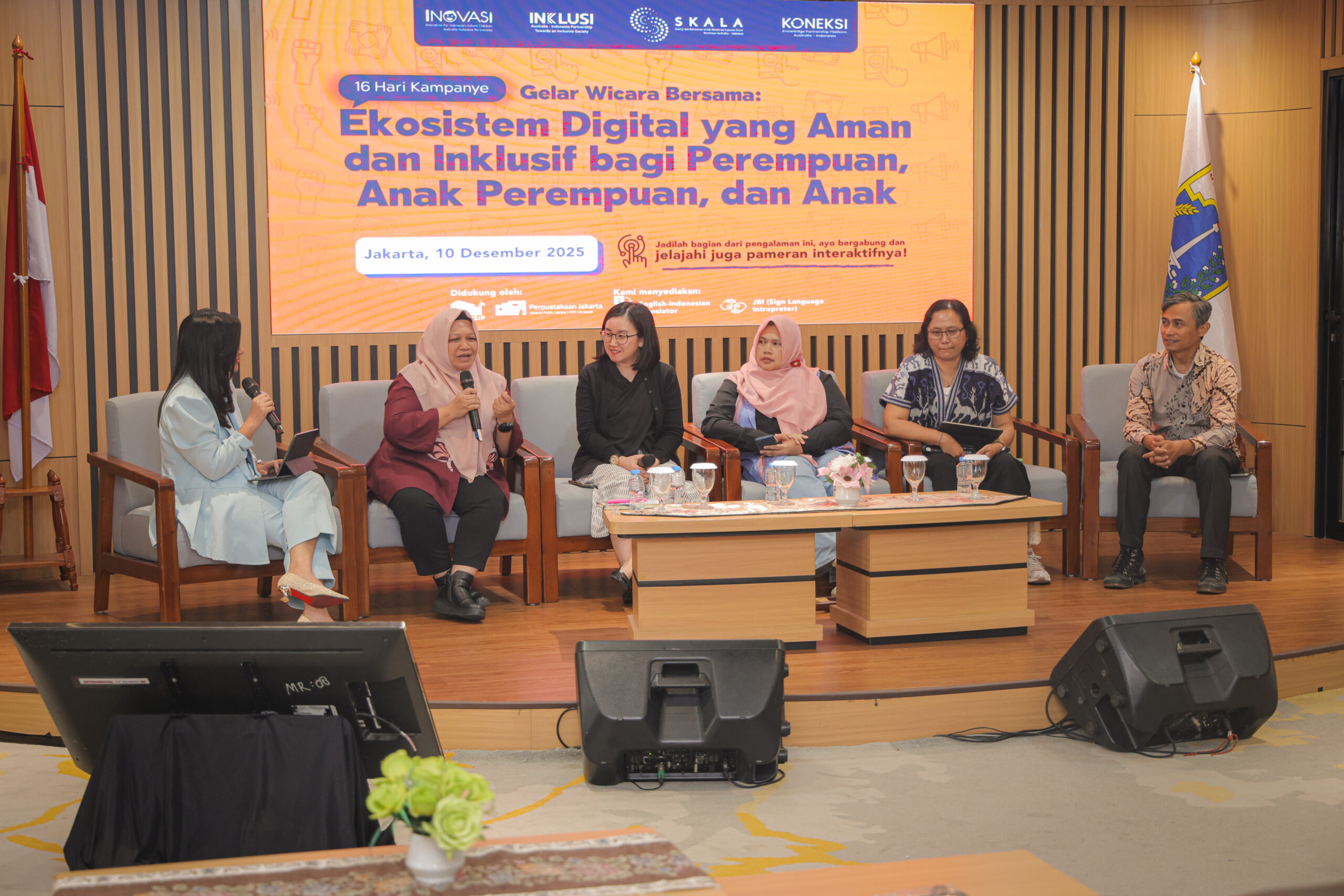
In response to these challenges, four programs under the Australia–Indonesia Partnership—INKLUSI, INOVASI, KONEKSI, and SKALA—held a public discussion titled “A Safe and Inclusive Digital Ecosystem for Women, Girls, and Children” at Taman Ismail Marzuki, Jakarta. The event marked the closing of the global 16 Days of Activism against Gender-Based Violence (25 November–10 December) and brought together representatives from government, civil society organisations, disability groups, education institutions, researchers, and development partners.
Maliki, Deputy for Community Empowerment, Population, and Employment at the Ministry of National Development Planning/Bappenas, emphasised that digital protection is a cross-sectoral issue.
“Violence against women and children is a challenge that cuts across sectors and stakeholders. That is why we must work together to encourage changes in behaviour and social norms, and to ensure equal opportunities for everyone,” he said in his opening remarks.
He also stressed that the government has strengthened regulations to create safer digital spaces, including through Law No. 35 of 2014 on Child Protection.
From the Australian side, Hannah Derwent, Acting Minister Counsellor for Governance and Human Development at the Australian Embassy in Jakarta, highlighted the importance of grounding policies in lived experience.
“The Australia–Indonesia Partnership has always focused on collaboration between communities, government, and civil society. This approach is built on the ability to listen—to teachers, young people, academics, communities, and disability advocates—so that digital inclusion can be realised in practice,” she said.
“By placing lived experience at the heart of policymaking, Indonesia and Australia can ensure that no one is left behind as digital technology continues to advance,” she added.
Challenges, Policies, and Protection Systems
The first panel discussion explored policy frameworks and protection systems for safeguarding vulnerable groups in digital spaces. Robby Kurniawan from the National Commission on Violence against Women (Komnas Perempuan) revealed a significant increase in reports of Online Gender-Based Violence (OGBV) over the past five years, reaching more than 1,000 cases.
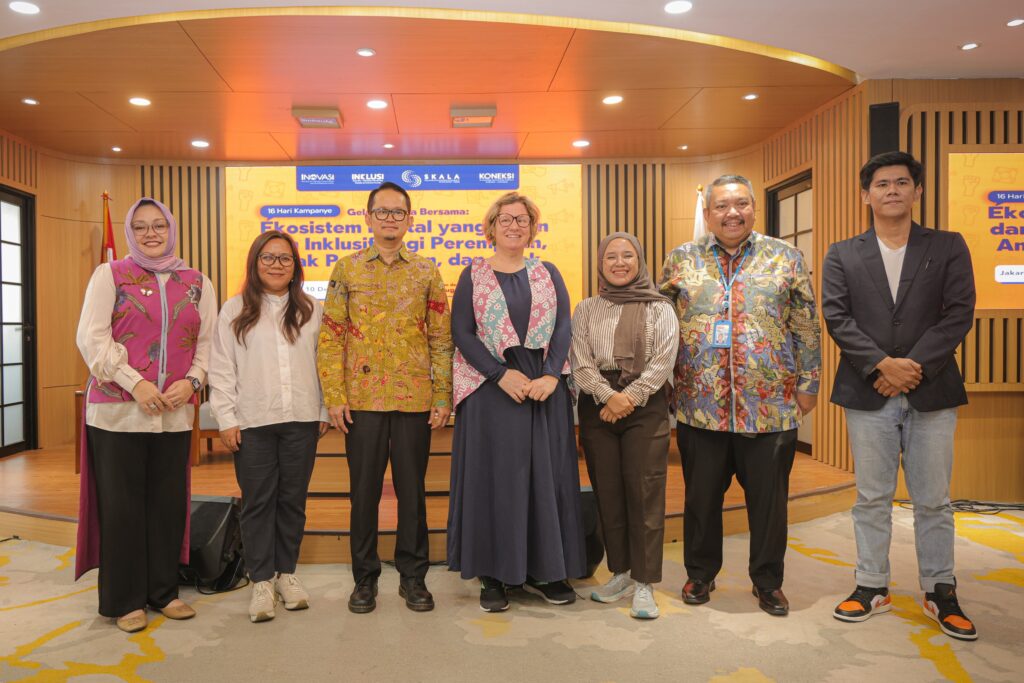
Nenden Sekar Arum from SAFEnet, a regional organisation advocating for digital rights, pointed out that digital violence has direct real-world consequences—ranging from sexual, psychological, to financial extortion. Syamsul Tarigan from UNDP Indonesia reinforced this perspective, noting that women politicians, women journalists, and human rights defenders are among the most vulnerable groups globally, including in high-income countries.
Mediodecci Lustarini from the Ministry of Communication and Digital Affairs explained that around 75 per cent of Indonesia’s 88 million children are already connected to the internet, even though most digital platforms were not designed with children in mind. She highlighted Government Regulation No. 17 of 2025 (PP TUNAS) as a key step to ensure age verification, platform accountability, and parental involvement.
Ciput Eka Purwianti from the Ministry of Women’s Empowerment and Child Protection added that, based on the 2024 national survey, approximately four per cent of children aged 13–17 have experienced non-contact online sexual violence. She also underscored that the proportion of boy victims is now equal to that of girls, signalling the need for broader public awareness and protection.
“Protective measures cannot rely on restrictions alone. We must also innovate to create healthy offline spaces for children to grow and develop,” Ciput said.
Community-Based Practices and Local Action
The second panel focused on good practices at the local and community levels. Rusovanny Halalutu from the Gorontalo Provincial Development Planning Agency (Bappeda) explained that the Provincial Government of Gorontalo has mainstreamed Gender Equality and Social Inclusion (GESI) into its Medium-Term Development Plan (RPJMD). The province has also established the Gorontalo Inclusive Dulohupa Forum as a platform for cross-sector collaboration.
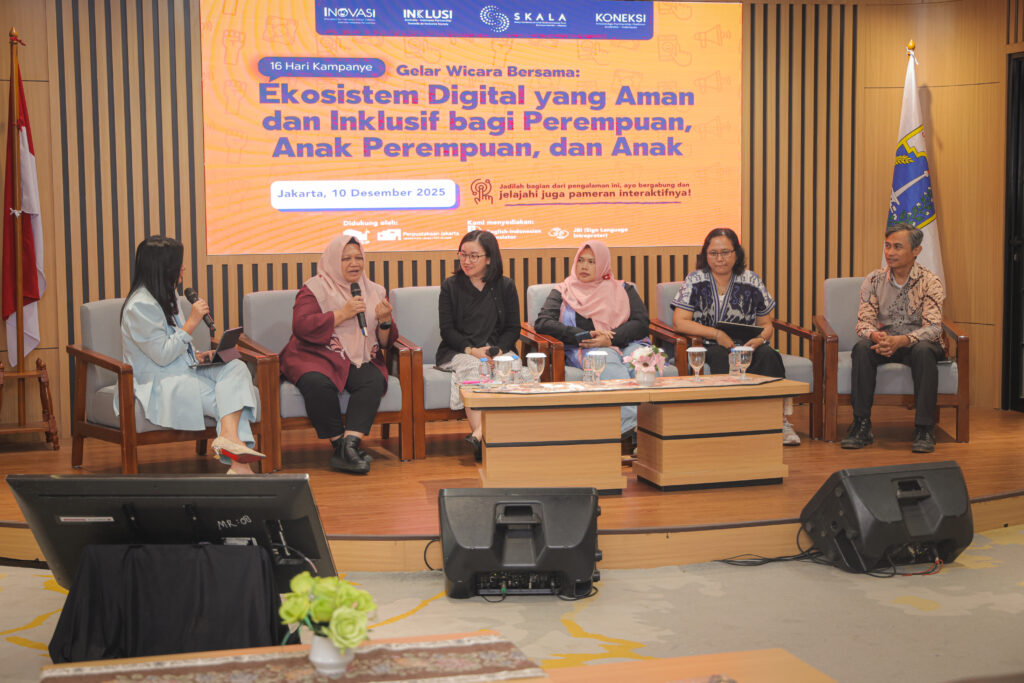
Emmy, a GESI Specialist from INOVASI, emphasised the importance of children’s emotional literacy—not only to protect them from becoming victims, but also to prevent them from becoming perpetrators of violence. From a disability perspective, Nurul Saadah Andriani from the Centre for Advocacy of Women, Persons with Disabilities, and Children (SAPDA) highlighted the critical role of families.
“Peer groups for parents are essential so they can learn from one another about how to raise and protect children from digital violence,” she explained.
Budhis Utami from INKLUSI partner KAPAL Perempuan added that strengthening community leadership through Women’s Schools helps women from the most marginalised communities confront inequality, including in digital spaces.
Meanwhile, Andy Ardian from ECPAT—a global network of civil society organisations working to end the sexual exploitation of children—warned that victim-blaming practices remain a major challenge in addressing online sexual violence.
“We must challenge the habit of blaming victims, both in society and among law enforcement,” he stressed.
Safeguarding Expo: From Information to Action
In addition to the panel discussions, participants also visited the Safeguarding Expo, which showcased good practices from the four partnership programs. One installation that drew particular attention was “Spot: Red Flag”—an interactive space designed to help visitors recognise early signs of uncomfortable, confusing, or risky situations, including in digital environments.
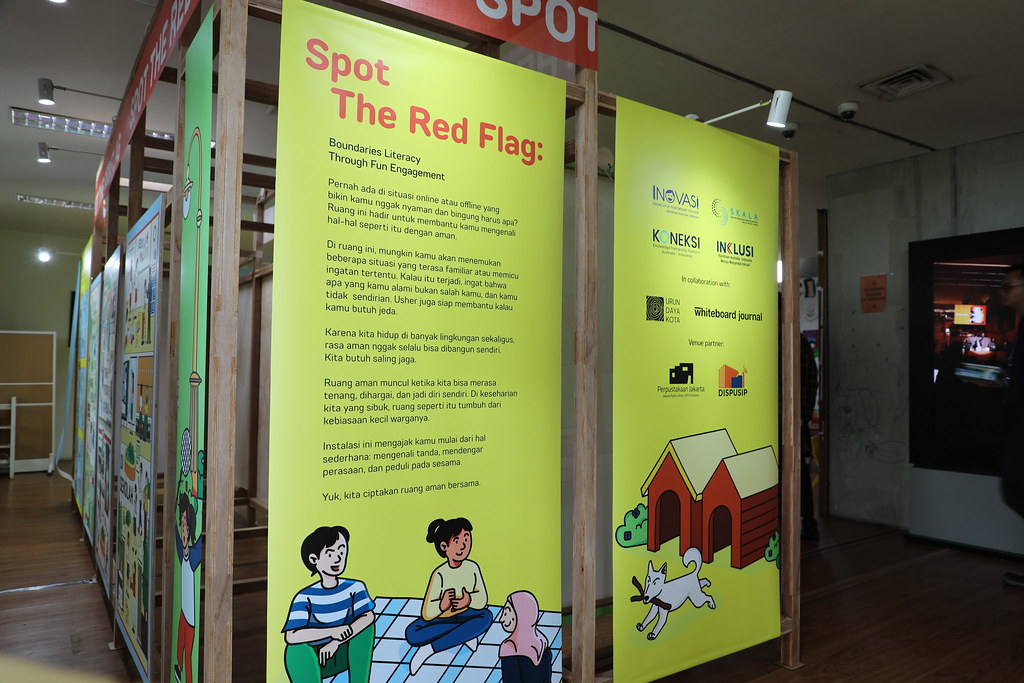
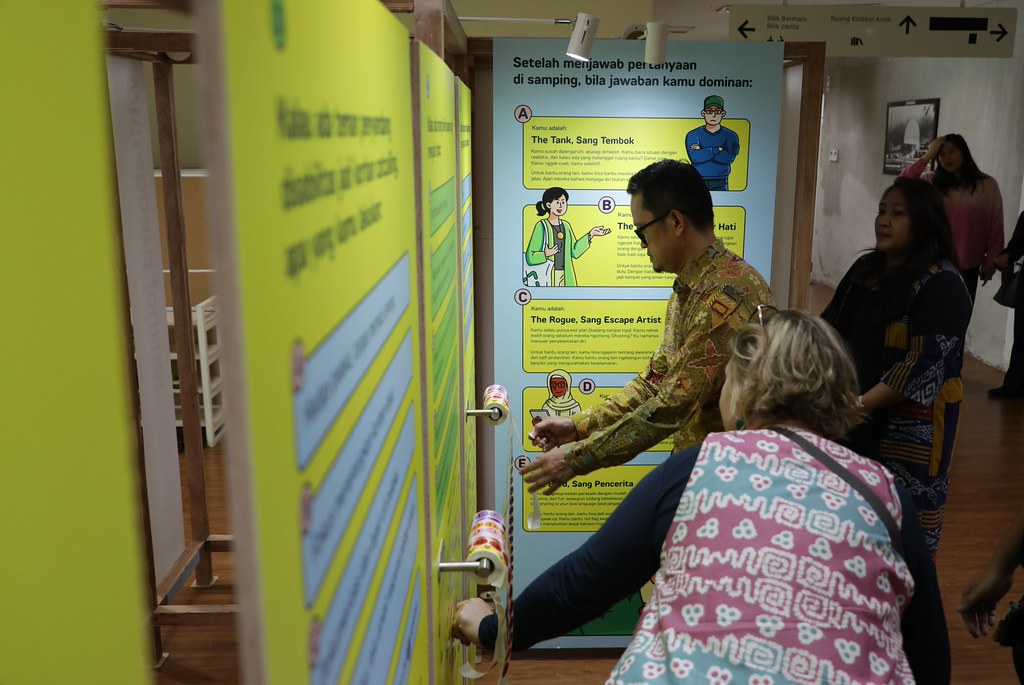
This approach aims to raise awareness and foster a culture of mutual care to prevent violence from occurring in the first place.
Overall, the public discussion and exhibition served as a shared learning space, reinforcing the message that digital safety is not solely about regulation and technology, but also about interconnected systems, norms, and everyday practices—from the national level to communities, and from online spaces to families.
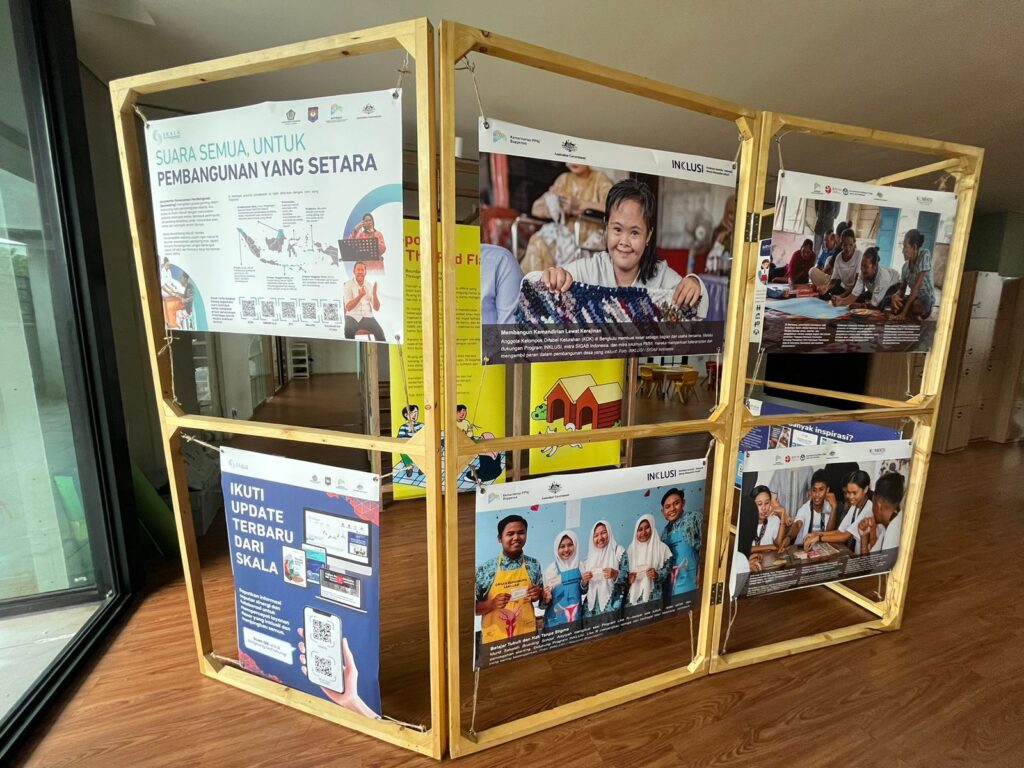
The four Australia–Indonesia Partnership programs demonstrated their complementary approaches:
- INKLUSI strengthens community-based protection systems and gender equality;
- INOVASI supports schools in promoting safe digital education;
- KONEKSI mobilises evidence and research to inform policy innovation; and
- SKALA supports inclusive basic service delivery in disadvantaged regions.
Through this collaboration, all stakeholders are reminded that a safe and inclusive digital ecosystem can only be achieved when the rights, voices, and dignity of women and children are truly placed at the centre of policies and actions.