

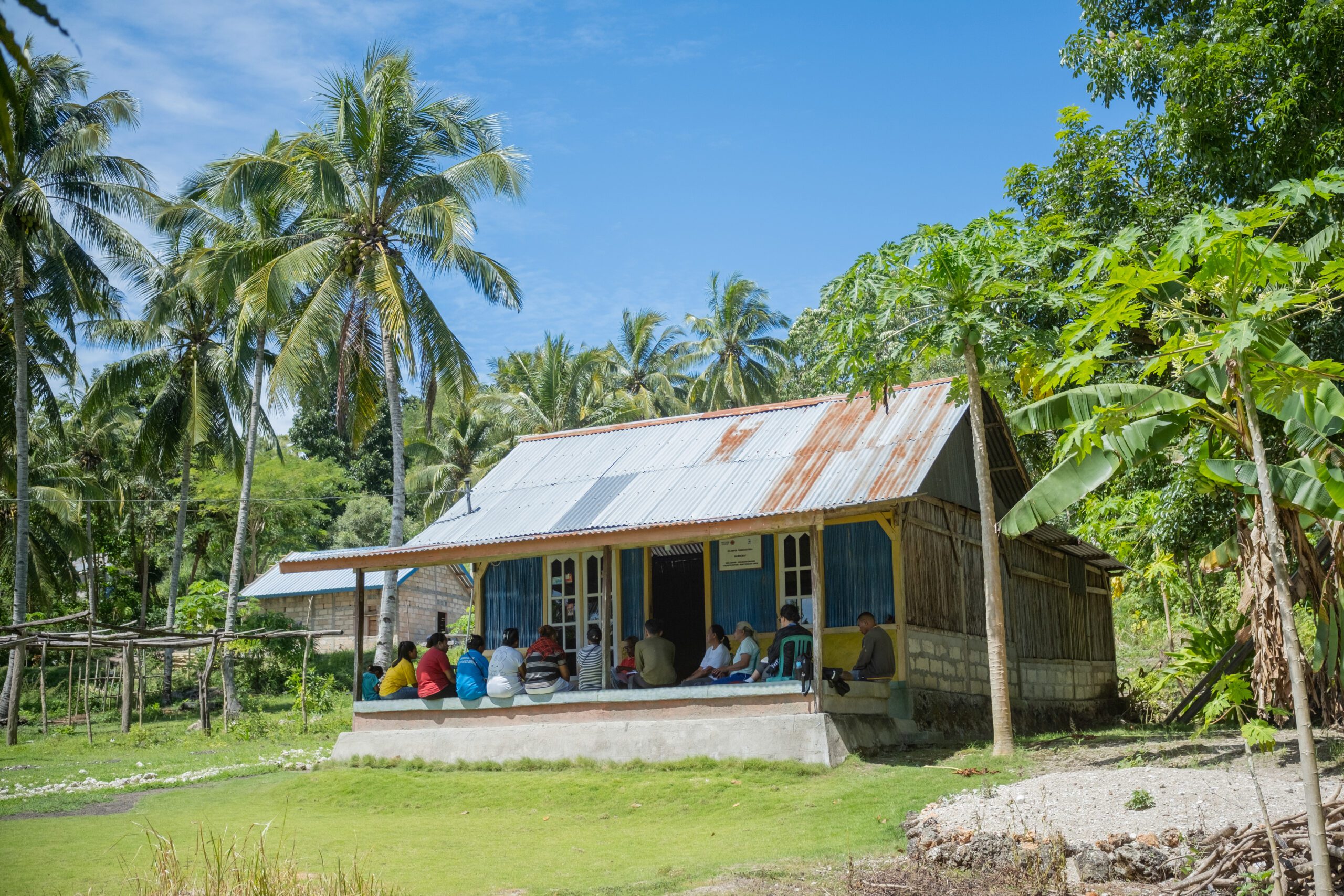
For residents of Oenoni I Village in Amarasi, Kupang District, accessing public services can mean travelling long distances at considerable cost. Processing civil registration documents, for example, can cost around Rp100,000 each way. For older people, persons with disabilities, and women heading households, the journey itself can become a significant barrier.
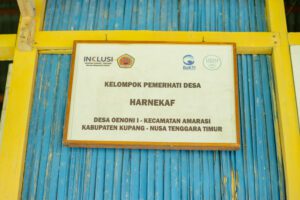
These are the kinds of challenges regularly encountered by the Oenoni I Village Community Group, or Kelompok Pemerhati Desa (KPD). Established in 2022 with support from Yayasan Ume Daya Nusantara (UDN), an INKLUSI partner in Kupang District, the group helps residents identify problems in their community and connect with the services and institutions that can respond.
KPD Oenoni I initially brought together 15 women heads of household. Through regular mentoring, members have learned how to navigate public services, respond to cases of violence, and explore livelihood opportunities.
The most important change, however, is not simply what they know. Members are increasingly confident about where to take community concerns and how to advocate for a response.
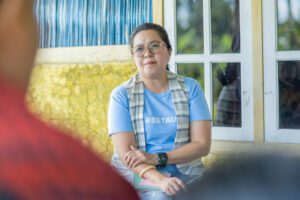
“KPD members are more confident now because the group is increasingly recognised alongside other community organisations such as Karang Taruna. They are more active in accessing services, raising community needs, and working with other groups and institutions,” said Ivonny Tallo of Yayasan UDN.
Bringing Services Within Reach
One example came in 2024, when UDN supported a participatory constituency meeting with local parliamentarians. The meeting was designed to enable groups who often face barriers to participating in public forums to speak directly about their needs.
“Older people were picked up so they could attend. Persons with disabilities were included, and problems with civil registration documents were also discussed,” said KPD member Vinsensia G. Lesu.
For KPD, this kind of approach matters because not everyone has the money, transport, information, or confidence to approach government offices independently. A service may formally exist, but that does not necessarily mean everyone can access it.
KPD members also play a connecting role in cases of violence against women and children. According to the group, reports come in almost every week. Since UDN began working with them in 2022, members have become more aware that some cases should not simply be mediated or treated as private family matters.
Survivors can now be referred to protection services, including the regional technical unit for the protection of women and children, known as UPTD PPA. Coordination with services outside the village has also improved, including access to protection vehicles to support survivors who need assistance.
“In the past, cases tended to be mediated or left alone. Now we understand when a case needs to be referred and when a survivor needs protection,” Vinsensia said.
Access is still far from seamless. In accompanying residents, KPD and UDN continue to encounter government offices and law enforcement services that are not fully accessible to persons with disabilities. Their experience shows that connecting people with services is only one part of the task; making sure those services work for everyone is another.
Finding New Options as Village Budgets Tighten
The concerns brought to KPD go beyond public services and cases of violence. Everyday livelihoods are another major issue.
In Oenoni I, income-generating options come with different constraints. Weaving requires substantial upfront capital, while the finished products are not affordable to every buyer. Raising cattle takes a long time before generating returns. Chickens, by contrast, are easier to manage and can help meet more immediate household needs, making poultry one option explored by women in the group.
Since 2023, village funding has supported vulnerable groups, including through economic empowerment activities. As village budgets have become tighter, however, members have had to think more creatively about opportunities that do not depend entirely on financial assistance.
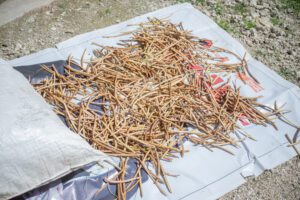
During mentoring sessions, ideas often start with what members see around them. They have discussed growing plants in polybags and organic vegetables for urban consumers. Ahead of Indonesia’s Independence Day celebrations, they considered selling chips and woven products. Other ideas include setting up their own stalls or partnering with others to market roasted corn snacks and banana chips.
“We need to look for our own business opportunities as village funds become more limited, and identify which ideas have the strongest potential,” said KPD member Helda F.S. Manafe.
Not every idea will immediately become a viable business. Capital, markets, equipment, and production capacity remain constraints. But the discussions themselves reflect a shift in how members approach economic challenges: rather than waiting for assistance, they are beginning to assess opportunities around them and consider what they can build together.
UDN continues to work with KPD around twice a month and involves members in activities across its partner villages. According to Ivonny Tallo, the group is increasingly recognised as part of village life, alongside other community organisations.
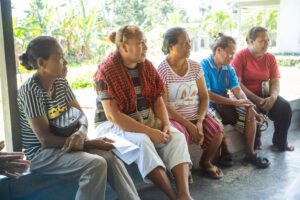
That recognition matters for the women heads of household who make up KPD. As they gain access to more spaces, concerns that once remained within households or among neighbours can now be taken further—to village authorities, service providers, and local parliamentarians.
The barriers have not disappeared. Village budgets remain constrained, public services still need to become more accessible, and many livelihood ideas still lack the capital needed to grow.
But for KPD Oenoni I, change does not always mean that every problem is immediately solved. It can also mean that residents know which door to knock on, who they can work with, and how to bring their needs into spaces that once felt out of reach.