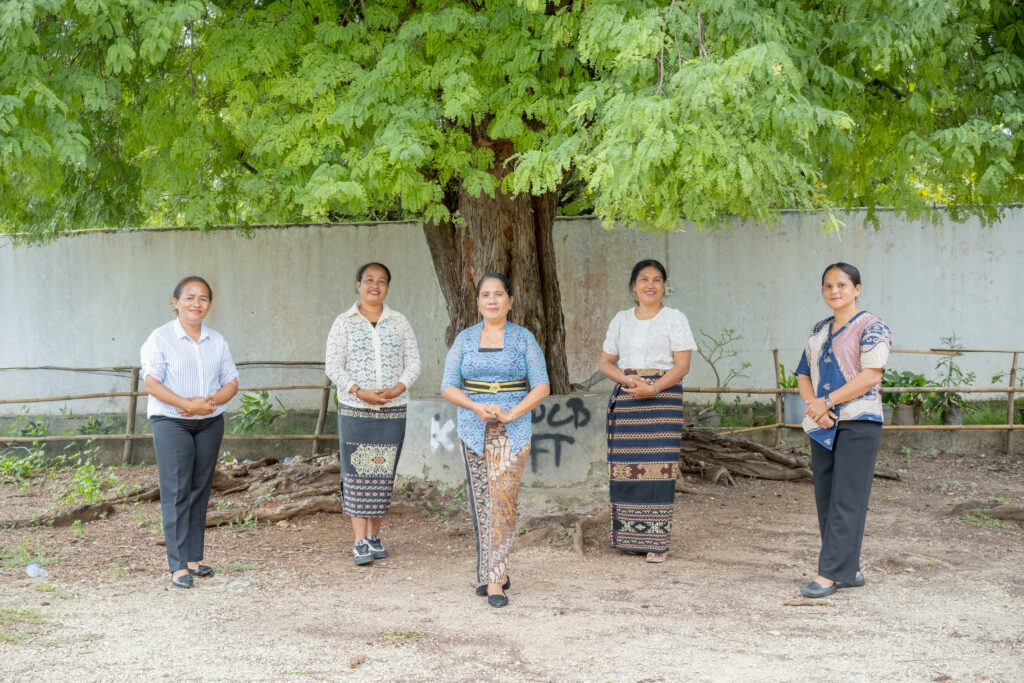


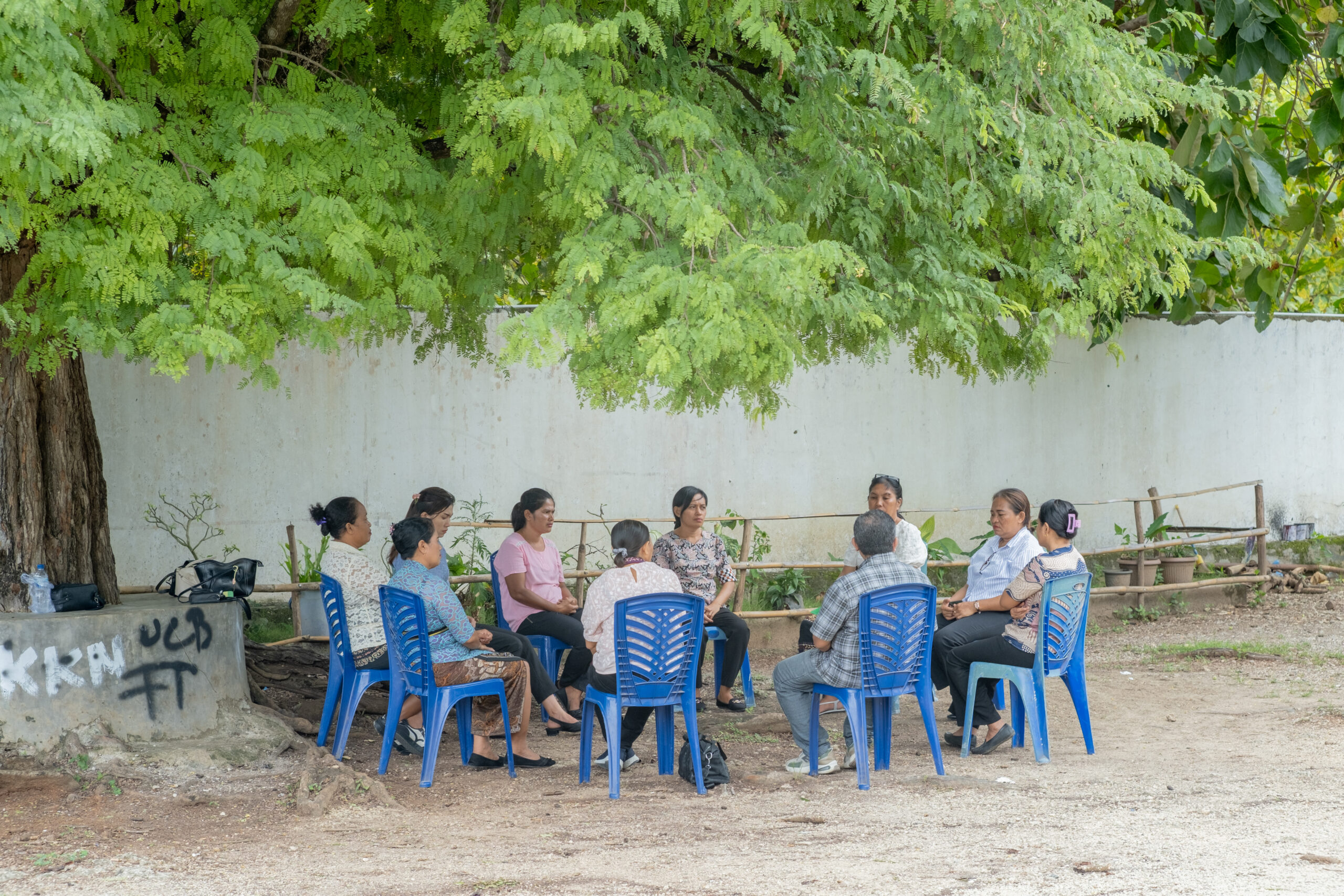
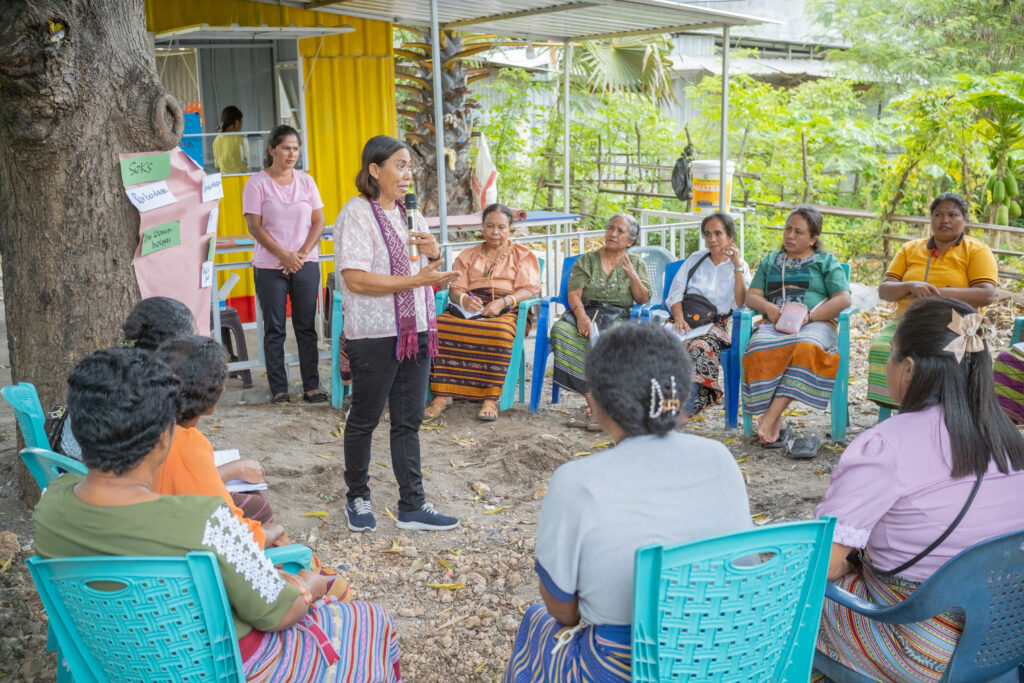
Under a tree in front of a house beside a busy road in Kupang, more than a dozen women sit in a circle, talking in a relaxed atmosphere. Amid the sound of passing vehicles, they discuss subjects that were once rarely spoken about openly: the vagina, reproductive organs, sexual and reproductive health and rights, and the taboos that discourage women from asking questions about their own bodies.
In this informal learning space, using the correct words for parts of the body is an important first step towards understanding their rights, recognising violence, and having the confidence to seek help.
The discussion was part of the Women’s School facilitated by PEKA-PM (the Association for Alternative Education for Women and Marginalised Communities), a local partner of the KAPAL Perempuan Institute, one of INKLUSI’s partners in East Nusa Tenggara. Based in Kupang Regency, PEKA-PM focuses on critical education, women’s empowerment, and gender equality, while advocating for women’s basic rights, reproductive health, and social inclusion.
Since beginning its partnership with KAPAL Perempuan in March 2022, PEKA PM has provided community education, capacity building, group mentoring, and safe spaces where women can learn, speak openly, and support one another.
PEKA PM currently supports seven Sekolah Perempuan groups. Their activities extend beyond regular discussions and include community-based learning groups, small-business assistance, leadership training, and complaint posts for women experiencing barriers related to legal identity, violence, and discrimination.
“Our incentive is not a diploma, but lifelong learning,” said Yerni Hariance, PEKA PM’s Deputy Director and Program Coordinator.
According to Yerni, many women have long had their opportunities restricted by the assumption that their role is confined to the home: cooking, washing, caring for their husbands, and looking after their families. Through Sekolah Perempuan, their space to participate is gradually expanding.
“In the past, we were told to stay at home. Now women can take part in development planning meetings, meet the district head, and speak up about their needs,” she said.
Women in Kupang Participate in Decision-Making Spaces
The changes are clearly visible in Tanah Merah Village, Kupang District. Women who were previously hesitant to speak are now participating in hamlet meetings and village development planning forums. Their involvement is no longer merely symbolic. They attend, put forward proposals, and help ensure that women’s needs are included in village development plans.
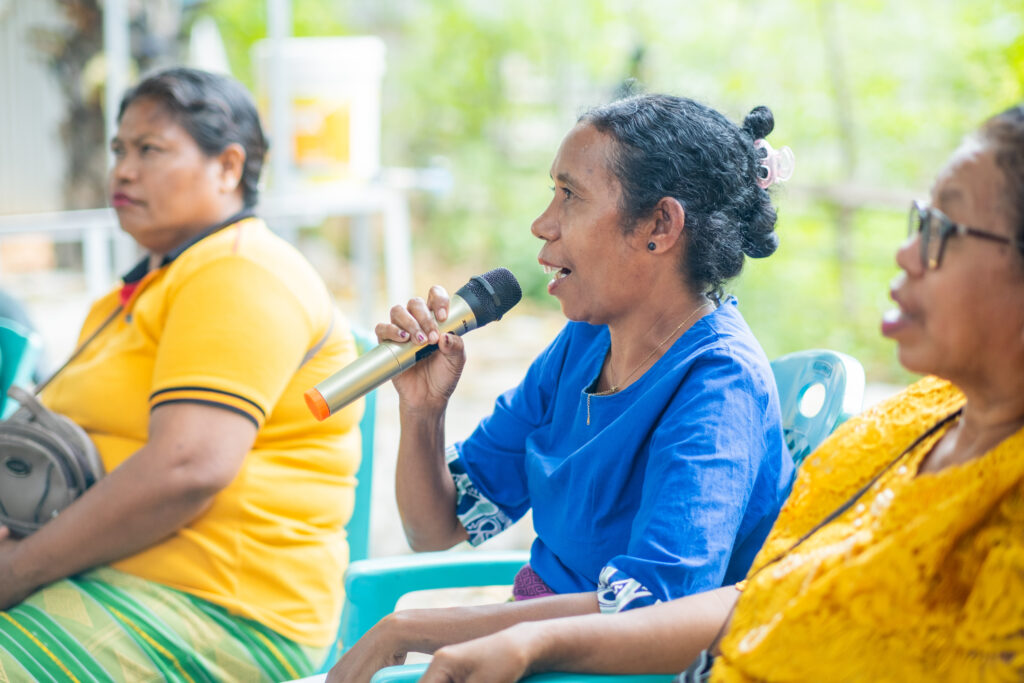
Marini, Head of Hamlet 1 in Tanah Merah Village, is one of the women whose leadership developed through Sekolah Perempuan. She first joined after the head of her neighbourhood unit visited her home and invited her to participate. At Sekolah Perempuan, she learned about leadership and gained the confidence to express her views.
“Men usually dominate development planning meetings. After joining Sekolah Perempuan, I became confident enough to speak. People began listening to our views,” she said.
Women’s proposals are now reflected in village policies and support programmes, including business capital for women’s groups. In Tanah Merah, five women’s groups have each received IDR15 million in start-up capital. Women are also involved in collecting community data, including information on women-headed households and residents facing literacy barriers.
For some participants, however, the most significant change has taken place within themselves.
Getreda, a Sekolah Perempuan member who has since been elected to lead her neighbourhood unit, said she had gained a better understanding of gender, the law, and women’s rights. This knowledge has helped her respond to cases of violence in her community, including dating violence.
“Now I understand what to do when violence occurs. I am proud to be able to help prevent violence and educate other women,” she said.
Venny, meanwhile, remembers initially refusing to join Sekolah Perempuan.
“I thought, ‘I’m already old. What would I do with a book?’” she said.
Curiosity eventually led her to attend. Through the learning sessions, she realised that fear and a lack of information had made it difficult for her to make decisions, including within her marriage. After experiencing domestic violence, she eventually found the courage to take her case to court.
For these women, Sekolah Perempuan is more than a place to study learning modules. It gives them the language to describe experiences that have long been treated as shameful, including domestic violence, sexual violence, and the unequal burden of unpaid care and domestic work.
Since 2022, PEKA PM has also operated complaint posts that help women access services, particularly those related to legal identity and responses to violence.
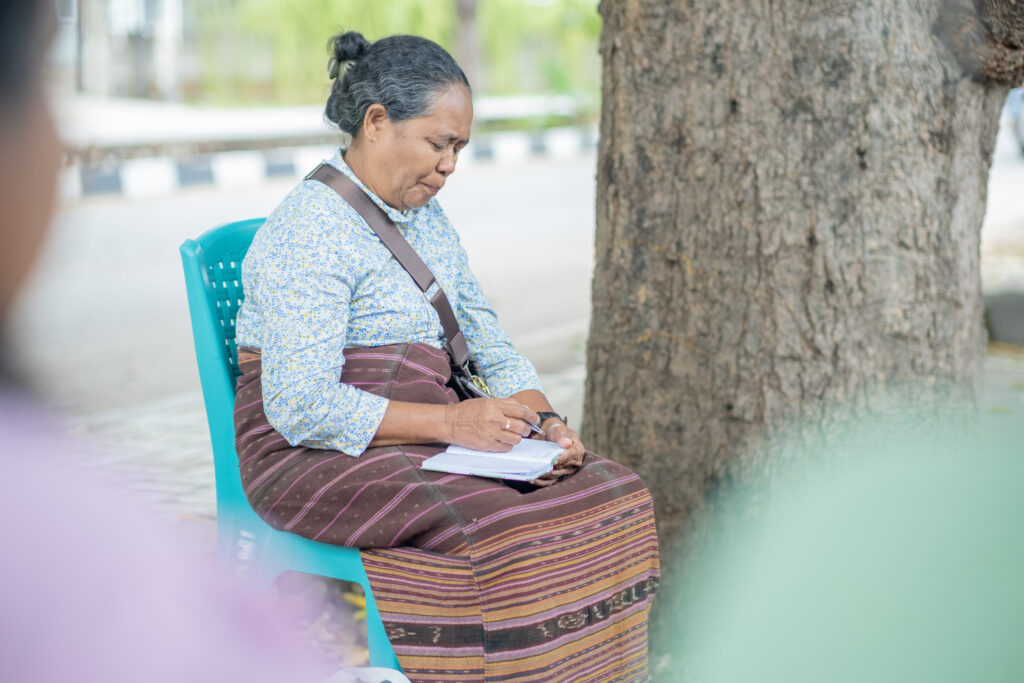
Yerni said some of the women supported by PEKA PM face multiple and overlapping barriers. These include dropping out of school, illiteracy, limited proficiency in Indonesian, experiences as former refugees, and disability. For this reason, the learning process cannot be the same for everyone.
“Some participants need more time. Sometimes we set aside an additional 10 to 15 minutes specifically to help them follow the session,” she said.
Change is growing through this gradual process. Women who once remained silent are beginning to ask questions. Those who were previously afraid to name violence are now willing to report it. Women once seen only as responsible for the home are now taking seats in village forums.
Under the tree in Kupang, conversations about bodies and rights continue to flow. For these women, saying the word “vagina” without shame is part of a much larger journey: learning to understand themselves, protect one another, and take their place in decision-making spaces where women’s voices have gone unheard for too long.