
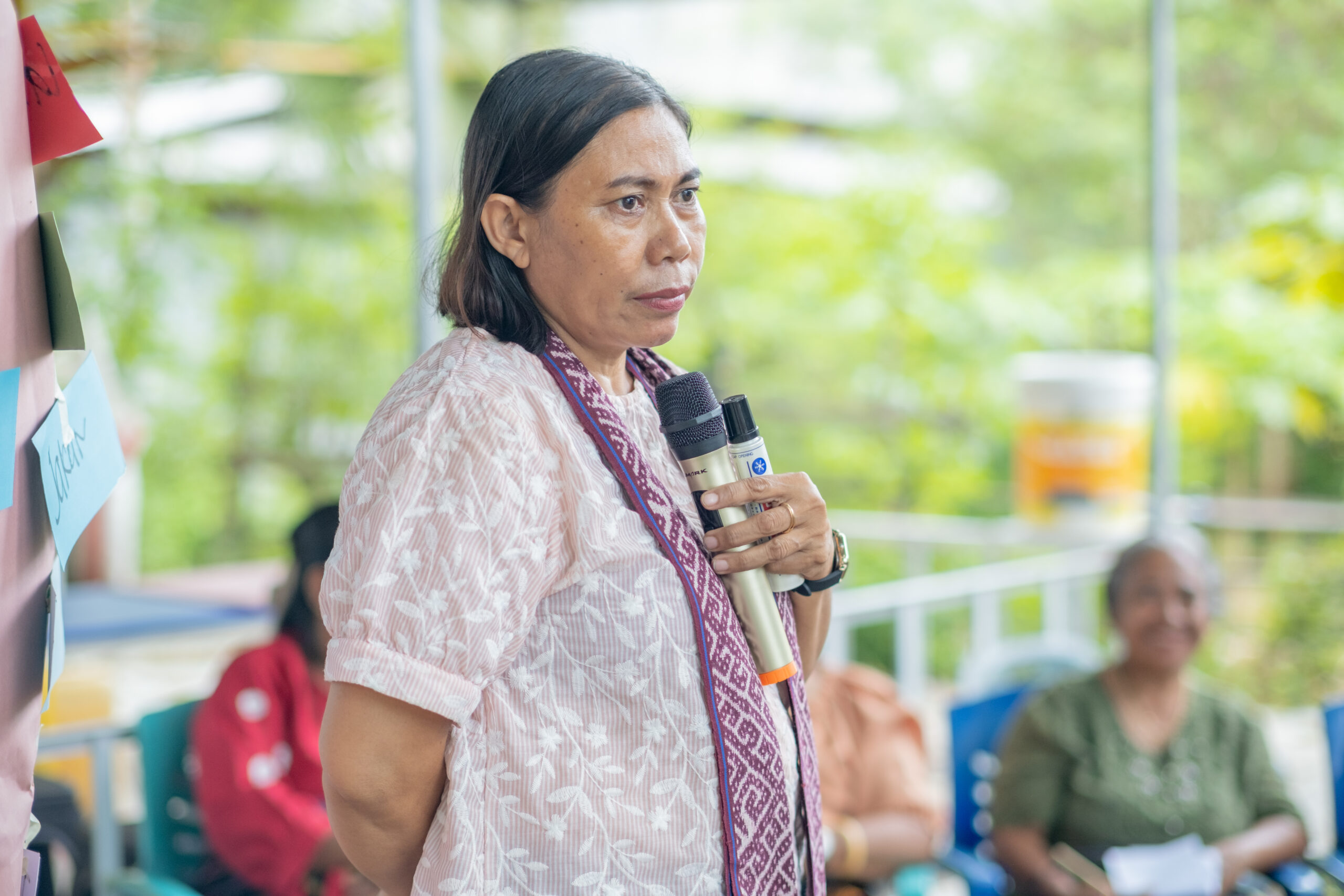
When Yerni Hariance speaks about the women she has supported over the years, there are moments when her voice falters.
She recalls stories of women who endured violence in silence, believing there was nowhere to turn for help. Women who lacked legal identity documents and struggled to access public services. Women who rarely left their homes, and persons with disabilities who were hidden away by their families. She also remembers survivors who faced long, costly and exhausting journeys in seeking justice.
As she reflects on these experiences, her eyes fill with tears.
For Yerni, these are not simply stories she has heard through her work. They are stories she has walked alongside for many years.
Yerni is the Deputy Director and INKLUSI Programme Coordinator at PEKA PM (the Association for Alternative Education for Women and Marginalised Communities), a civil society organisation in Kupang focused on critical education, women’s empowerment, and gender equality. PEKA-PM also advocates for women’s basic rights, reproductive health, and social inclusion.
“Violence is like a frightening monster,” Yerni said. Yet it is precisely because of this reality that she continues her work.
Long before joining PEKA PM, Yerni was already involved in community work. She served as a community volunteer in Noelbaki, an area where former Timor-Leste refugees settled after leaving their homeland.
There, she entered refugee camps, taught literacy classes, and accompanied community members facing social, economic and legal identity challenges.
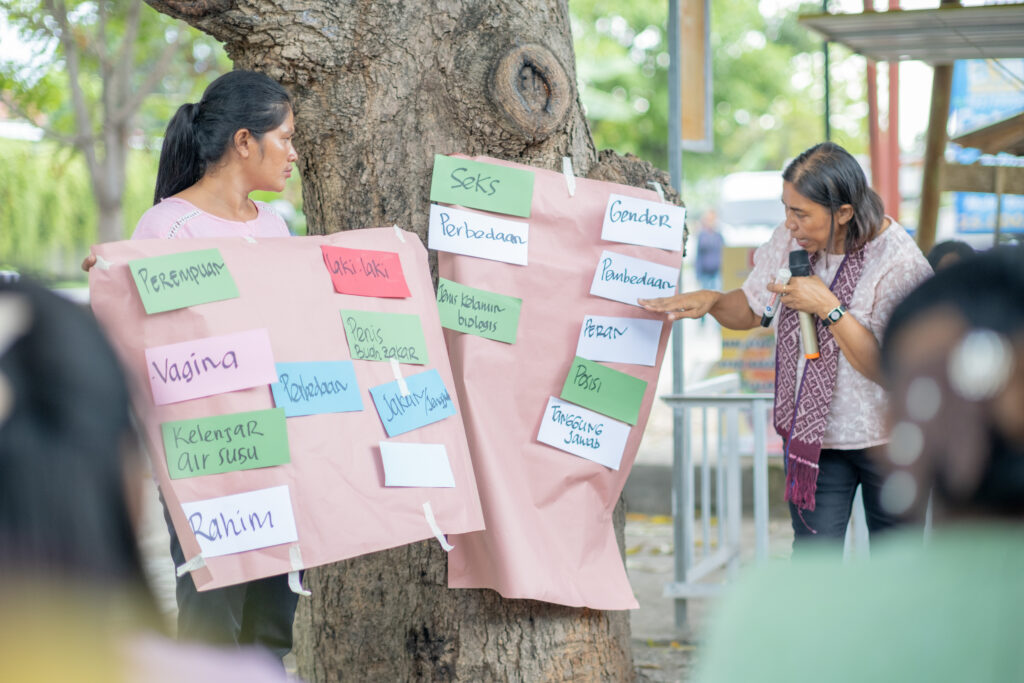
Through these experiences, Yerni learned that the challenges faced by women are often intersectional. Poverty, gender inequality, disability, trauma and discrimination frequently overlap, creating barriers that prevent women from participating fully in society. Some women she met were not fluent in Bahasa Indonesia. Others had left school early or were unable to read and write. In these situations, she realised that support could not follow a single approach.
“In the field, we learn to listen first,” she said. “Not every woman is ready to tell her story immediately, especially when she has spent years believing that her experiences are something to be ashamed of.”
PEKA PM itself grew from humble beginnings. In its early years, the organisation worked from open community spaces and focused on helping refugee families meet basic needs such as food and shelter materials. Today, PEKA PM has a dedicated team of five staff members, including its Director. Since March 2022, the organisation has partnered with the KAPAL Perempuan Institute, an INKLUSI partner, to strengthen women’s leadership through Women’s Schools (Sekolah Perempuan), community learning spaces, and initiatives that support women experiencing violence, legal identity challenges and economic barriers.
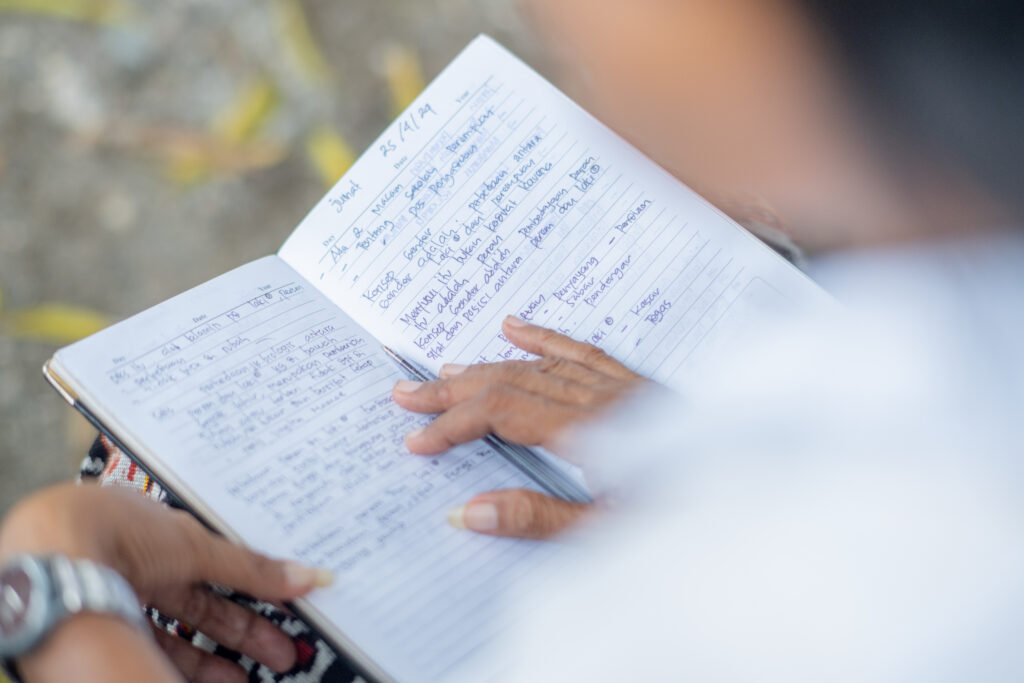
For Yerni, the essence of this work is helping women rebuild confidence in themselves.
“If women do not have confidence, they will continue to be stepped on,” she said. “Confidence is what helps us stand up and fight for our rights.”
Returning to a Deferred Path
Yerni’s confidence is also rooted in her own life experience. She once put her higher education on hold because the opportunity to attend university was given to her younger siblings. As the eldest child, she accepted that university was not an option for her at the time.
Years later, after navigating many chapters of life, including becoming a single mother, Yerni decided to create a new path for herself. As she approached the age of 50, she finally enrolled in a bachelor’s degree at Artha Wacana Christian University in Kupang.
It was no small decision. At an age when many people consider their years of formal education to be behind them, Yerni became a university student once again. She completed her degree and continued learning through various training programmes, including legal assistance and human rights. Today, she is a certified paralegal companion.
“I only finished high school because the opportunity to attend university was given to my younger siblings,” Yerni said. “But I learned that it is never too late to continue learning.”
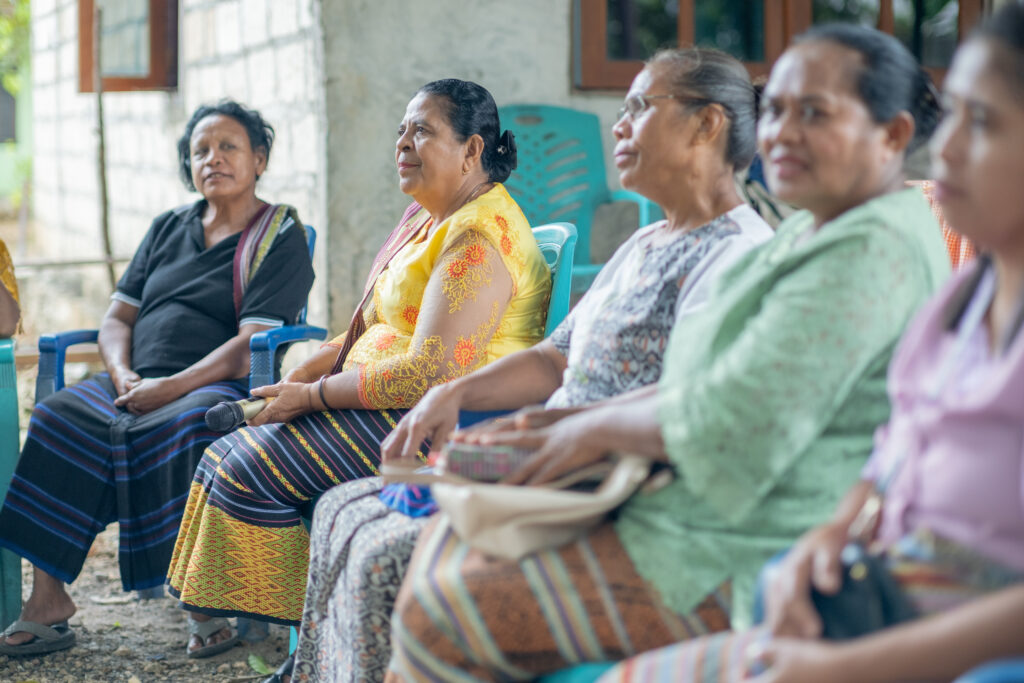
It is a message she often shares with the women she supports. According to Yerni, many women grow up hearing messages that limit their aspirations: women do not need higher education, women should focus on household responsibilities, women should remain silent, and women should not speak up too much. Even after marriage, many women find their opportunities constrained by domestic responsibilities that are often seen as solely their burden.
Yerni challenges these views. She has seen first-hand how women change when they are given opportunities to learn.
Women who were once afraid to speak begin sharing their opinions. Mothers who previously knew little about their rights start asking questions. Women who were once expected only to manage household responsibilities are now participating in hamlet meetings, village development planning forums (Musrenbang), and discussions with local government.
“I am very proud when women participate in Musrenbang,” she said. “In Kupang, women are still often underestimated. We want to see those stereotypes disappear.”
Through PEKA PM’s partnership with KAPAL Perempuan, supported by INKLUSI, Yerni has helped facilitate seven Sekolah Perempuan’s groups. Since 2022, PEKA PM has reached 875 women through its programmes. In Tanah Merah Village, a complaint and referral post established in 2022 has also helped more than 3,000 women access services, particularly those related to legal identity and responses to violence.
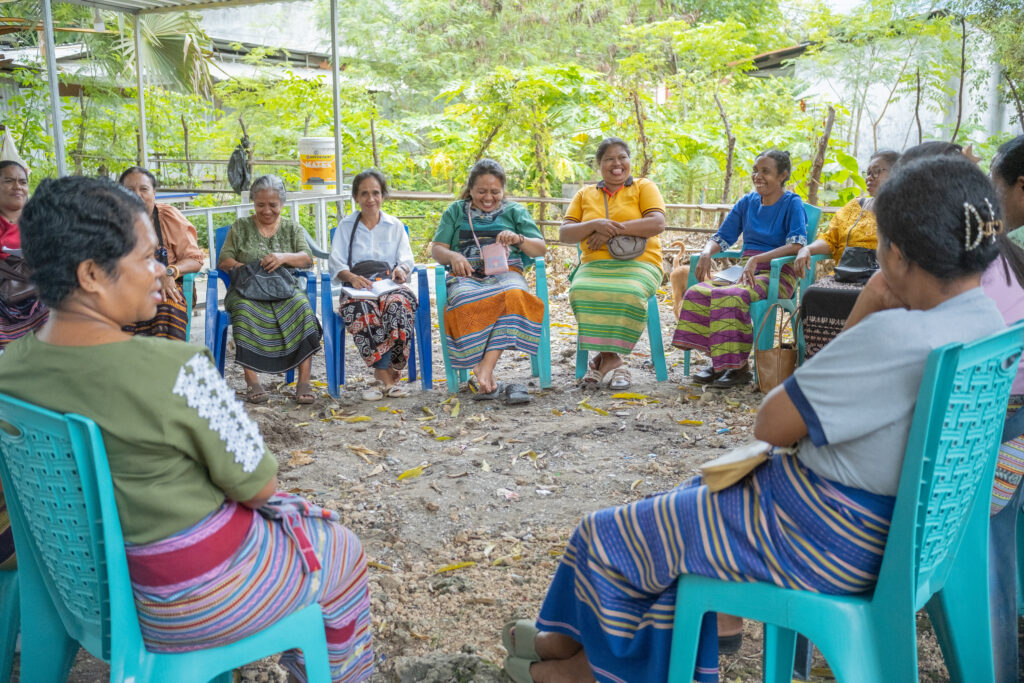
For Yerni, however, these figures are more than programme achievements. Behind every number is a face, a name, and a story. A woman who finally obtained legal identity documents. A survivor who found the courage to report violence. A village woman who was elected as a hamlet head, a member of the Village Consultative Body (BPD), or a neighbourhood leader.
Supporting women is not always easy. Throughout her years of community work, Yerni has faced threats and intimidation.
“I have been threatened before. People have told me they would hurt me or even kill me. Those things can happen,” she recalled.
Yet these experiences have never caused her to step back. She knows that for many women, the presence of someone who listens, supports, and stands alongside them can make the difference between remaining silent and seeking justice.
Yerni believes that change does not always arrive in big ways. Sometimes it begins with a woman speaking up for the first time in a village forum. Sometimes it starts with a mother learning to read again. Sometimes it emerges when a family gradually becomes more accepting of a family member with a disability. And sometimes it begins when a survivor realises that violence is not something to be ashamed of and should never be endured alone.
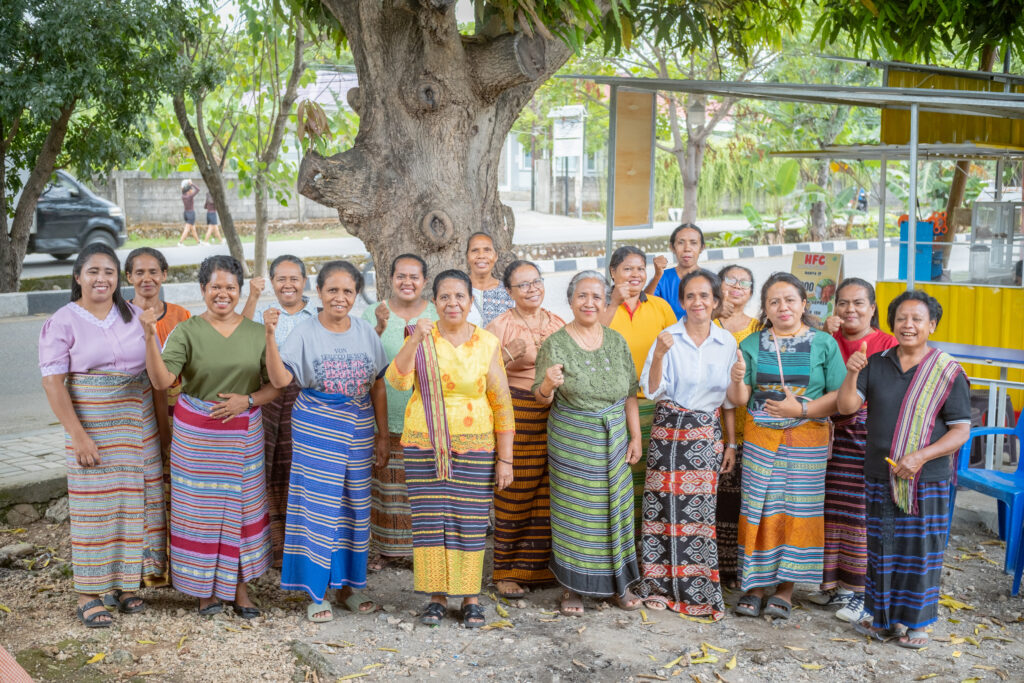
In Kupang, Yerni continues to walk alongside women whose voices have often gone unheard. She has seen how learning spaces and community support can transform the way women see themselves and their place in society.
“When women lead, everything comes alive,” Yerni said. “Women are leaders of civilisation.”