


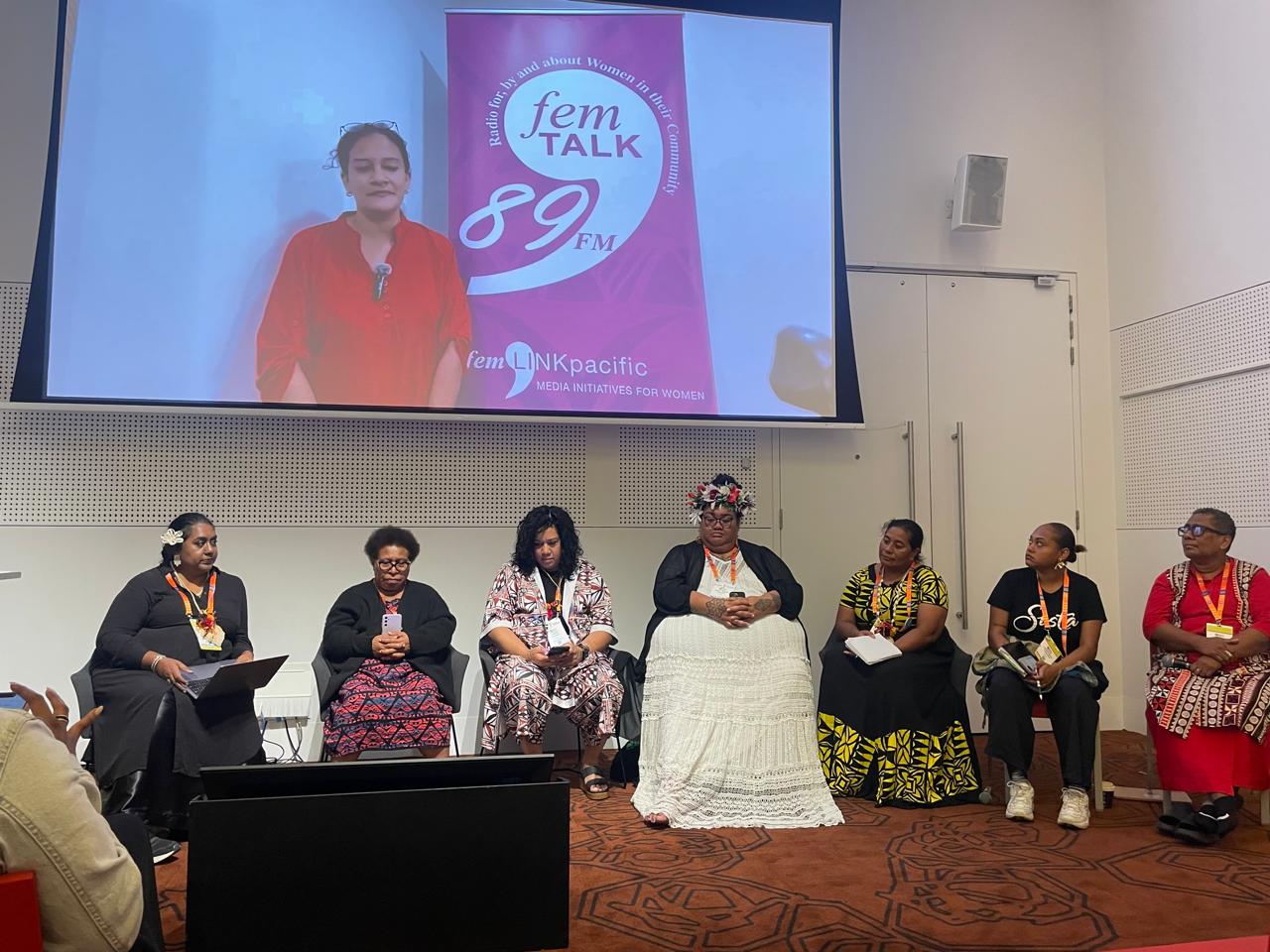
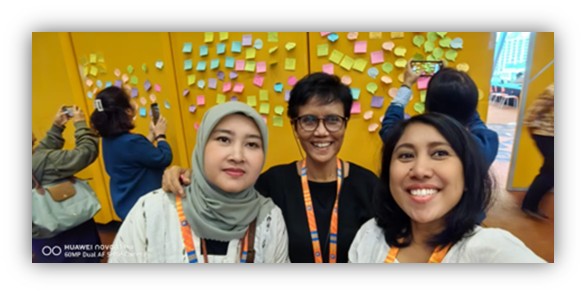
For Dina Lumbantobing of the PERMAMPU Consortium, attending the Women Deliver 2026 Conference in Naarm/Melbourne was more than simply taking part in an international conference. It became a space to reflect on the long-standing work of Indonesia’s grassroots women’s movement, while also testing its relevance within global conversations on gender justice.
Held on 27–30 April 2026, the conference brought together more than 6,000 participants from 189 countries. Under the theme “Change Calls Us Here”, Women Deliver 2026 became a meeting point for diverse experiences, from Indigenous women, climate activists, sexual and reproductive health and rights advocates, grassroots organisations, to feminist movement leaders from different regions.
Dina represented INKLUSI from Indonesia, together with two other partners: Indri Sri Sembadra from Institut KAPAL Perempuan and Ufi Ulfiah from Lakpesdam PBNU. For PERMAMPU, this participation was important because many of the issues discussed at the conference were closely connected to the organisation’s work with grassroots women in Sumatra: climate change, gender-based violence, Indigenous women’s leadership, adolescent girls’ rights, the care economy, and sustainable funding for women’s movements.
One of the most memorable sessions for Dina was Roots & Rising: Grounding the Feminist Climate Justice Movement. The session framed climate change not only as an environmental issue, but also as an issue of gender justice. Participants were invited to discuss what constitutes a collective feminist agenda, the movement infrastructure that already exists, and the kinds of support communities need to survive and adapt.
In the context of PERMAMPU, this conversation was highly relevant. Grassroots women, particularly in rural areas, have long faced the impacts of climate change in their daily lives: shifting planting patterns, food insecurity, increased care burdens, and unequal access to resources. Yet their experiences are often not recognised as important knowledge in designing climate responses.
Dina noted that raising awareness of climate change needs to become part of the women’s movement agenda. For PERMAMPU, this aligns with the need to strengthen the capacity of grassroots women to understand climate risks, manage resources, and advocate for policies that better respond to their needs.
PERMAMPU and Grassroots Women’s Leadership
Another issue that gained prominence at the conference was technology-facilitated gender-based violence (TFGBV). In the PREVENT session, participants discussed how digital violence against women and girls is increasing, threatening their safety, participation, and freedom in digital spaces.
For PERMAMPU, this issue deserves attention because digital violence does not stand alone. It is often connected to violence within families, communities, and public spaces. Therefore, digital literacy, case documentation, and survivor-centred protection advocacy need to be strengthened at the community level.
The conference also gave significant space to Indigenous women’s leadership. In the session Decolonization and Self-Determination: Indigenous Feminist Leadership, participants reflected on the importance of shifting power away from external actors—including donors, governments, and elites—towards communities. For PERMAMPU, this message reinforced the importance of supporting Indigenous women to have equal roles in leadership, decision-making, and control over land, knowledge, and customary resources.
Discussions on adolescent girls also became an important takeaway. In the session Girls at the Center: Power, Voice, and Investment, it was emphasised that adolescent girls are not a homogeneous group. They have diverse backgrounds, needs, and experiences. Therefore, the involvement of adolescent girls cannot stop at symbolic representation. Their voices must genuinely influence systems, policies, and funding decisions.
Another lesson came from the session on the care economy in agriculture. In many rural communities, women sustain agricultural systems while also bearing the primary responsibility for childcare and other forms of unpaid care work. This burden often limits women’s space to participate in economic and organisational activities. For Dina, the session recalled the experience of PESADA, a member of the PERMAMPU Consortium, which had once developed a day care centre approach to support women farmers in rural areas.
Across these sessions, one common thread became clear: the work of gender justice requires a long breath. Women’s movements are not built in a single moment; they are nurtured over time, across generations, and together with communities.
For PERMAMPU, Women Deliver 2026 became a reflective space affirming that its approach to strengthening grassroots women remains relevant in global conversations. At the same time, the conference also served as a reminder that this approach must continue to evolve: becoming more sensitive to climate change, better prepared to address digital violence, more serious in listening to adolescent girls, and more courageous in discussing the care economy as a political and development issue.
The journey towards gender justice is underway, even if progress has not been as fast as hoped. From Naarm to PERMAMPU’s partner villages, the call for change remains the same: to strengthen grassroots women so they are not only beneficiaries, but also leaders of change in their own communities.