

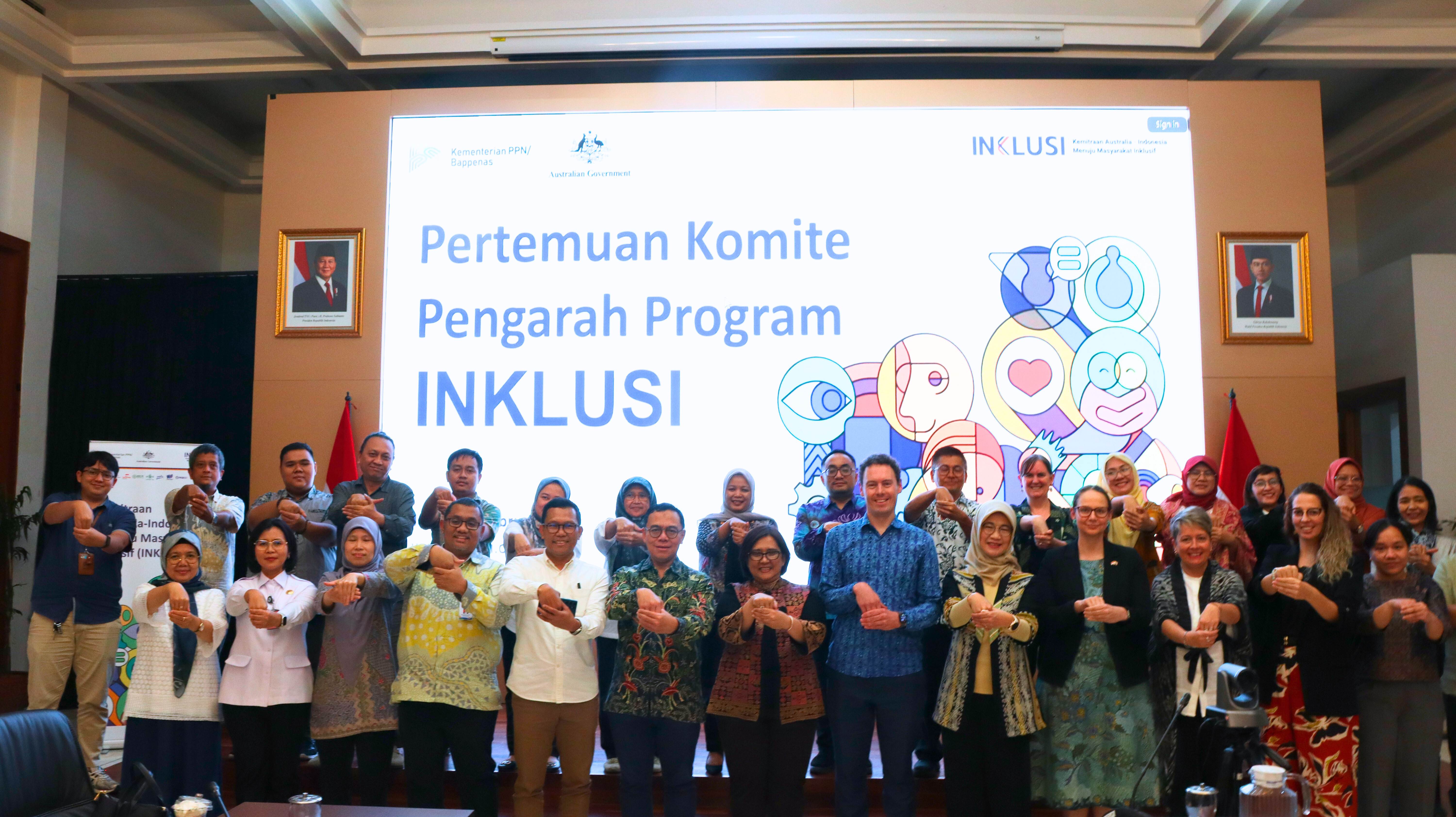
The Governments of Indonesia and Australia have agreed on the 2026 Annual Work Plan for the INKLUSI Programme, marking a significant transition from Phase I to Phase II. The agreement was reached at the Programme Steering Committee (PSC) Meeting held at the Bappenas office in Jakarta on 4 February 2026.
As the programme’s highest governance forum, the meeting was attended by representatives from Indonesian government ministries and agencies, the Australian Embassy, civil society organisation partners, and the INKLUSI Secretariat. The meeting focused on two key agenda items: reflecting on the achievements and lessons learnt from Phase I (2021–2025), and agreeing on the strategic direction and priorities for Phase II (2026–2029).
Opening the meeting, Tim Stapleton, Minister Counsellor for Governance and Human Development at the Australian Embassy, affirmed that the INKLUSI Programme in Phase I had laid a strong foundation for inclusive development, as evidenced by various good practices at the local level that demonstrated increased access and participation among marginalised groups. He emphasised that the 2026 Work Plan is expected to serve as a key instrument for strengthening the alignment between INKLUSI’s work and government policy, with a sharper focus on tangible policy impact.
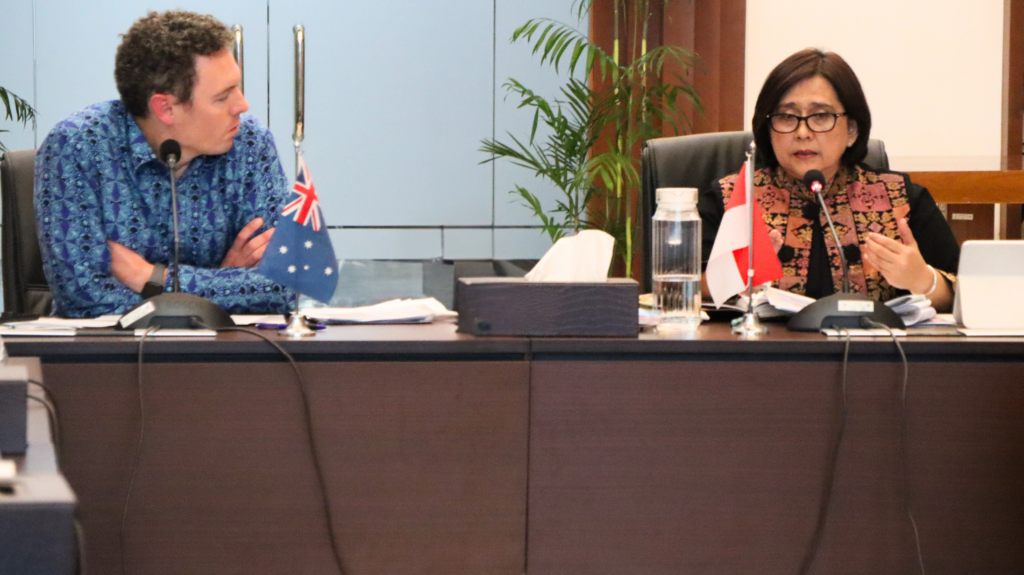
Teni Widuriyanti, Secretary of the Ministry of PPN/Bappenas and Co-Chair of the INKLUSI Steering Committee, stressed the importance of cross-actor collaboration in advancing inclusive human development.
“Indonesia and Australia remain committed to ensuring that women, persons with disabilities, older persons, and other marginalised groups can actively contribute to development — ultimately contributing to the wellbeing of all Indonesian people,” she said.
Kate Shanahan, INKLUSI Team Leader, presented the programme’s achievements since its launch in 2021. Designed to run until 2029 with a total budget of AUD 210 million, INKLUSI focuses on increasing the participation of women and marginalised groups in socio-cultural, economic, and political development.
Phase I: INKLUSI’s Achievements and Contributions
By the end of Phase I, the programme had reached 33 provinces, more than 120 districts/cities, and over 800 villages, through partnerships with 11 national civil society organisations, 8 research institutions, and various government ministries and agencies.
Key achievements include strengthening hundreds of community groups to improve access to services for marginalised groups, with tens of thousands of service access instances reaching women, men, and persons with disabilities. The programme also facilitated service referrals at scale, broadening access to government services, while marginalised groups increasingly participated in public decision-making forums including Musrenbang and policy dialogues. New leadership from marginalised groups also emerged at the community level, including within village structures and community organisations.
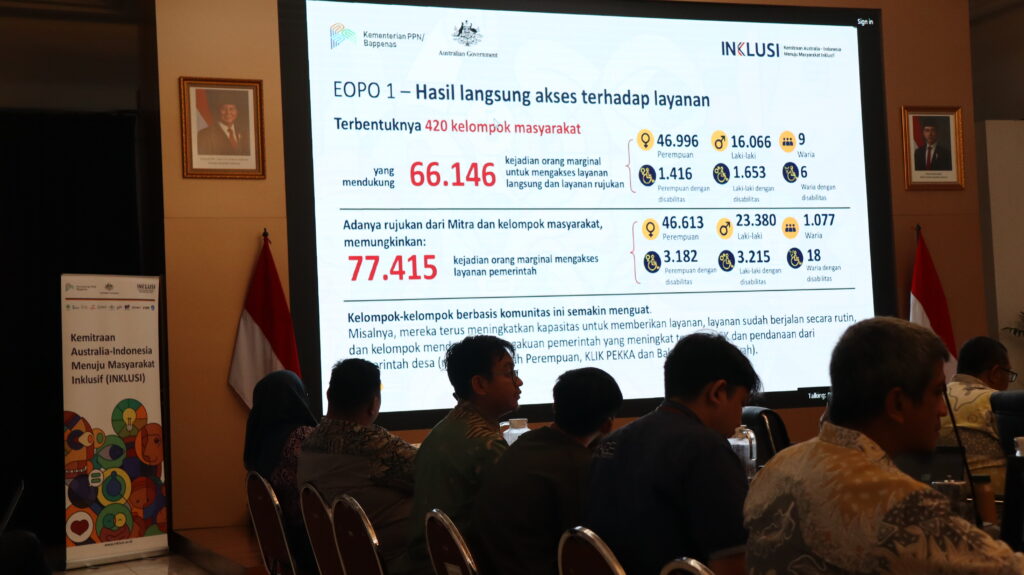
Beyond community-level impact, INKLUSI contributed to systemic change across various sectors, including the integration of gender equality, disability, and social inclusion (GEDSI) into development planning documents, strengthened protection policies, and the development of inclusive service models. The programme also supported the implementation of national policies such as the National Strategy for the Prevention of Child Marriage, strengthened protection services for women and children, and the development of more inclusive employment and social protection policies.
Phase II: Sharper Focus and Stronger Alignment for Inclusive Development
The 2026 Work Plan was developed based on recommendations from the Mid-Term Review (MTR), which highlighted the need for a sharper strategic focus, a strengthened Theory of Change, and closer alignment with national priorities. In Phase II, INKLUSI will expand its reach to 34 provinces, more than 140 districts/cities, and over 900 villages, implemented through four Working Groups (Pokja) aligned with the National Priorities of the 2025–2029 RPJMN: Access to Basic Services, Protection from Violence, Economic Recovery and Livelihoods, and Inclusive Participation in Development.
The meeting also highlighted the swift response of INKLUSI’s civil society organisation partners to disasters in Sumatra. Through budget reallocation and local partner networks, the programme reached more than 5,000 beneficiaries, including vulnerable groups such as female-headed households, older persons, and persons with disabilities. This response demonstrated the importance of long-term investment in community strengthening, enabling rapid and targeted crisis response.
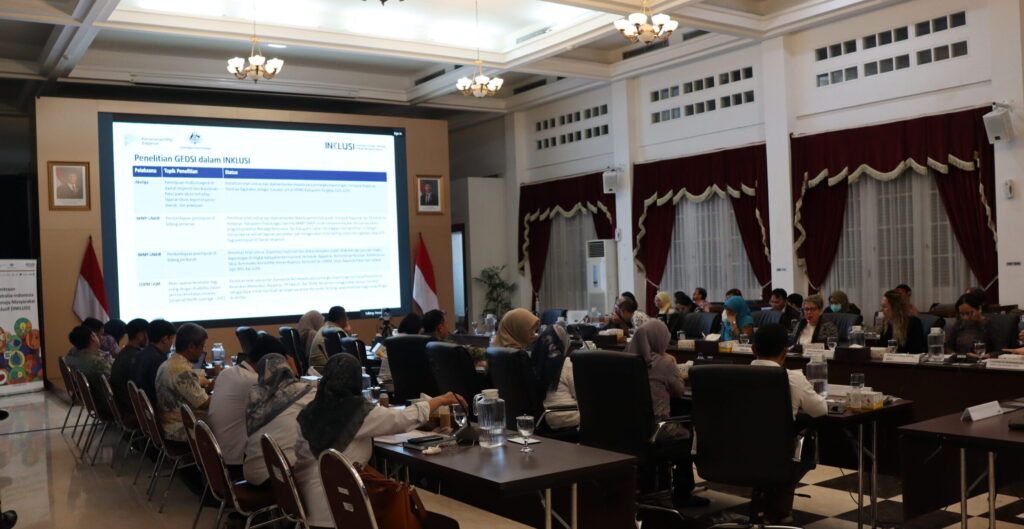
The Steering Committee discussions reaffirmed INKLUSI’s vital contribution to more inclusive development, from community strengthening to national policy. Cross-sector collaboration between government, civil society, and development partners is key to ensuring stronger linkages between grassroots practice and broader systems and policies. The meeting also reaffirmed the shared commitment to strengthening INKLUSI’s impact through more focused, integrated, and sustainable work, ensuring that marginalised groups can actively participate in inclusive development.