

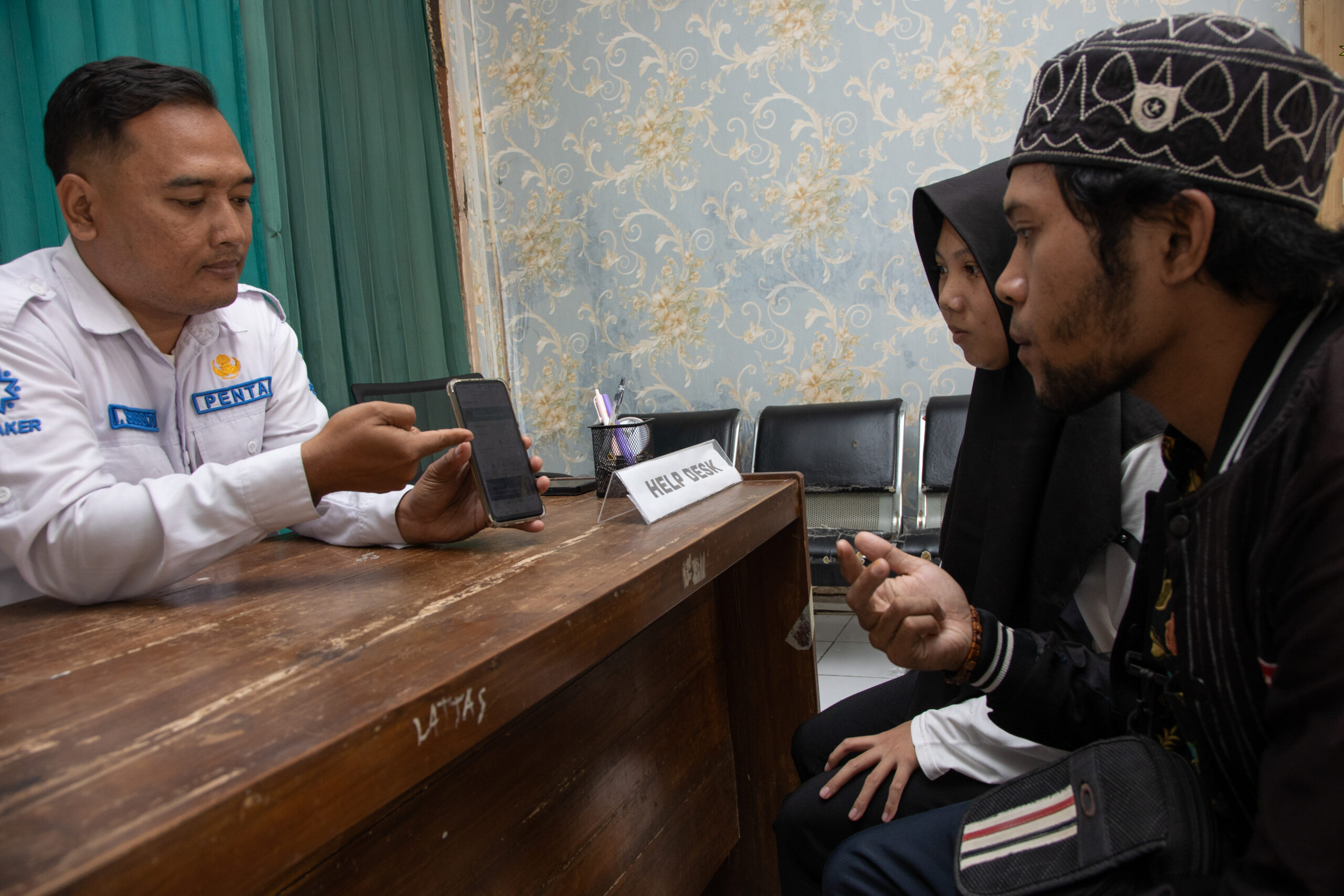
Cirebon, 10 February 2026 – The INKLUSI Program conducted a Joint Monitoring Visit (JMV) in Cirebon District to engage with key stakeholders and review efforts to expand inclusive employment opportunities for persons with disabilities. The visit is part of the partnership between the Governments of Indonesia and Australia, involving Bappenas, relevant ministries/agencies, the Australian Embassy (DFAT), the Cirebon District Government, and the INKLUSI Secretariat team.
The Cirebon District Government reported a significant achievement in disability-inclusive employment. As of January 2026, a total of 871 workers with disabilities have been employed by various companies in Cirebon District, across both the formal and informal sectors. This achievement reflects strong collaboration between the local government, the private sector, and civil society organisations in supporting the implementation of Law No. 8/2016 on Persons with Disabilities.
Representing the Regent of Cirebon, Imron, the Regent’s Expert Staff for Community Affairs and Human Resources, Neneng Hasanah, reaffirmed the local government’s commitment to strengthen policies and local regulations that support inclusive employment, while encouraging greater private sector engagement and broader social acceptance.
“I hope that through cross-sector collaboration, Cirebon District can transform into an area that is welcoming, dignified, and provides the widest possible space for the independence of persons with disabilities,” she said.
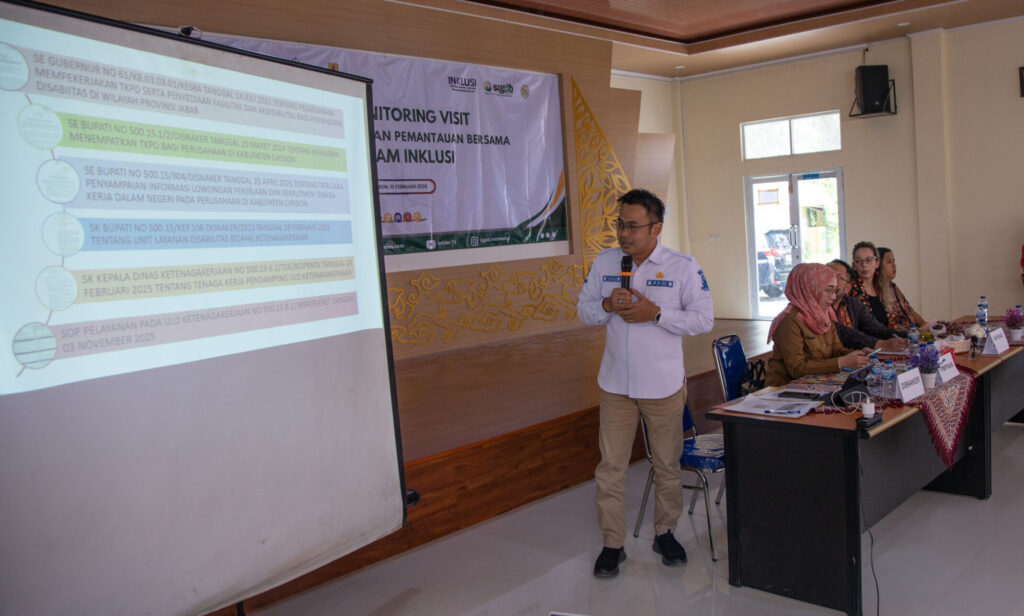
Head of the Cirebon District Manpower Office, Novi Hendrianto, explained that strengthening the Disability Service Unit (ULD) for Employment is one of the strategies to expand inclusive services, including bridging the needs of employers and jobseekers with disabilities. He added that throughout 2024–2025, dozens of persons with disabilities participated in skills trainings—such as souvenir-making and digital marketing—to enhance their competencies and competitiveness in the labour market.
During the visit, the delegation also explored a community-based approach together with INKLUSI Partner SIGAB Indonesia, through strengthening Village Disability Groups (KDD) and the Cirebon Disability Communication Forum (FKDC). This approach promotes participatory data collection, meaningful involvement of persons with disabilities in village development planning, and improved access to employment through collaboration with the Manpower Office and the ULD.
SIGAB Indonesia representative M. Joni Yulianto welcomed Cirebon District’s progress, noting the increasing integration of disability community aspirations through the Thematic Musrenbang mechanism in local development planning.
From Policy to Practice in the Private Sector
The JMV continued with site visits to private sector actors that have opened access to training and employment for persons with disabilities, including Cirebon Power and PT Dahju Foam Product. These visits provided a shared learning space to observe more inclusive recruitment practices, the provision of reasonable accommodation, and opportunities to further strengthen the role of the ULD and community networks in preparing job-ready candidates.
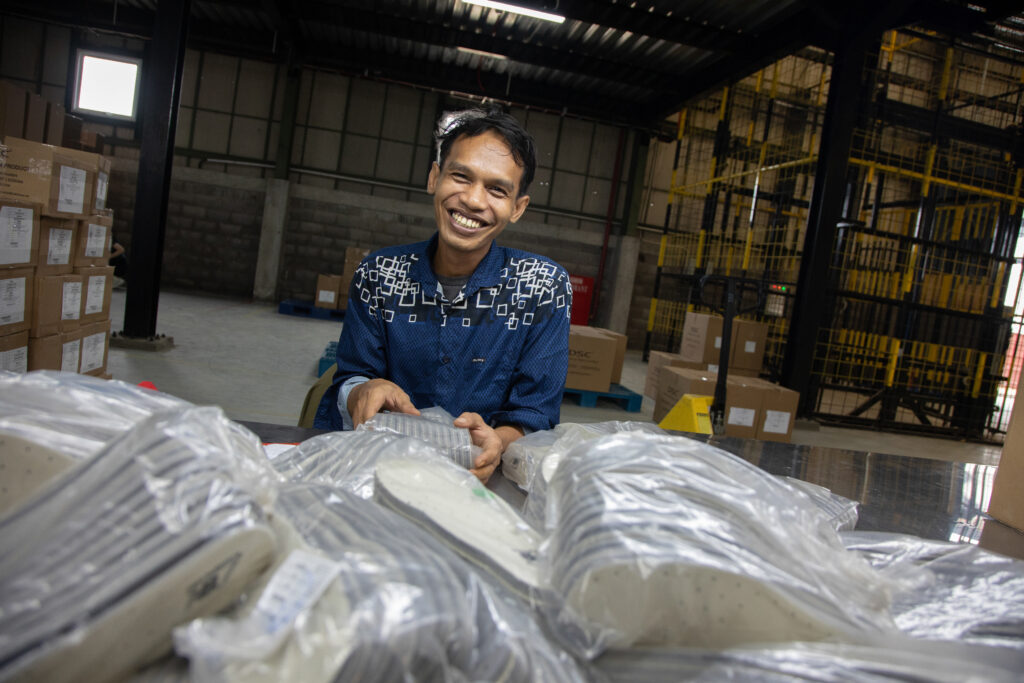
Cirebon Power delivered Microsoft Office training for 10 participants with disabilities with diverse support needs. Meanwhile, PT Dahju Foam Product has employed a worker with a disability as part of fulfilling the 1 per cent quota requirement under existing regulations.
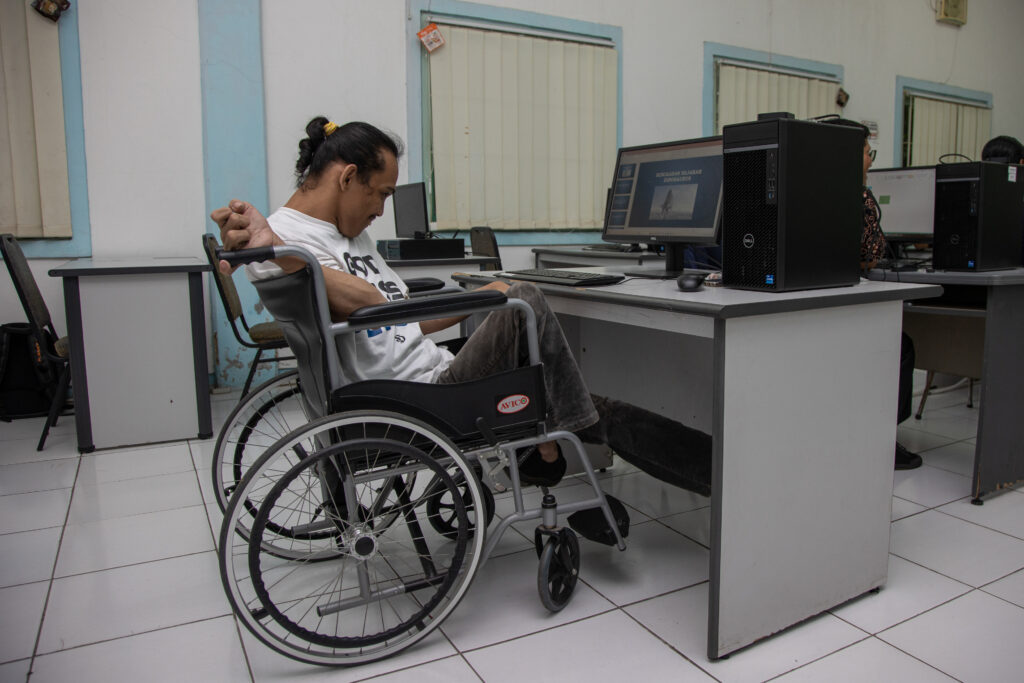
One of PT Dahju Foam Product’s workers, Apipudin, shared that he accessed the job opportunity through FKDC and has experienced support in the workplace. “I got access to this job through FKDC. I work in the factory in quality control, with 7 working hours and breaks every 1.5 hours,” he said. He added, “I hope persons with disabilities receive more attention and better access to information about job opportunities.”
In discussions with the Cirebon District Government and the private sector, several challenges were also highlighted, including limited budget allocation for the Manpower Office, the absence of sign language interpreters at job fairs, and the need to strengthen the ULD’s role as a connector between employers and jobseekers with disabilities.
From a national planning perspective, M. Zul Fauzi from KPPA Bappenas reiterated the RPJMN mandate to create workplaces that are friendly, safe, comfortable, and equitable. In line with this, DFAT First Secretary for GEDSI, Elena Martin Avilla, stressed the importance of ensuring that the equal rights of persons with disabilities are realised in practice. “Cooperation between the Indonesian and Australian governments through the INKLUSI Program aims to create a society that provides equal opportunities for everyone,” Elena said.
The joint monitoring visit reaffirmed that expanding inclusive employment requires sustained synergy between policy, public services, the private sector, and community strengthening—so that the principle of No One Left Behind is truly realised at the local level.