

Jakarta, 11 August 2026 — For people with disabilities, access to decent employment continues to face a range of barriers. The challenge is not limited to finding job opportunities or securing employment, but also extends to accessing adequate support to enter the workforce, remain employed, and advance in their careers. Limited access to information, skills development, employers, and accessible workplaces remains part of the broader challenge.
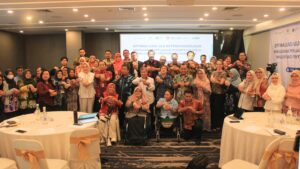
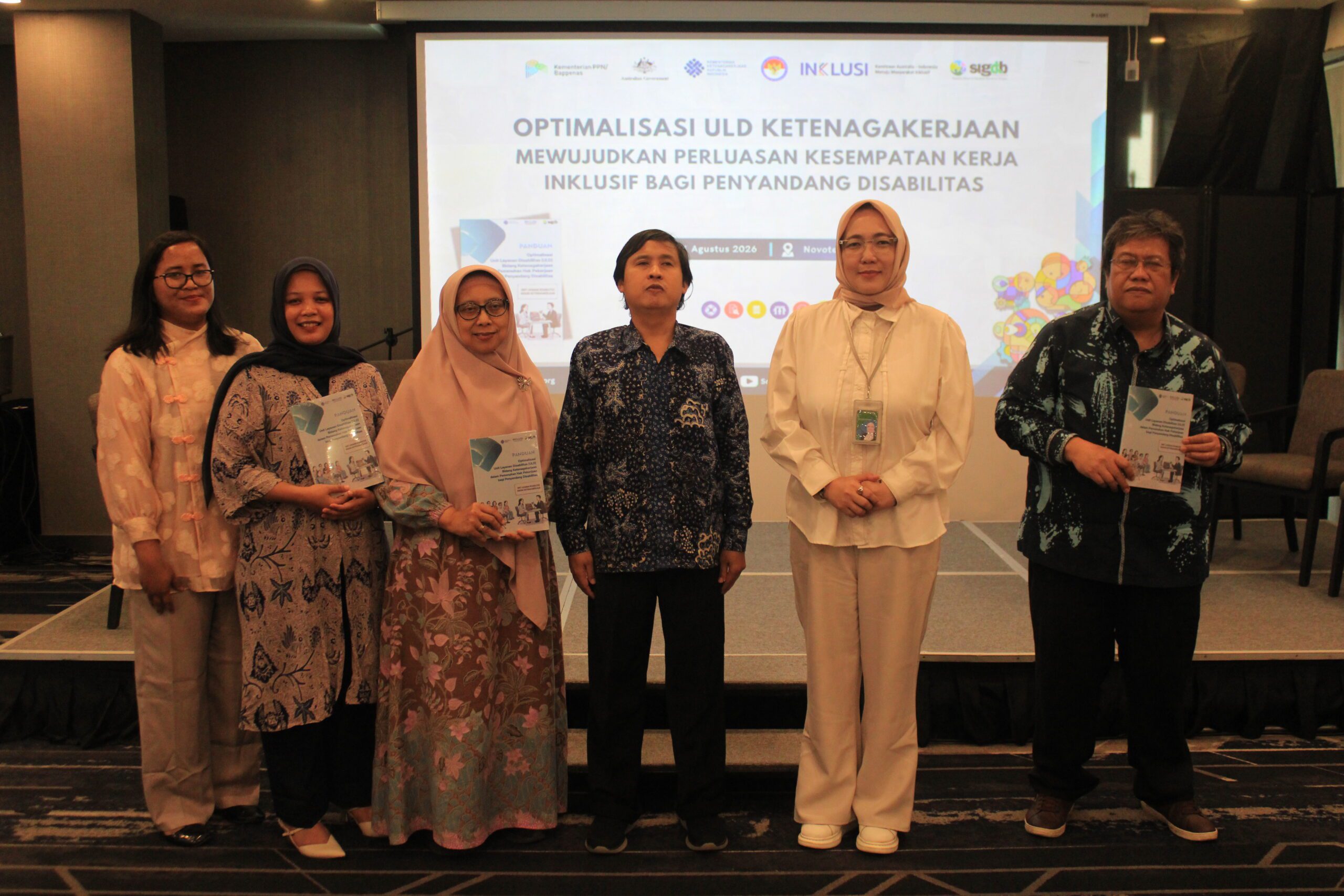
To strengthen more inclusive employment services, the Ministry of Manpower of the Republic of Indonesia (Kemnaker), together with Sasana Inklusi dan Gerakan Advokasi Difabel (SIGAB), with support from the INKLUSI , launched the Guidelines for Optimising Disability Employment Service Units (Panduan Optimalisasi Unit Layanan Disabilitas/ULD) on 11 August 2026 in Jakarta.
The guidelines provide a practical reference for strengthening the role of ULDs in expanding access to decent employment for persons with disabilities. The launch and dissemination of the guidelines also provided an opportunity for central and local government institutions, organisations of people with disabilities, training institutions, and private sectors to discuss the challenges and opportunities involved in developing more inclusive employment services.
As of April 2026, 269 employment-related ULDs had been established across 31 provinces, 64 cities, and 174 districts. However, the availability and quality of services continue to vary across regions. The disparities between Java and Eastern Indonesia, for example, demonstrate that strengthening ULDs cannot rely on a one-size-fits-all approach, but must instead respond to the specific needs and conditions of each region.
Strengthening ULDs is also part of the Government’s efforts to expand employment opportunities for persons with disabilities through the Disability Sector Roadmap 2025–2030 developed by the Ministry of Manpower. The roadmap covers regulatory strengthening, capacity building, expanded employment opportunities, and support services.
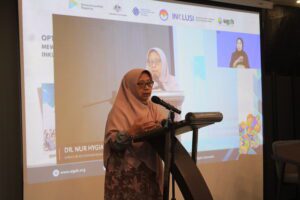
Director of Employment at the Ministry of National Development Planning/Bappenas, Nur Hygiawati Rahayu, emphasised that access to the workforce needs to be accompanied by adequate support to enable people with disabilities to continue developing professionally.
“Such support may include mentoring, opportunities to share experiences, competency development, as well as a supportive and accessible working environment,” she said at the hybrid launch event.
Elena Martin Avila, First Secretary at the Embassy of Australia in Indonesia, echoed this view. She noted that inclusive employment should not be measured solely by the number of people with disabilities entering the workforce or by the fulfilment of employment quotas.
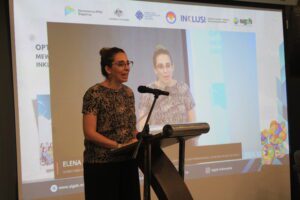
“More importantly, we must ensure that people with disabilities have equal opportunities to secure decent employment, work in accessible environments, and continue to develop professionally,” she said.
Disability Employment Service Units, Beyond Job Placement
Muh. Syamsudin, Director of SIGAB, also highlighted that employment services often remain focused primarily on job placement.
“The success of employment services should also be measured by workers with disabilities’ ability to retain their jobs and advance their careers,” he explained.
The ULD therefore go beyond the placement process. They also recommend needs assessments for reasonable accommodation, post-placement monitoring, education for supervisors and colleagues, support in addressing workplace barriers, and career development counselling.
Several regions have demonstrated how strengthened services and private-sector engagement can expand employment opportunities. In Cirebon Regency, the number of people with disabilities in employment increased from fewer than 20 in 2021 to 651 across 27 companies by mid-2025. Meanwhile, in East Java, collaboration with 67 companies resulted in 163 dedicated positions for people with disabilities through the 2025 Inclusive Job Fair.
These experiences demonstrate that policies can have a greater impact when translated into concrete action at the local level—from support for jobseekers and engagement with employers to post-placement assistance.
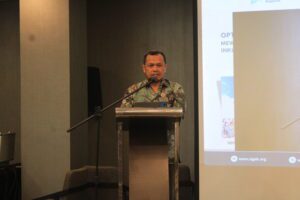
At the national level, the Government has also set more ambitious targets to increase the participation of persons with disabilities in the formal sector. Sugeng Heri Suseno, Director General of Labour Placement and Employment Opportunity Expansion (Binapenta and PKK) at the Ministry of Manpower, said, “The Government is targeting 12 per cent of formal-sector job placements to be filled by persons with disabilities by 2029.”
Achieving this target requires services that can bridge national policies with local needs. In this context, strengthening ULDs is an important part of implementing Law No. 8 of 2016 on People with Disabilities, particularly in fulfilling the right to employment.
For people with disabilities, equal employment opportunities are about more than simply securing a job. They also mean having access to the support needed to perform their roles effectively, develop their skills, build their careers, and have greater choices in their economic lives.