
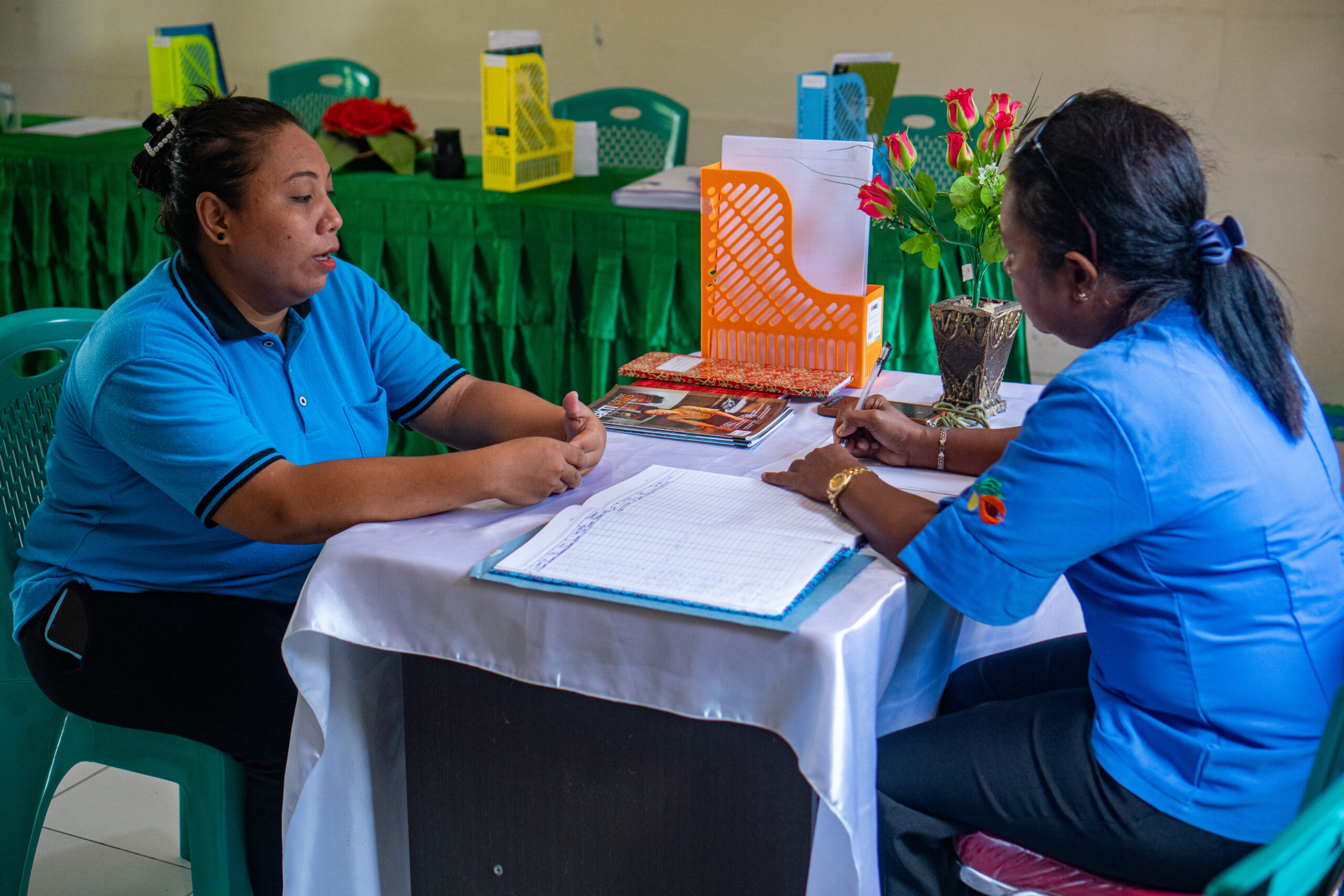
In the city of Ambon, Maluku, change does not always begin with sweeping policy. Sometimes it grows from work that is close to the people: accompanying vulnerable groups, helping them access social protection, and ensuring their voices are present in the life of their villages and communities.
Since 2022, the Inclusion Working Group (Pokja Inklusi) has been established in 15 villages and negeri across the city of Ambon. Throughout 2025, its impact began to be felt more widely. A total of 34 individuals from vulnerable groups — persons with disabilities, female-headed households, the elderly, and women — were actively involved in political activities in their respective villages and negeri. The Inclusion Working Group also facilitated assistance for 519 social protection cases and 9 cases of violence against women and children.
The impact did not stop at service access. From the mentoring carried out, a number of business units managed by vulnerable groups were established: Fatima Herbal Tea in Negeri Batu Merah, Rachel Collection in Desa Poka, Wayasel in Negeri Rutong, Tihulessy in Negeri Hukurila, Ekoprint Mahina in Negeri Laha, and Itte Craft in Desa Nania. Inclusion, in this sense, is not merely about having a seat at the table — it is also about the opportunity to grow and become self-reliant.
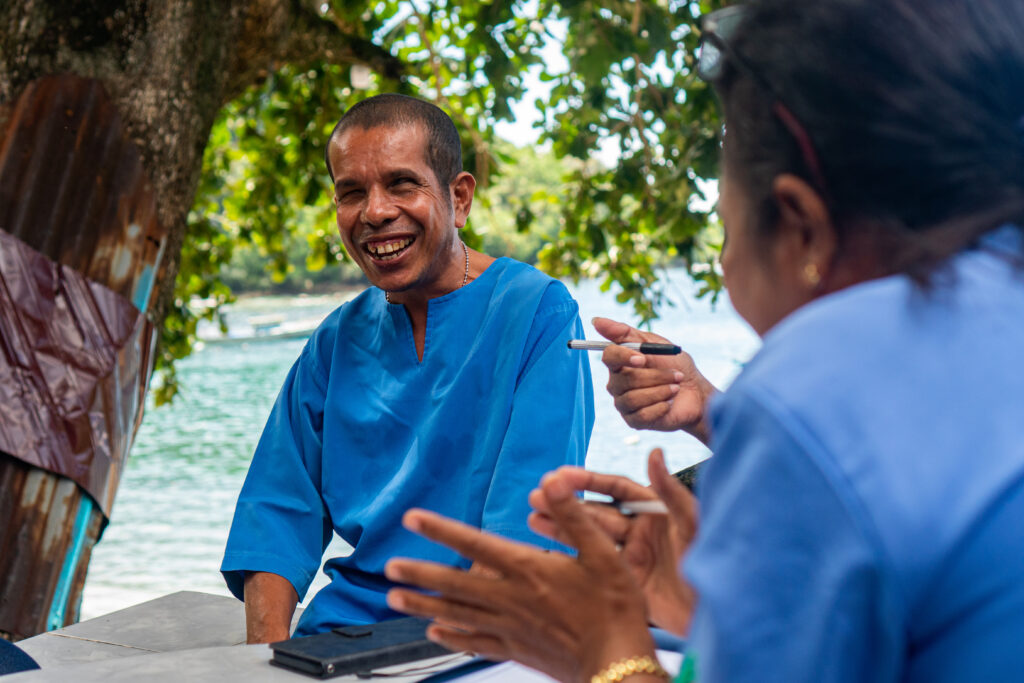
Reinhard Dequeljoe, a person with visual impairment who is also a member of the Inclusion Working Group (Pokja Inklusi) and Chair of the Hukurila Village Disability Forum, shared that the presence of the Inclusion Working Group and the Disability Forum has opened greater opportunities for persons with disabilities to participate in various village activities. He and other members now have more opportunities to be involved and gain experience alongside the community.
“My experience in the Inclusion Working Group has been very positive. We are consistently involved in various activities and gain valuable experience. As a representative of the Disability Forum, I feel comfortable with the presence of the Inclusion Working Group, which continues to support and accompany us,” he said.
The strengthening of the Inclusion Working Group was carried out through the GEDSI approach — Gender Equality, Disability, and Social Inclusion — alongside an understanding of climate change as a threat that can deepen the vulnerability of marginalized groups. This approach helped broaden community perspectives and encourage more meaningful participation.
These good practices at the village and negeri level then caught the attention of the Ambon City Government. Through the Office for Women’s Empowerment, Child Protection and Village Communities (DP3AMD), the city government viewed the Inclusion Working Group as an innovation worth replicating. On 12 February 2026, the Ambon City Government facilitated a thematic discussion titled “Climate Crisis and Its Impact on GEDSI Issues” at Gedung Vlissingen, the Ambon Mayor’s Office. The event featured Dian Afriyanie, a climate resilience expert and climate change consultant from the INKLUSI Secretariat in Jakarta, and was attended by various city government offices and agencies.
In his remarks, Executive Director of BaKTI Foundation Muhammad Yusran Laitupa stressed the importance of a collective response. “We will now be talking more about climate change. In Ambon, the effects are largely about water and landslides. I hope we can do something better for this city that we all love,” he said.
The Head of DP3AMD Ambon City, Megi Lekatompessy, added that through collaboration with Yayasan Rumah Generasi, the functions of the Inclusion Working Group now encompass case handling, prevention, disability issues, and other vulnerable groups. The Inclusion Working Group has even been involved in community-level tuberculosis response alongside the City Health Office.
The replication moved quickly. The following day, on 13 February 2026, a preparatory meeting was held attended by 10 village heads and raja for the formation of new Inclusion Working Groups, with the full support of DP3AMD Ambon City. Its sustainability is reinforced through Ambon Mayor’s Regulation Number 34 of 2024, which mandates budget allocations for the establishment and operationalization of Village Inclusion Working Groups — covering the drafting of village inclusion regulations through to the operationalization of the working group as part of village community institutions.
When the participation of vulnerable groups and persons with disabilities is no longer pushed to the margins, the quality of development changes as well — more inclusive, more responsive, and more attuned to those who have long been left behind. In Ambon, this experience proves that good practices can be replicated, and when they are, inclusive services no longer depend on the vision of a few — they become a shared commitment.