
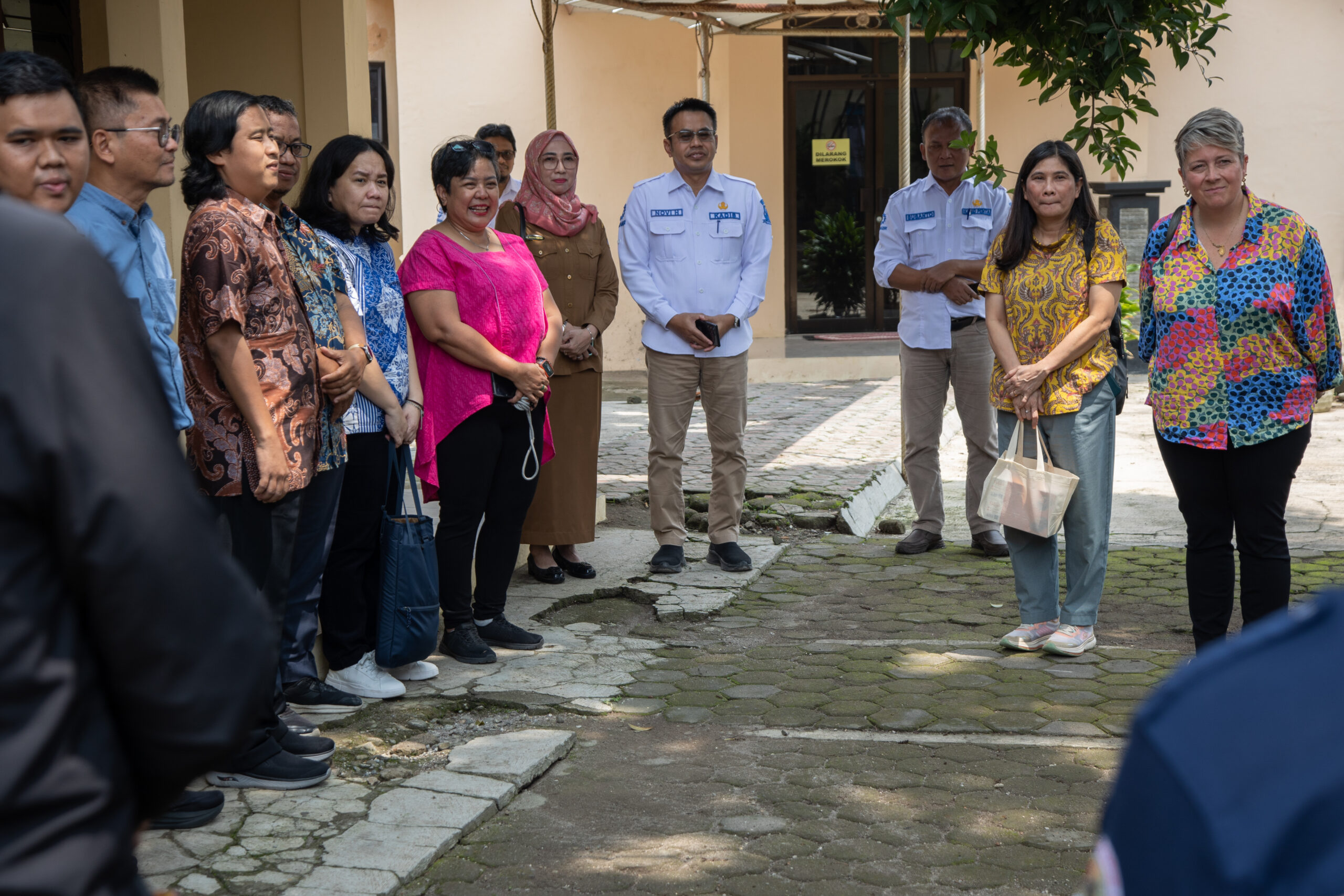
As part of the partnership between the Governments of Indonesia and Australia, the INKLUSI Program conducted a joint field monitoring visit to three locations in West Java on 10–12 February 2026. The visit brought together Bappenas, relevant ministries/agencies, the Australian Embassy (DFAT), and the INKLUSI Secretariat team to review program achievements, lessons learned, and implementation challenges at the subnational level.
Over three days, the delegation visited Cirebon, Indramayu, and Purwakarta districts together with four INKLUSI Partners: SIGAB, Migrant CARE, Lakpesdam NU, and PEKKA. The visit focused on inclusive employment for persons with disabilities, protection of migrant workers, prevention of child marriage, and strengthening the economic empowerment of female-headed households.
Joint Monitoring Visit in Cirebon: Advancing Inclusive Employment for Persons with Disabilities
In Cirebon District, together with SIGAB through the SOLIDER Program, the team observed efforts to strengthen Village Disability Groups (Kelompok Disabilitas Desa/KDD) and the Cirebon Disability Communication Forum (Forum Komunikasi Difabel Cirebon/FKDC). This community-based approach promotes participatory data collection, disability-inclusive entrepreneurship, and improved access to employment through collaboration with the local Manpower Office and the Disability Service Unit (Unit Layanan Disabilitas/ULD).
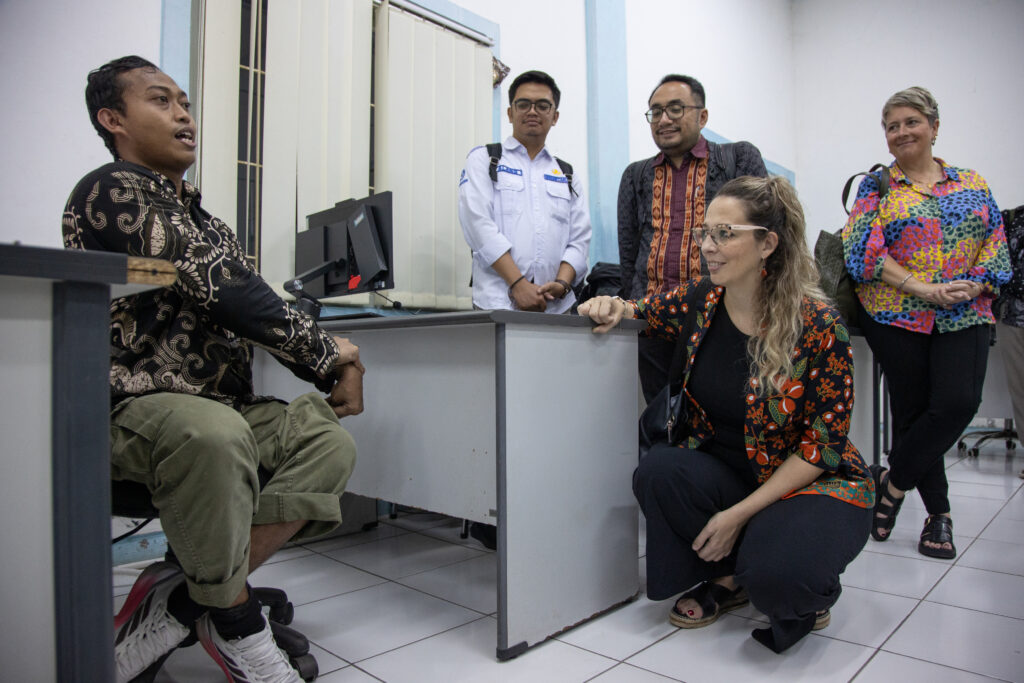
The delegation also visited Cirebon Power, which provides training for people with disabilities, and PT Dahju Foam Product, which has employed a worker with a disability in line with the mandate of Law No. 8/2016 on Persons with Disabilities. The company provides equal wages and benefits and expressed its commitment to gradually increase the number of employees with disabilities.
Discussions with the local government and the private sector highlighted several challenges, including budget constraints, the absence of sign language interpreters at job fairs, and the need to strengthen the role of the ULD as a bridge between employers and jobseekers with disabilities. Bappenas underscored the importance of implementing the National Medium-Term Development Plan (RPJMN) to create workplaces that are inclusive, safe, and equitable.
Joint Monitoring Visit in Indramayu: Migrant Worker Protection and Child Marriage Prevention
In Indramayu—one of the largest migrant worker-sending areas in West Java—the visit with Migrant CARE reviewed the implementation of the Desa Peduli Buruh Migran (Desbumi) initiative. Through the Integrated Service Centre (Pusat Pelayanan Terpadu/PPT), villages provide complaint-handling services, counselling, verification of departure documents, and economic support for returned migrant workers and their families.
Key issues raised included low levels of financial literacy, suboptimal enrolment in BPJS Employment for migrant workers, and the need to prevent non-procedural migration and trafficking in persons (TPPO). Ministries/agencies encouraged stronger village regulations, the development of caregiving modules for children of Indonesian migrant workers, and the use of remittances to support village-level economic empowerment.
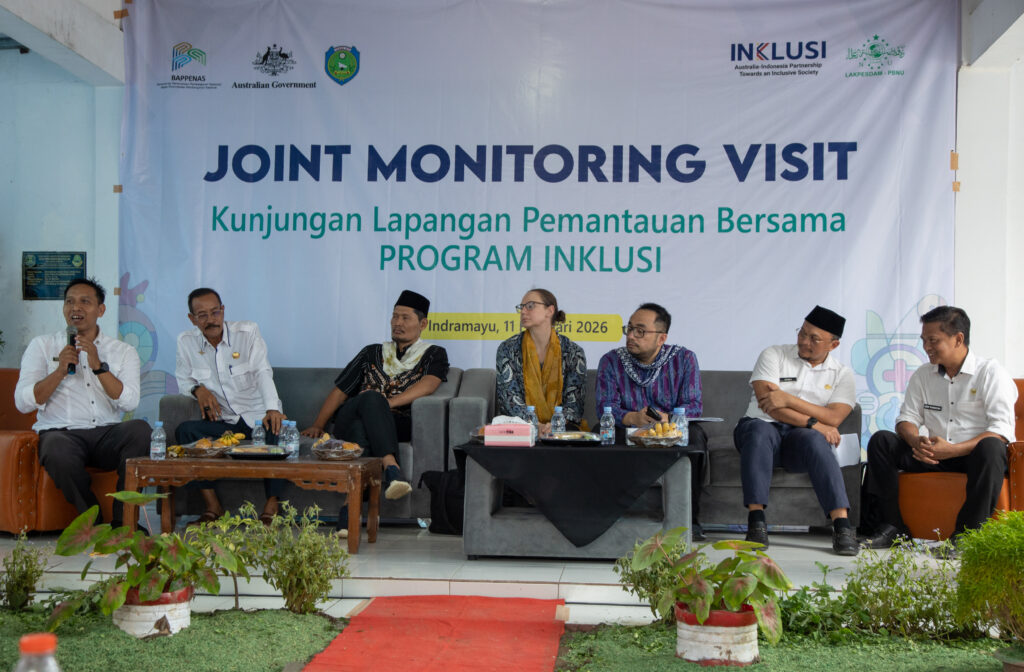
Still in Indramayu, together with Lakpesdam NU, the delegation reviewed child marriage prevention efforts carried out through strengthening Village Children’s Forums, Village PPA Task Forces, and outreach to parents and religious leaders. Data indicate that child marriage rates remain significant, making stronger village regulations and the establishment of an Integrated Service Unit for Women and Children Protection (UPTD-PPA) key follow-up priorities. The Ministry of Women’s Empowerment and Child Protection (KPPPA) emphasised the importance of access to civil registration documents and education for survivors of child marriage.
Joint Monitoring Visit in Purwakarta: Strengthening the Economic Empowerment of Female-Headed Households
In Purwakarta District, the visit with PEKKA highlighted the Akademi Paradigta Kewirausahaan (AP-Kewirausahaan) strategy to build a more equitable economy. Since 2022, PEKKA has trained dozens of female heads of households as local economic drivers across seven villages, supporting the development of locally based enterprises and linking women’s products to village markets.
The main challenges identified were limited access to capital, raw materials, and production equipment. Bappenas encouraged further collaboration between PEKKA and the local MSME Office (Dinas UMKM) to strengthen access to financing, training, and market expansion. The Ministry of Social Affairs and the local government also expressed readiness to follow up on support for female-headed households.
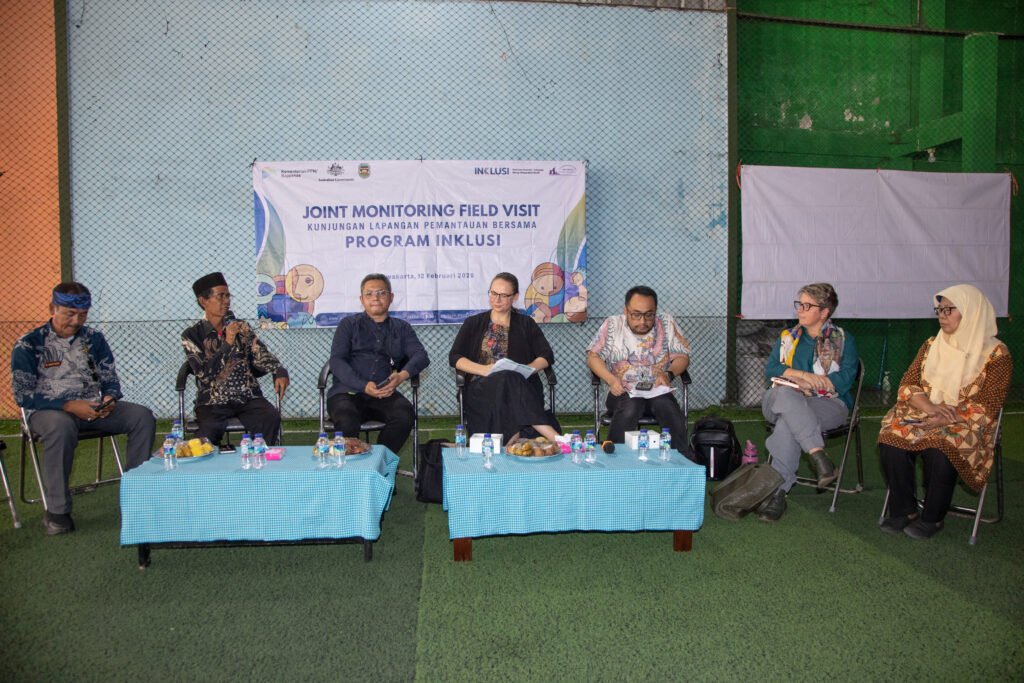
This visit provided a concrete picture of how the “No One Left Behind” principle is being applied in local development—through disability-inclusive villages, community-based migrant worker protection systems, child marriage prevention efforts, and strengthened economic empowerment for female-headed households.
Findings and recommendations from the visit will serve as strategic input for INKLUSI Phase 2, particularly to strengthen the institutionalisation of good practices within subnational development systems. Collaboration among ministries/agencies, local governments, and civil society partners will continue to be strengthened to ensure the sustainability of program impact.