

INKLUSI partners participated in the Indonesia Civil Society Forum (ICSF) 2025, held on 5–6 November 2025 in Jakarta, which convened approximately 300 participants from 31 provinces across Indonesia.
Since 2018, ICSF has provided a collaborative platform linking national and local civil society actors, government reformers, academics, and development partners to strengthen networks, enhance capacities, and promote innovation and good practice in support of inclusive democracy.
The forum was organised by the Humanist and Social Innovation Foundation (Humanis), the Indonesian Partnership, Initiative, and Community Participation Strengthening Foundation (YAPPIKA), PeaceGeneration Indonesia, and Pamflet Generasi, under the theme “Defending Democracy, Demanding Justice: Connecting Civil Society Movements.”
Designed as an open and collaborative space, ICSF 2025 featured plenary sessions, panel discussions, group dialogues, and an exhibition, enabling meaningful exchange and shared learning across sectors.
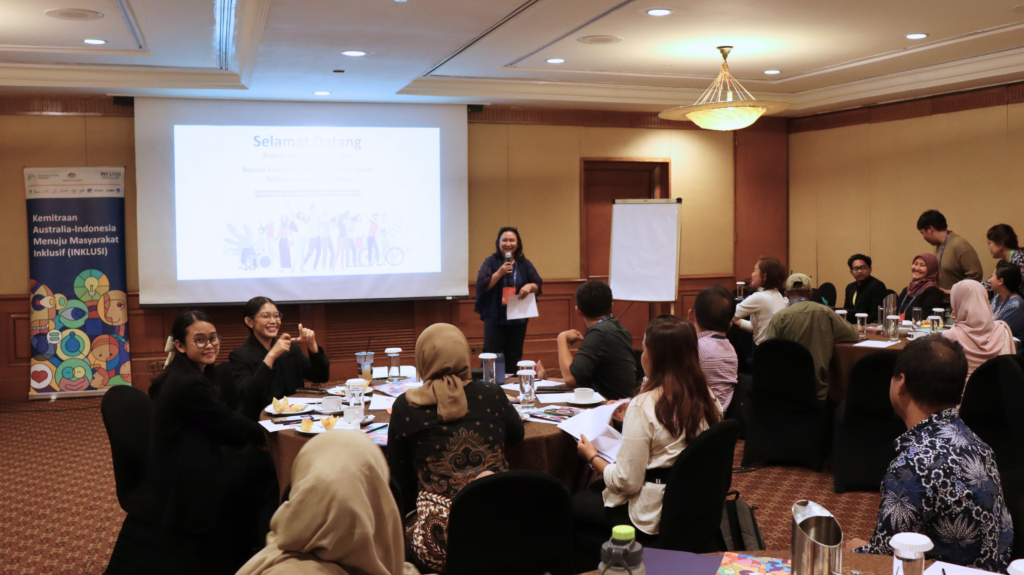
The wide range of participation reaffirmed the value of cross-issue collaboration in advancing democracy and social justice, including efforts on gender equality, disability and social inclusion (GEDSI), civic space and fundamental freedoms, environmental and climate justice, labour rights, health, education, as well as media and technology.
In the context of evolving democratic dynamics, the forum highlighted the growing opportunities for strengthening linkages and advancing constructive forms of civic action, including digital engagement, social media mobilisation, civic technology to support accountability, and intersectional cultural initiatives.
INKLUSI Partners Host Breakout Session on Intersectionality
INKLUSI partners Kemitraan and the KAPAL Perempuan Institute facilitated a breakout session on “Supporting Intersectionality-Based Networks and Social Movements.” The session fostered thoughtful dialogue on how movements and networks can collaborate across issues and identities to respond more effectively to intersecting forms of inequality related to gender, disability, social class, geography, and other dimensions.
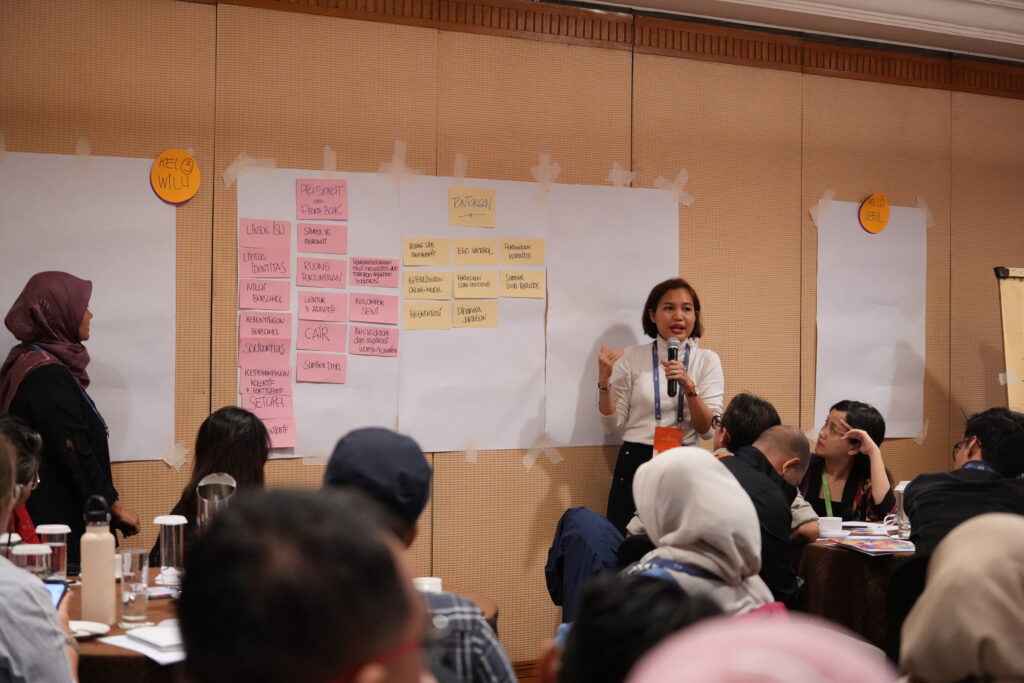
The discussion identified several strategic priorities to further strengthen intersectionality-based movements, including rights-based systemic policy advocacy, alignment of issues and momentum across sectors, inclusive and community-centred narrative development, holistic political education, clear mapping of actors and roles, and collective care approaches to support the wellbeing and safety of activists and human rights defenders.
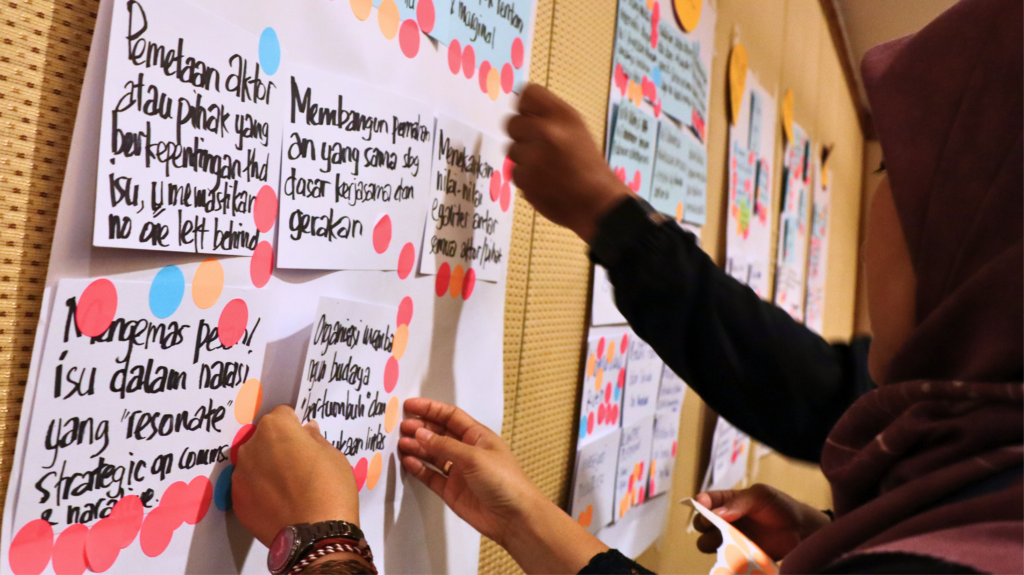
Across the two-day forum, participants generated more than 60 strategic ideas and 34 action agendas. Proposed follow-up actions included the development of regular podcasts and periodic publications as shared learning platforms, as well as the establishment of a joint political platform to support coordinated advocacy in relation to upcoming electoral processes and broader political developments.
INKLUSI continues to strengthen a supportive ecosystem for its partners to expand networks, deepen cross-issue collaboration, and advance sustainable movement strategies, contributing to inclusive development so that no one is left behind.