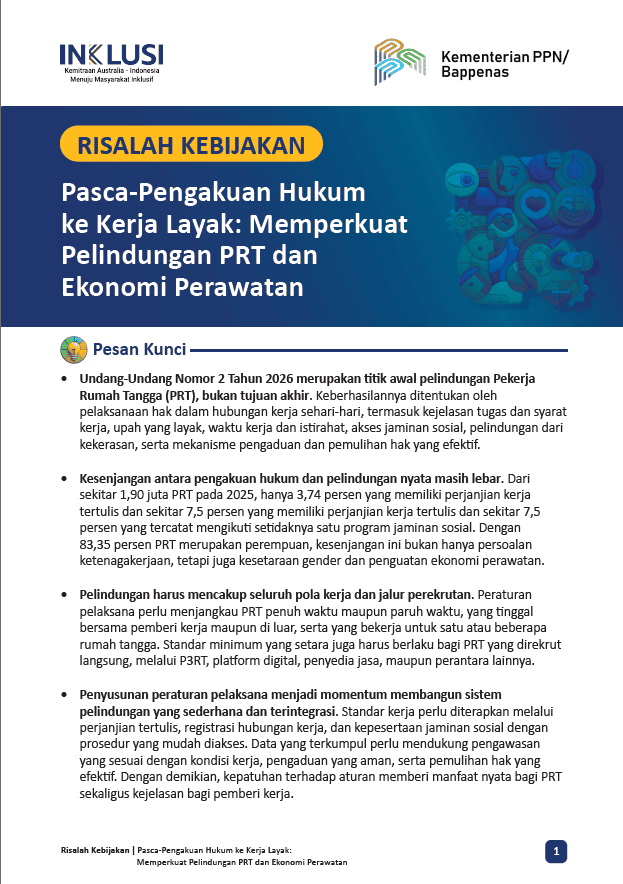

This policy brief examines the challenges of implementing Law No. 2 of 2026 on the Protection of Domestic Workers to ensure the fulfilment of labour rights and decent working conditions for domestic workers in Indonesia. While legal recognition represents an important milestone, significant gaps remain in the enforcement of labour standards, documentation of employment relationships, access to social security, labour inspection, and mechanisms for complaints and remedy. These challenges are further compounded by the diverse employment arrangements and recruitment channels through which domestic workers are engaged, the majority of whom are women.
The brief identifies seven key gaps in the domestic worker protection system and puts forward policy recommendations to strengthen regulatory implementation, establish operational decent work standards, integrate employment agreements with social security coverage, and improve labour inspection and access to effective grievance mechanisms. It also highlights the importance of recognising domestic workers as workers in both policy and public discourse, alongside initiatives to develop their competencies and formally recognise their skills. These measures are intended to strengthen domestic workers’ rights, advance gender equality, and contribute to a more inclusive and sustainable care economy.