
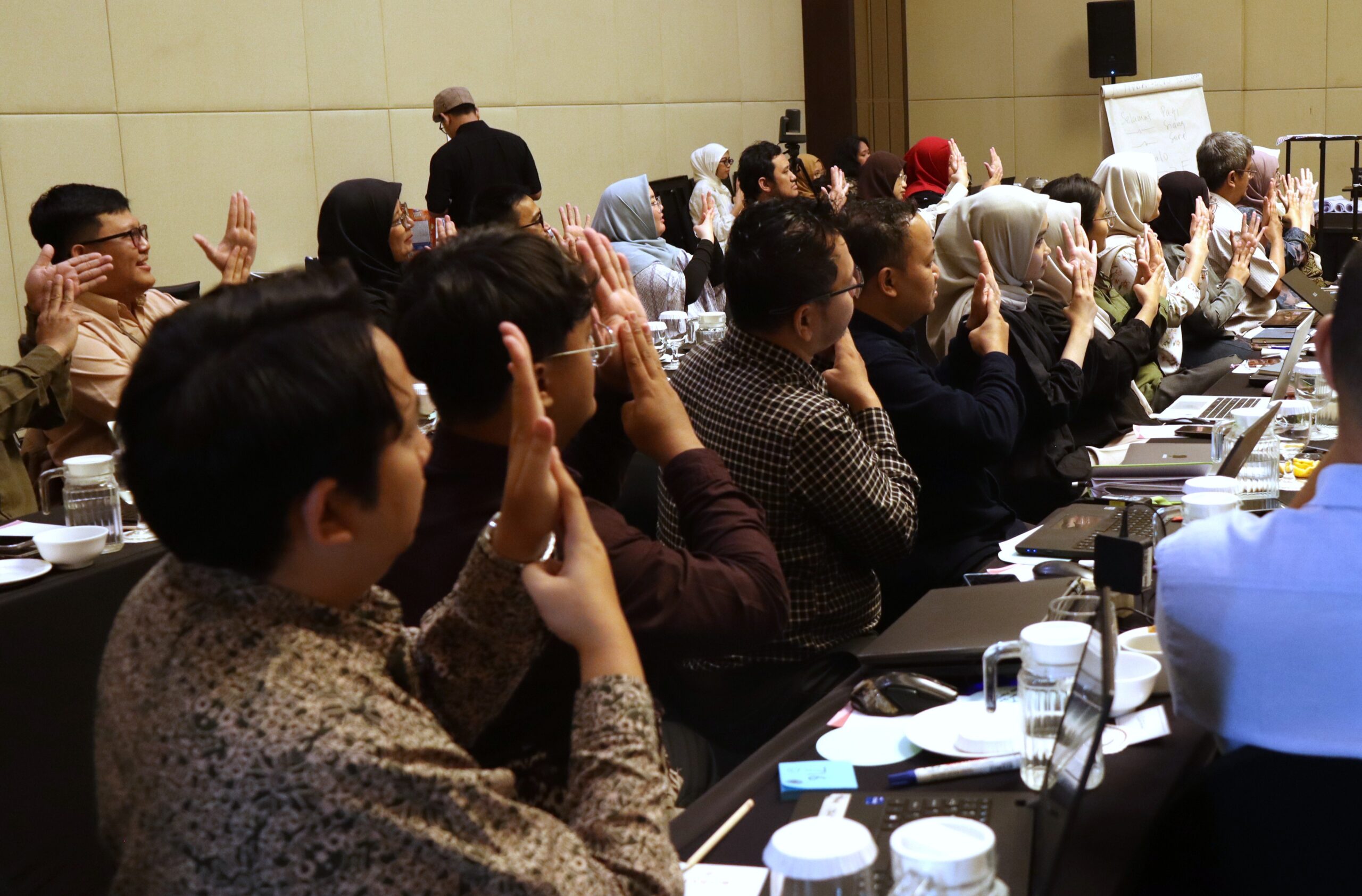
Jakarta, 4–6 October 2026 – The Ministry of National Development Planning/Bappenas, supported by the INKLUSI Programme, held a Technical Guidance Workshop (Bimtek) on Disability Inclusion to strengthen the capacity of civil servants (ASN) to integrate a disability perspective into national development planning and implementation. The workshop is also expected to widen the space for meaningful participation by persons with disabilities.
The three-day event was attended by 50 participants from various directorates at Bappenas. They discussed a range of case studies and took part in role-play simulations as government, persons with disabilities, and disabled people’s organisations, in order to identify the everyday barriers and formulate concrete steps to address them.
Joanna O’Shea, Acting Minister-Counsellor for Human Development and Humanitarian at the Australian Department of Foreign Affairs and Trade (DFAT), welcomed the Indonesian government’s commitment to ensuring that persons with disabilities can participate in, and benefit equally from, development.
“Today’s activity is an opportunity for us to work together to translate that commitment into development practice,” O’Shea said at the opening of the training.
Disability inclusion is part of the national development agenda under the National Medium-Term Development Plan (RPJMN). The Indonesian government continues to work to strengthen the meaningful participation of persons with disabilities in the formulation, implementation, monitoring, and evaluation of policy.
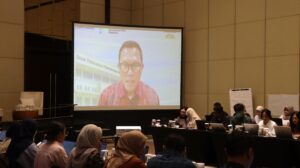
“Disability is a cross-programme, cross-priority issue. Mainstreaming disability inclusion means ensuring that every resident receives basic services, can develop their capabilities, and can participate in and benefit from development,” said Pungkas Bahjur Ali, Deputy for Human Development and Culture at the Ministry of National Development Planning/Bappenas.
Embedding a Human Rights Perspective in Institutions
Joni Yulianto, Knowledge and Learning Coordinator at Sasana Inklusi & Gerakan Advokasi Difabel (SIGAB) Indonesia, urged a shift in how disability is understood, away from the view that links it to social assistance or charity and toward an approach grounded in the fulfilment of human rights.
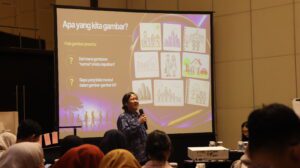
“To create an inclusive environment, we have to be able to dismantle our own paradigms. Disability should be seen as part of human diversity. In an inclusive approach, systems and services must be designed to accommodate diverse needs,” Joni said.
He added that in the context of development, disability inclusion means building systems, environments, and services that enable everyone to participate on an equal basis. For this reason, the perspective of persons with disabilities needs to be an important part of national development.
Echoing Joni, Jonna Damanik of the National Commission on Disability (KND) said that persons with disabilities need to be seen as rights-holders, not merely beneficiaries. According to Jonna, indicators of development achievement need to measure impact comprehensively and take into account links across sectors, guided by all the principles of fulfilling the rights of persons with disabilities mandated by Law No. 8 of 2016 on Persons with Disabilities.
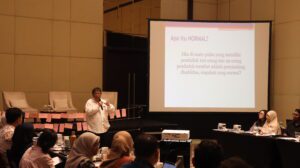
“Having a policy does not mean the problem is immediately solved. Its implementation also needs to be checked to see whether it truly benefits rights-holders,” Jonna said.
During the training, participants also developed indicators for the fulfilment of rights based on three aspects: structure, process, and outcome. This framework helps participants see the links between the policies that exist, how they are implemented, including budget support, and the results experienced by persons with disabilities.
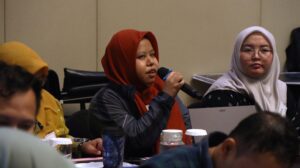
In the final session, participants learned how to interact with persons with disabilities. This learning is expected to be applied by civil servants in building an inclusive work environment at Bappenas, as well as when interacting with persons with disabilities in carrying out their duties and serving the public.
Inti Wikanestri, Secretary to the Deputy for Human Development and Culture at the Ministry of National Development Planning/Bappenas, said that the lessons from the workshop are expected to be integrated into the Government Work Plan (RKP) and performance indicators, and to feed into policy and budgeting recommendations.
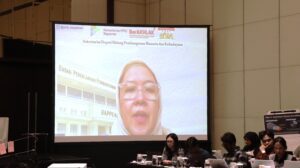
“Disability inclusion therefore needs to be an important part of the entire development cycle, from planning and budgeting to implementation, and monitoring and evaluation that ensure the meaningful participation of persons with disabilities,” she said as she closed the training.